
I have a challenge this year. I need to make a lot of soothing, herbal cold and flu remedies that are as universal as possible and as cheap as they can be. They’re for the Anti-Poverty Network community barbecues, where I give a little free health advice and some free remedies.
One day, herbal honeys came to mind.
If you’re finding this information useful, share it with your community
Honey… who doesn’t love it?
Honey is legendary for its own healing properties. It is soothing, antimicrobial, antifungal, nutritive making it a wonderful preservative for remedies, foods and our own bodies.
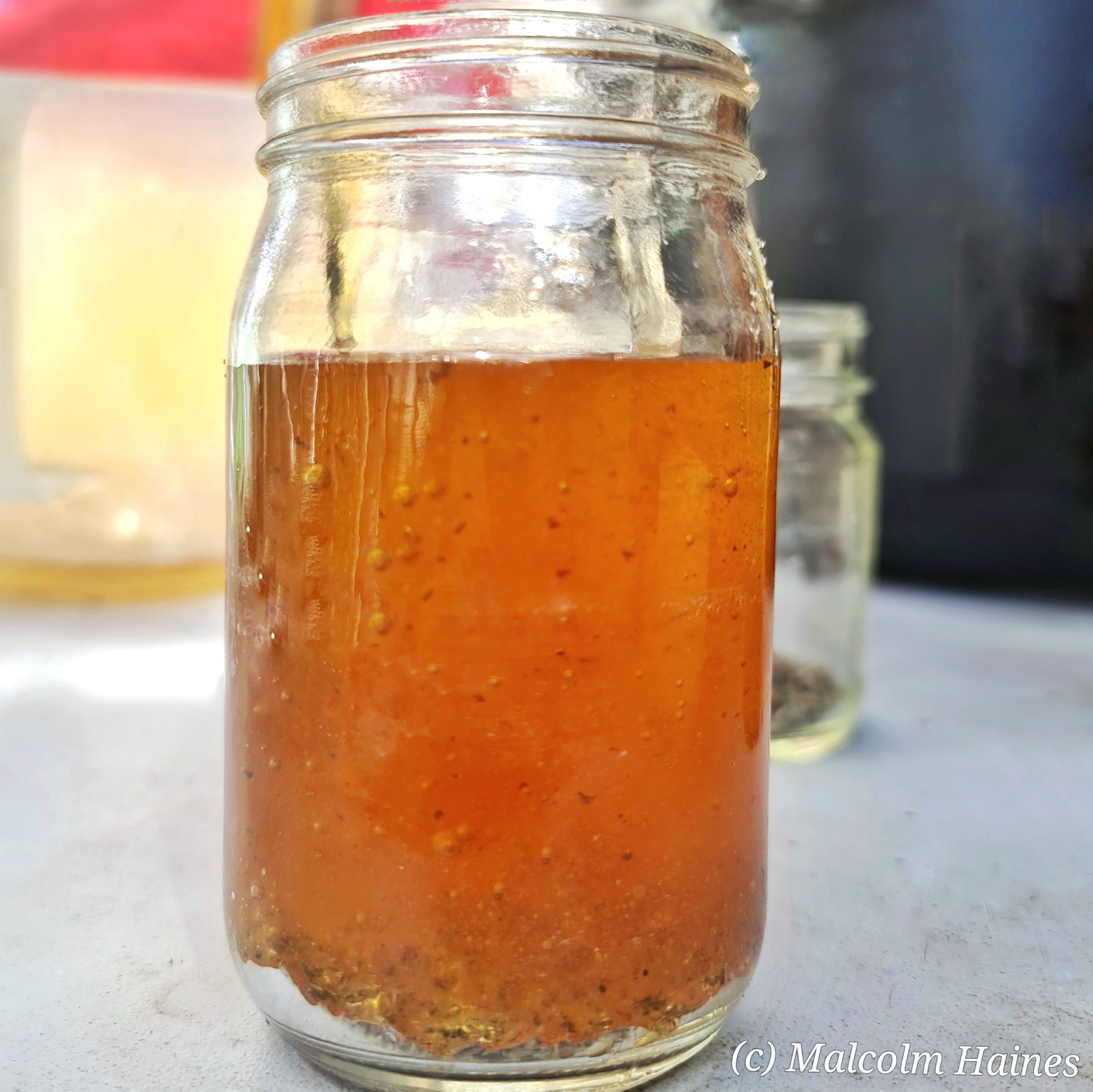
How to make a herbal honey

Adding herbs
Honey is a useful solvent for a range of herbs. It’s not as effective as alcohol or glycerine and I’d rate its ability to extract constituents as being on par with vinegar.
You can use fresh or dried herbs with honey Maybe soak dried material in a little water or Apple Cider Vinegar for an hour or so. Not too much, just enough to soften them and start the extraction process.
Aromatic herbs such as Sage (Salvia officinalis), Thyme (Thymus vulgaris) and Lavender (Lavandula species) extract well in honey. Other plants with a high percentage of water soluble compounds also extract well, especially berries like Elder Tree (Sambucus nigra), Hawthorn and Rose Hips (Rosa species).
Folk method (no direct heat)
Making herbal honeys is as easy as anything else I’ve covered on this website and far easier than some. If you can make a glycerite, a basic infused oil or Herbal Vinegar extracts (Acetae) as covered on other pages of this website, you can do it. In fact, the honey you make can be the basis for or combine well with other remedies.
You’ll need 3 things – honey, and herbs.
Fill your jar 1/4 full with your chosen herbs. This allows plenty of space for mixing. If you add too much, the herb can form a single mass in the jar and not mix well when you turn the jar upside down.
3/4 fill your jar with honey and give it all a good stir. Make sure there’s no air bubbles trapped inside.
Put your lid on and leave your jar somewhere out of direct light and pretty warm (on top of the fridge or near the stove are great places). This allows the honey to stay more fluid and makes the mixing and infusion easier.
Every day or two, turn the jar upside down. The herb will float to the ‘top’, mixing everything nicely.
If you have a lot of herb or you notice a big air space forming, open your lid and break it all up with your spoon.
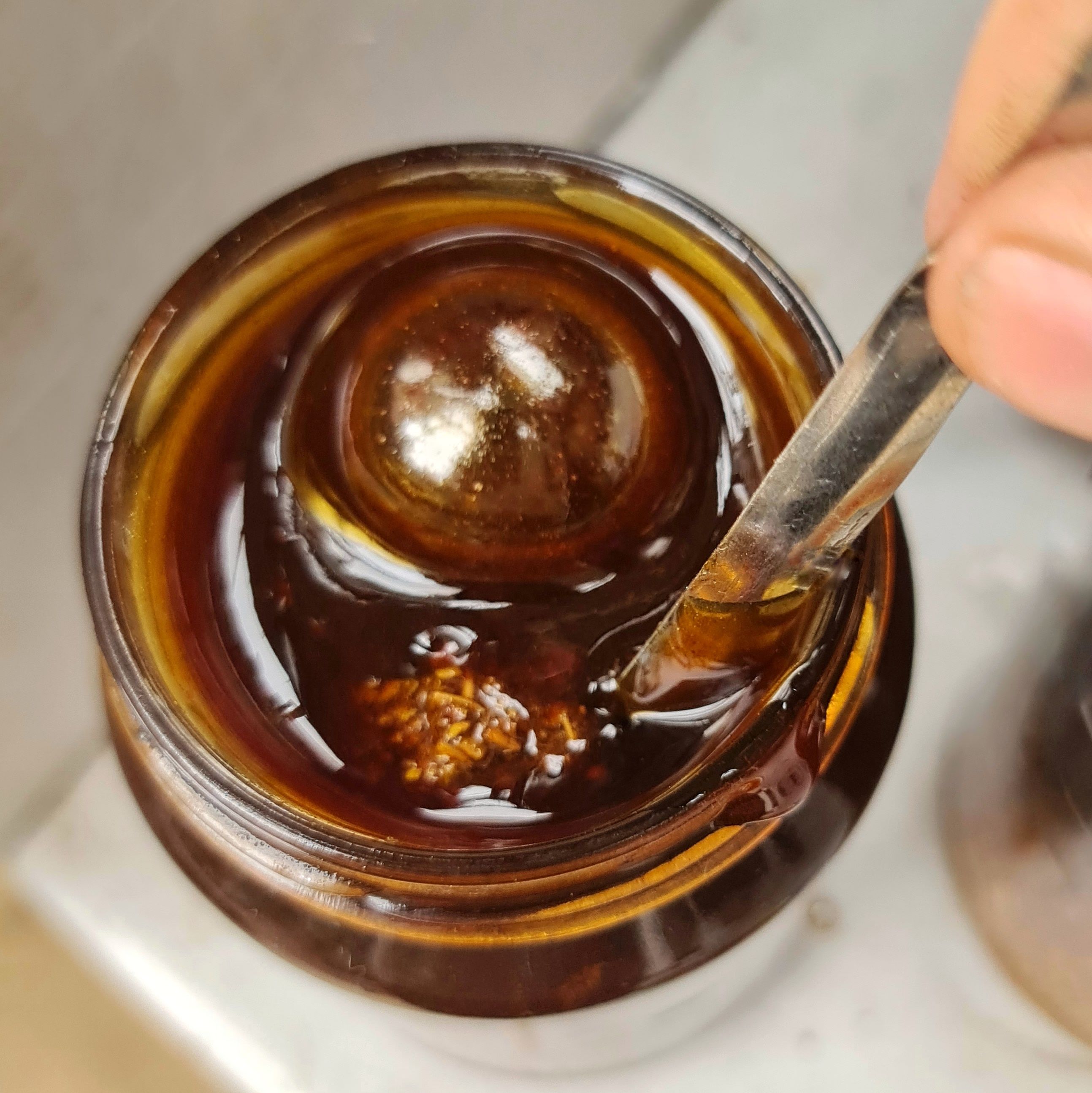
After 2 weeks – 1 month, warm the jar slightly to make the honey easier to sieve. Sieve it through a coarse sieve and then through a finer one. Sieving takes a lot of time so you may want to stop filtering your honey there.
Warming (not cooking) your honey slightly will make it easier to pour and sieve.



If you’re finding this information useful, share it with your community


Slow cooker method

As with glycerites and oils, you can use a slow cooker to slowly and gently warm your honey.
Place your honey in a jar and seal the lid, then place your jar(s) into a slow cooker that has been 1/4 to 1/2 filled with water. Keep the lid off so that the water doesn’t get too hot. The heat of the water will be transferred to the honey, making it more liquid and better at infusing the herbs.
If you find that your water is getting too hot, even with the lid of the cooker off, try putting the cooker on a timer with an on/off cycle. I like 15 minutes on/ 1/2 hour off from my cooker but yours may be slightly different. You only want to warm the honey enough to keep it fluid.
Occasionally invert the jar(s) to keep things mixing. You did remember to tighten the lids, didn’t you?
This’ll knock out a herb infused honey in a 2 -3 days, maybe 4 if you forget. Keep an eye on your water level too!
How to use your herbal honey.
Nothing can be more pleasant than taking a herbal honey. It’s even nicer than a glycerite and that’s Yummy!
To take your medicinal, infused honey, take 1 teaspoonful three or four times a day. Regardless of how tempting it may be to take more, you can over-do both the honey and the herbs within it.
Add your infused honey to hot water or other herbal teas or infusions for a sweet, health giving boost.
Infused honeys, especially if you’ve used the famous Manuka honey, can be applied externally to wounds, especially those that are slow to heal. Just lather it on, leave it fro a while (half an hour or so seems best in my experimentation), then remove it gently. and repeat that 3-4 times a day depending on how much honey you have handy. A better option that is easier to clean up is to soak gauze or gauze bandages in the honey and apply those to the wounds. This makes it easy to just peel them off and wipe the area around the wound down to keep it clean.
Other herb pages on Ligaya Garden
We cover a lot of ground on many herb related topics here on our website. There are whole pages devoted to different topics as well as frequent posts. Some of the links are –

Other herb pages on Ligaya Garden
We cover a lot of ground on many herb related topics here on our website. There are whole pages devoted to different topics as well as frequent posts. Some of the links are –
