
Phylum: Basidiomycota. Class: Agaricomycetes. Order: Boletales. Family: Suillaceae
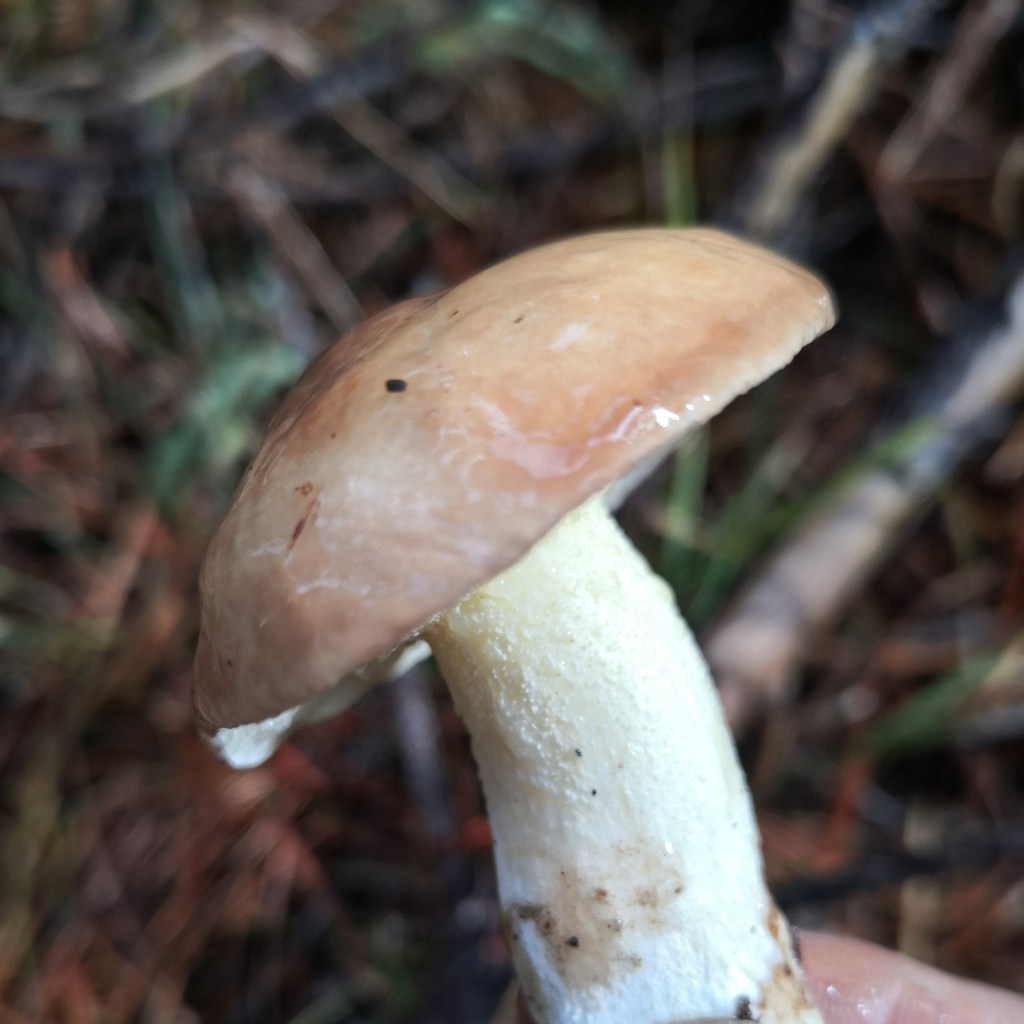
Weeping Boletes (Suillus granulatus) are common mushrooms in the Pine forests near Gawler. They’re closely related to the very similar looking Slippery Jack (Suillus luteus) with which they’re often confused.
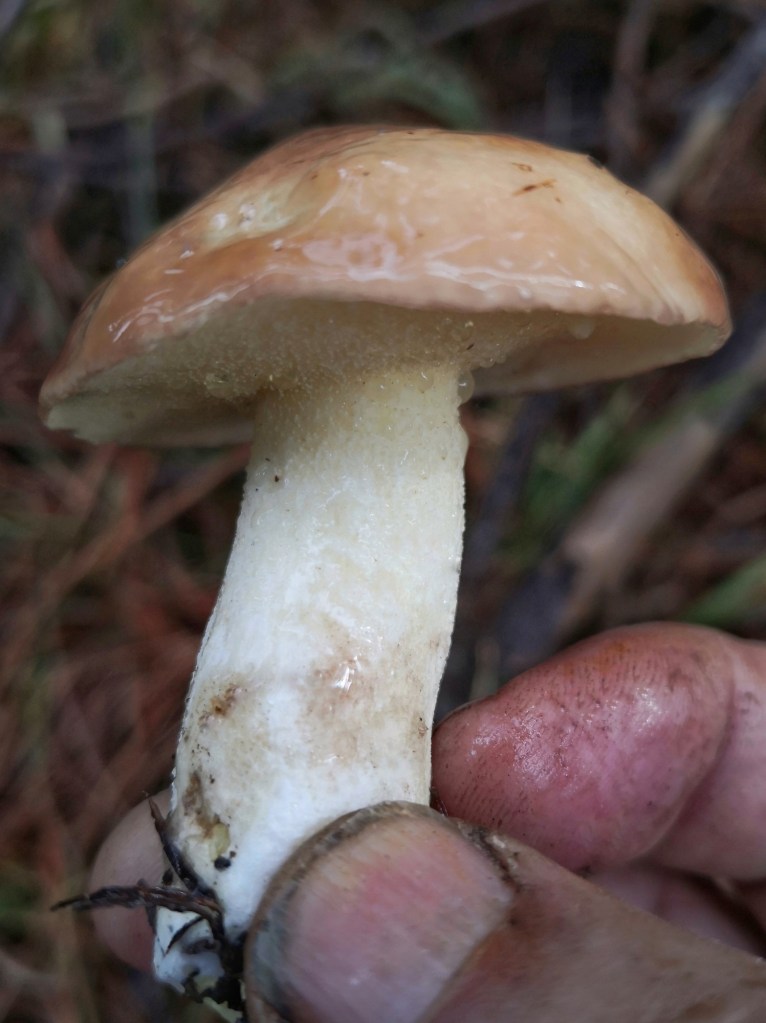

Weeping Boletes can be found under with their cousins, Slippery Jacks on the floor of Pine forests and, like Slippery Jacks, can be distinguished straight away by the slippery coating on their cap. All Boletes have a spongy material rather than gills beneath the cap which houses the spores. The name ‘Weeping Bolete’ comes from the fact that they commonly weep a clear or milky liquid from the sponge layer. This dries on the stem to form the granules that give rise to their species name ‘granulatus‘.
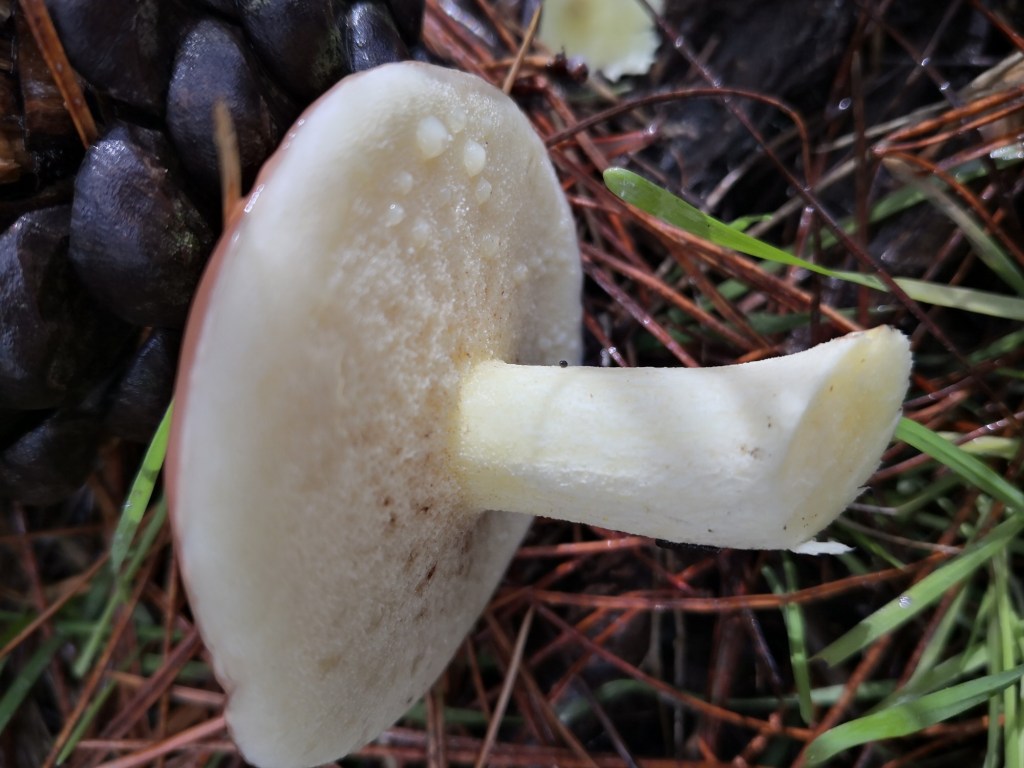

Boletes need to have the outer layer of the cap to be removed before cooking. Fortunately, this is easy to do as it comes away quite easily. Removing this and the spongy layer beneath the cap improves the taste of cooked Boletes too but lots of folks don’t do this because only a little mushroom meat is left after processing.
This is a species that tasted great when dried and powdered. If you’re drying them, you don’t need to remove anything, just slice thinly and dry by your favourite method.
Identifying Weeping Boletes (Suillus granulatus)-a summary
Look for Weeping Boletes in Pine forests,
- Brown to olive green cap from 5 cm to about 10 cm in diameter.
- The cap has a slippery surface, often with pine needles and soil adhering to it.
- The outer layer of the cap is easily peeled off.
- Yellow/creamy spongy pore material underneath the cap rather than gills.
- Thick, pale yellow stem that develops granular texture with age.
- NO annulus on the stem.
- Stem is solid in cross section.
- Spore print – yellow/brown
For reference, Weeping Boletes are on page 194 of ‘A field guide to Australian Fungi’ by Bruce Fuhrer.
Look alikes