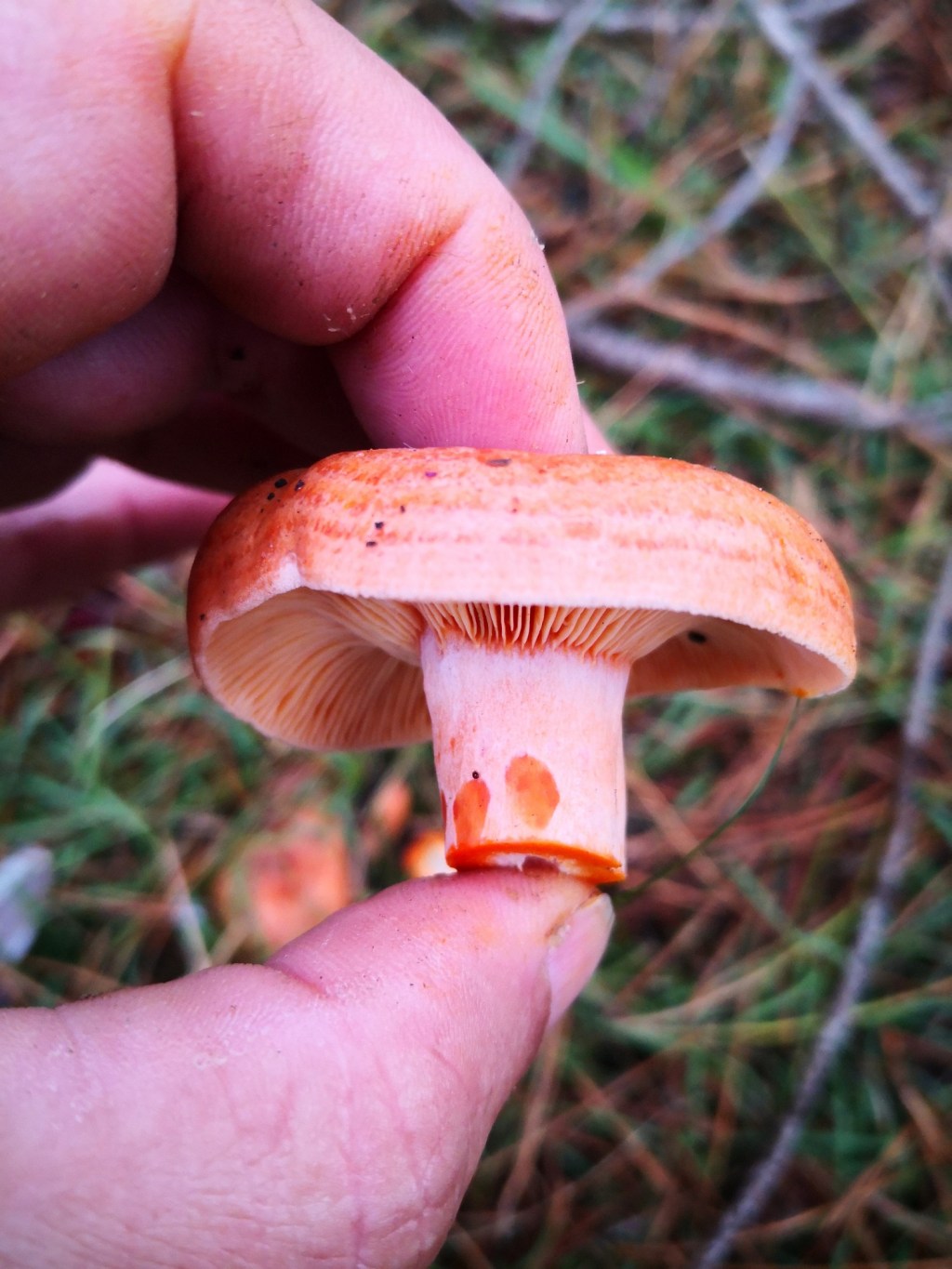

Saffron Milk Caps (Lactarius deliciosus), otherwise known as ‘Pine Mushrooms’ are a very common and fortunately, very distinctive edible mushroom in the Pine forests not far from here.
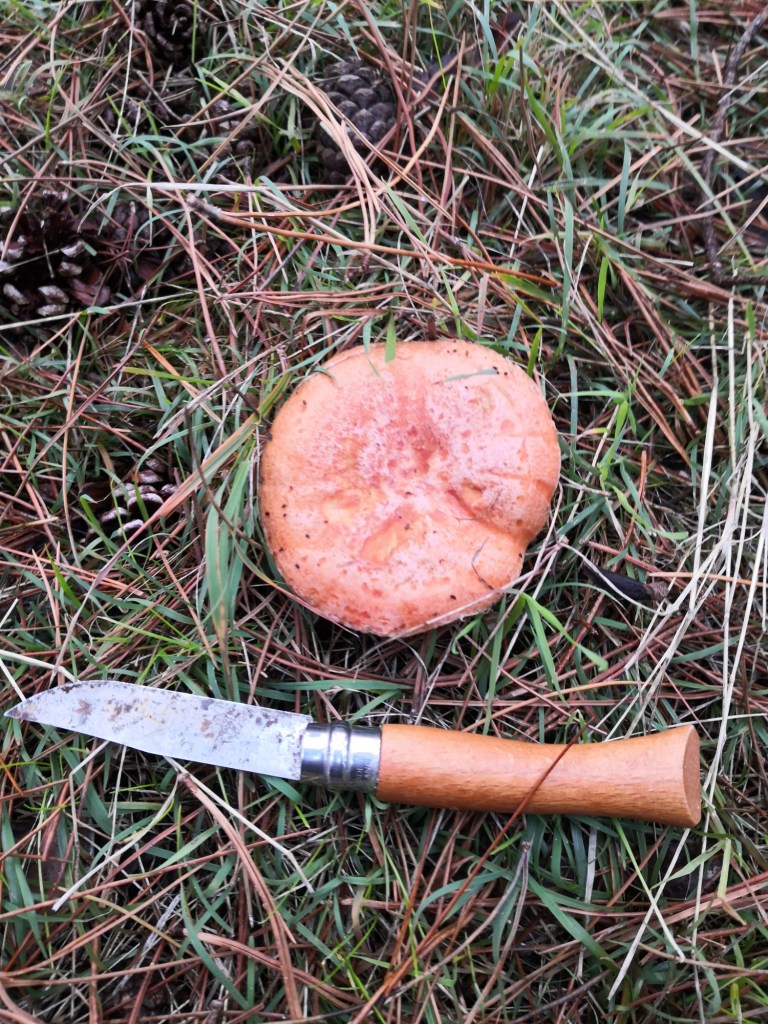
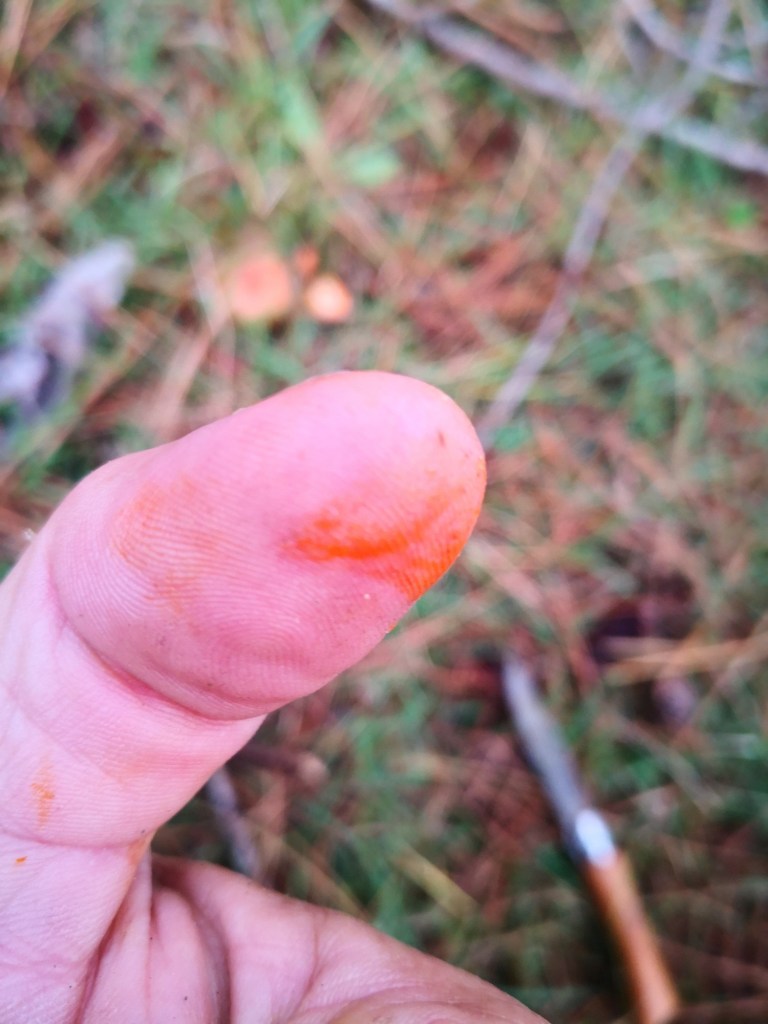
Saffron Milk Caps are one of the seemingly few things in nature which clearly show where their name comes from. ‘Saffron’ because of their colour, ‘milk’ because of the orange juice or milk that they bleed when cut. Or is that ‘saffron milk’?
Their taxonomic name too is a dead give away anything that has ‘lact‘ in it relates to milk, ‘deliciosus‘ because, well…they’re delicious!
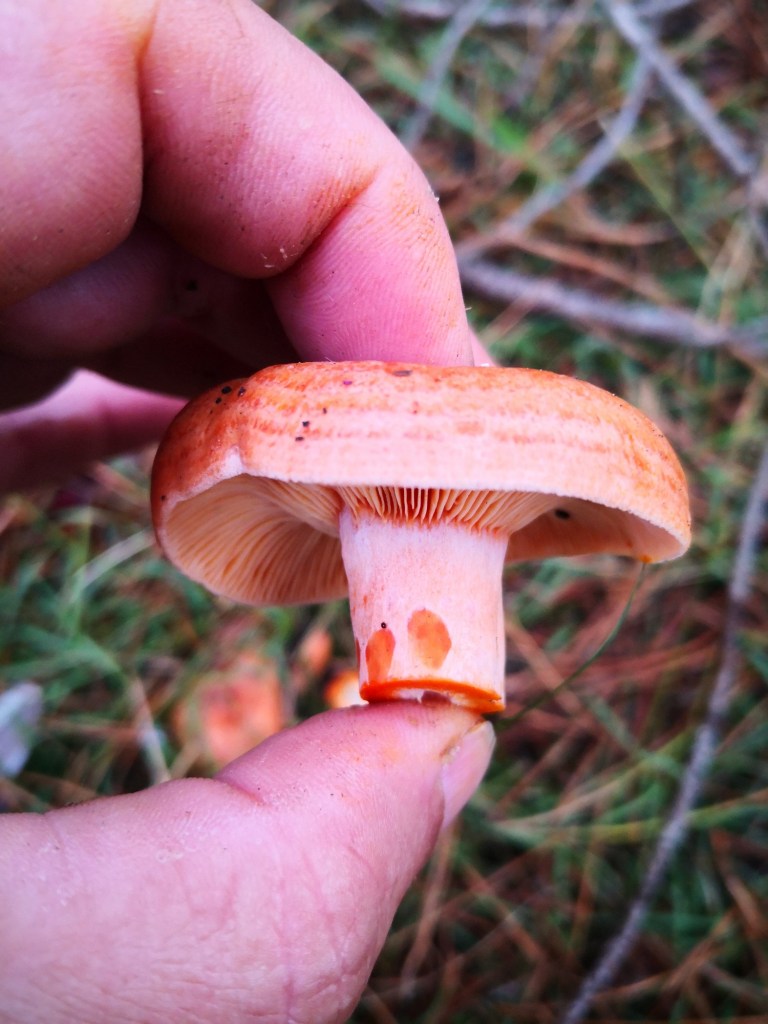


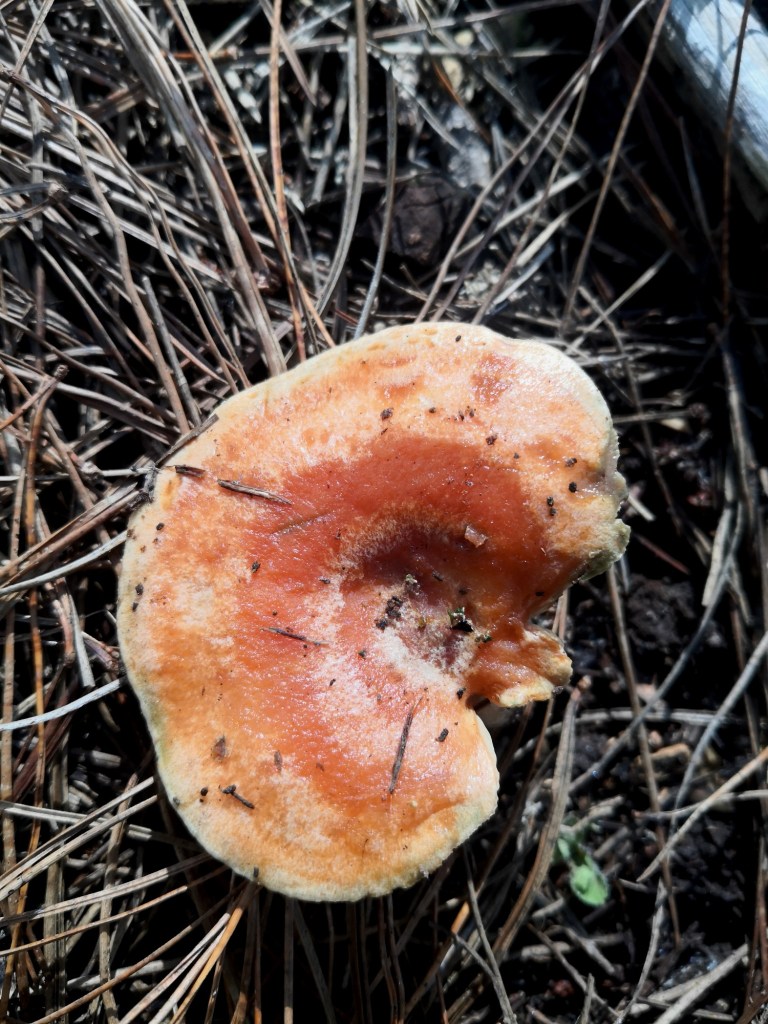
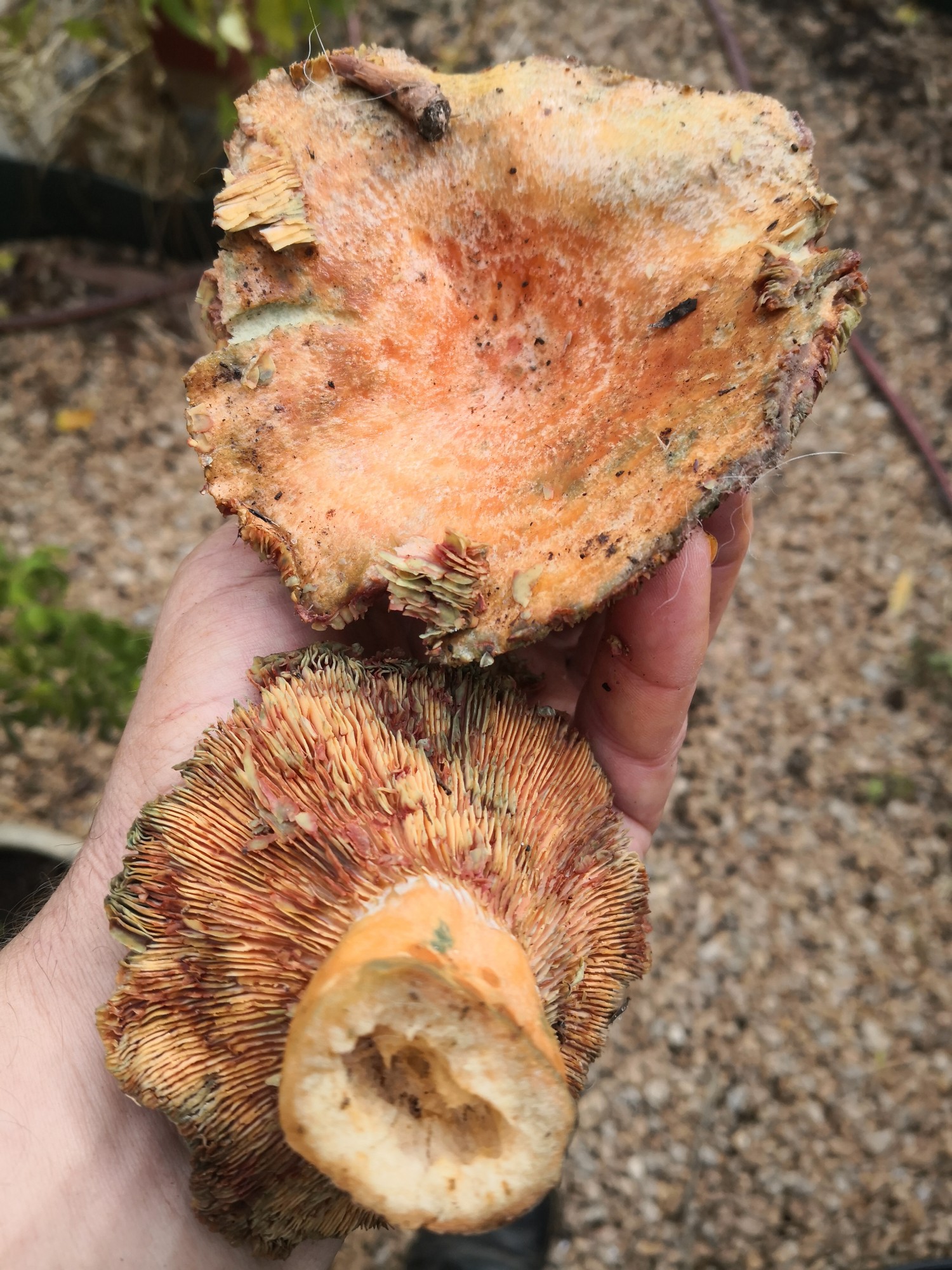
Identifying Saffron Milk Caps –
If you’re under Pine trees and find something that you think could be a Saffron Milk Cap, look for these details –
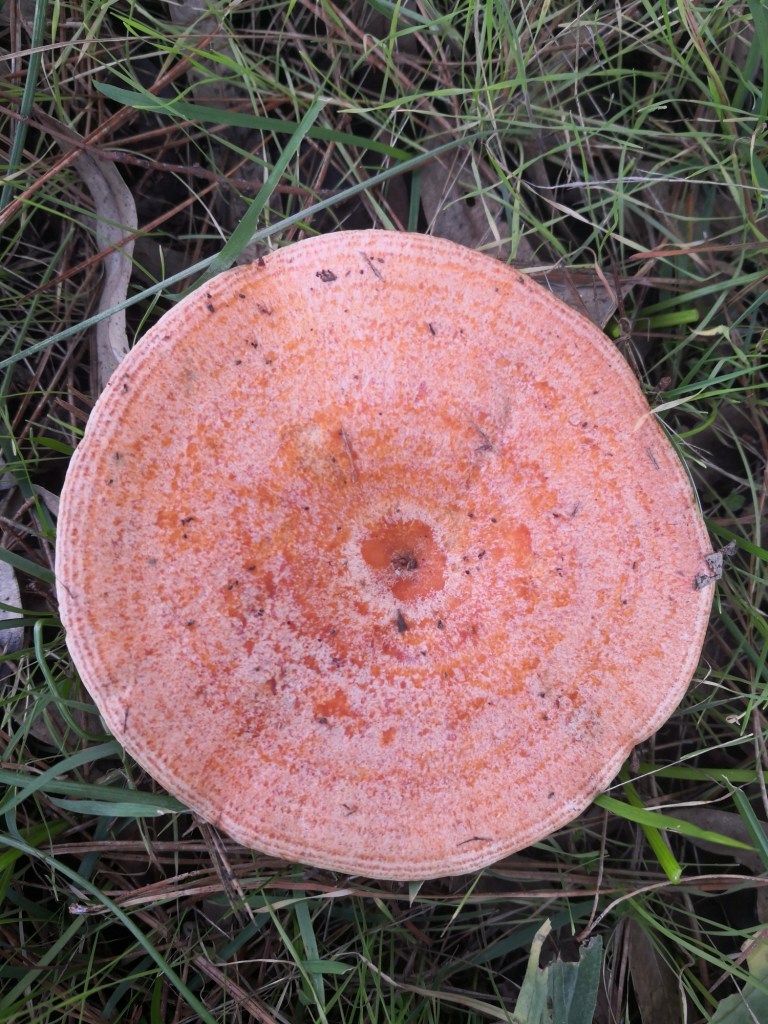
- Orange colour
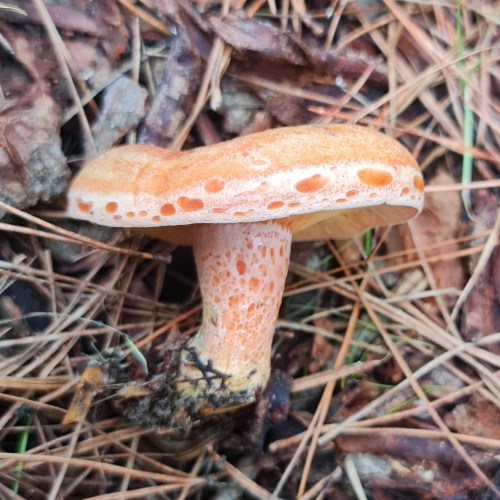
- Orange blotches on the stem (stippling)
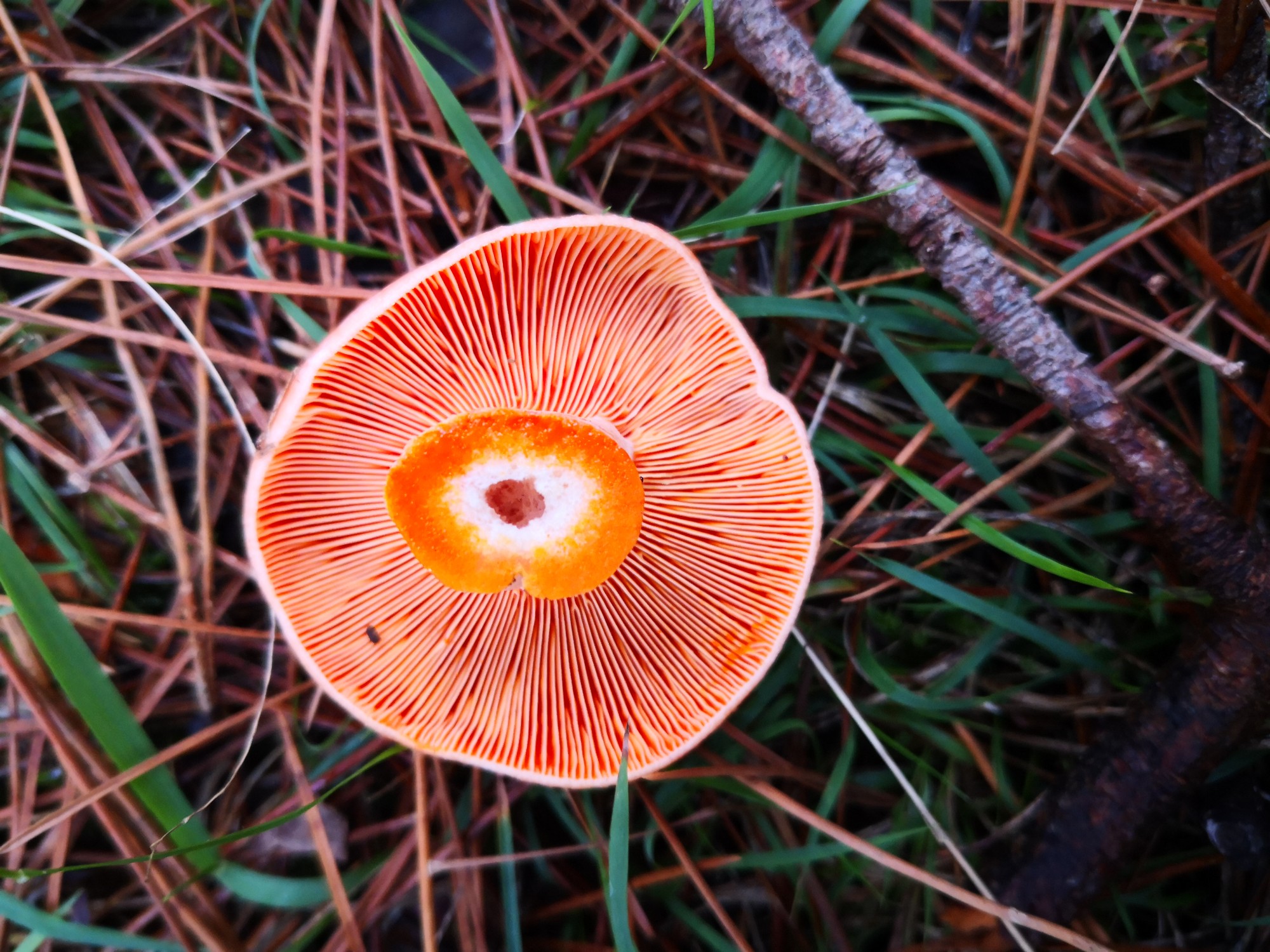
- Undivided gills that are easily damaged
- Hollow stem up to about 5 cm long and 1 to 3 cm wide
- Orange milk where cut, especially the stem
- Rings on the cap – they may not be distinct circular lines but you can see them
- Convex cap when young going to concave when mature
- Cap up to 15 cm diameter (though you wouldn’t pick it that big).
- They start to turn a blue/green as they get damaged age, especially the gills. They look scruffy and seem to be falling apart but are still quite edible.
If you find a mushroom under Pine trees that fits all of the above requirements, you’ve got yourself a Saffron Milk Cap!

Caution: Raw Saffron Milk Caps can have mild toxicity. Always cook them before eating as the cooking process destroys the toxin.
For reference, they’re listed on page 104 of ‘A field guide to Australian Fungi’ by Bruce Fuhrer.