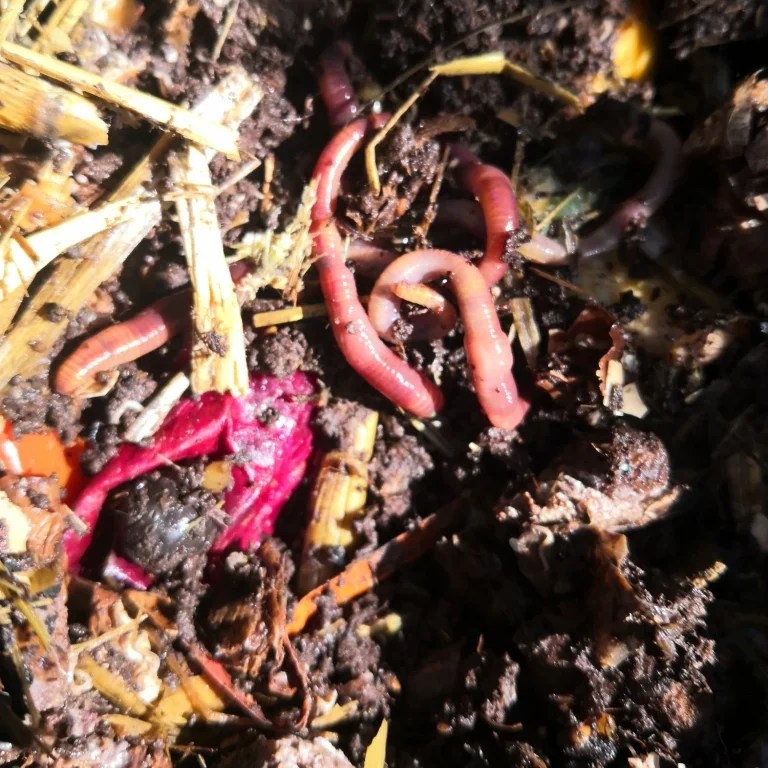
There are many, many products out there to help you give your garden a boost. However convenient, they are not always necessary because you can usually make your own from things readily at hand. This page links you to all of our DIY, at-home, made-from-scrap methods for composting and fertilizing your garden.
Getting a handle on composting and making your own fertilizers is one of the most important parts of moving toward and beyond sustainability. Composting teaches us about both the nature of the foods we eat and our gardening habits.
Composting is adding or returning nutrients and organic matter to our gardens. It is a key part of many cycles in the garden and key also to the life in the garden. There are many ways to do it, but the major division is between aerobic composting, which encourages air to mix with the composting materials, and anaerobic, which excludes it as much as possible. Under those two banners are the many styles that you’ll find online. The links on this page take you to the techniques that we favour.
Whichever style of composting you adopt, one thing is that you will quickly learn about how much food you waste and what gets wasted the most. Careful consideration of these details could lead you to a reduction of your weekly food bill as you learn what is being wasted. It’s also a huge part of understanding the waste stream, food security and some of the inequities in our society. Composting goes deep.
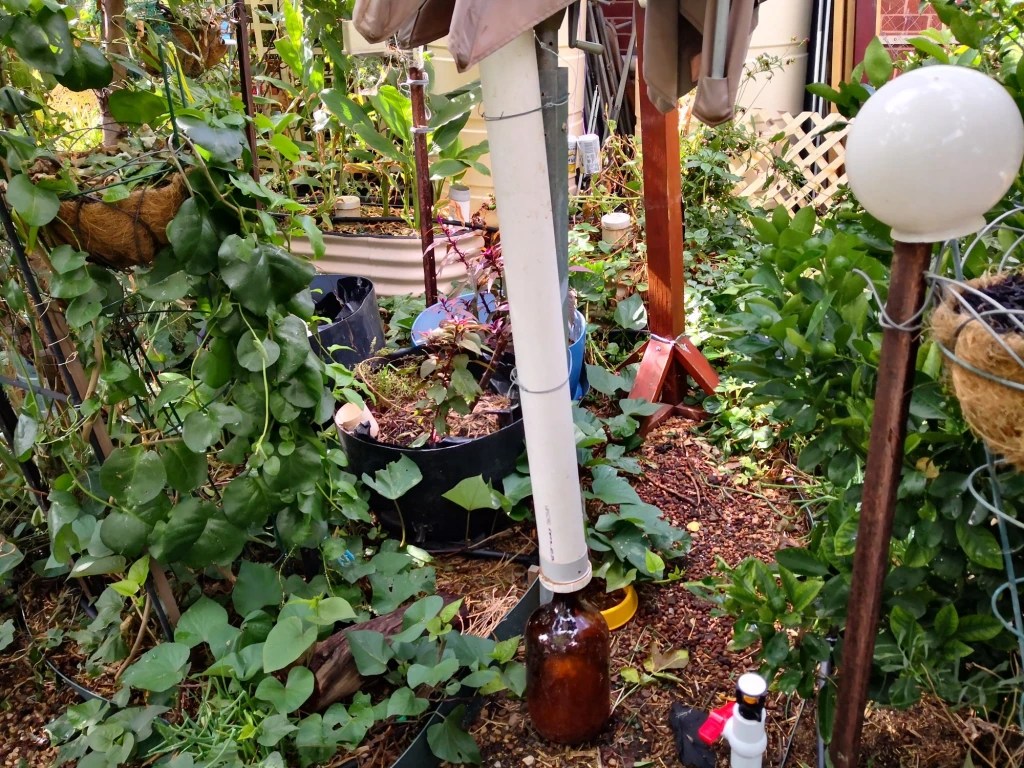
The links below lead to our pages about the composting and fertilizer-making techniques used to make the various brews and materials used in Ligaya Garden. You might notice that the traditional compost heap or compost bin isn’t listed. We do have one of those big plastic spinning bins, but that only comes out when we’re doing heavy pruning, especially the winter pruning. Then, it is only used as temporary storage for the prunings until I can run them through the mulcher, and then I use it to mix the mulched material, biochar and coffee grounds.








Mushroom tea (coming soon)