I’ve been asking around, of late, about what is missing on this site? Sure we have reams of information about herbs and DIY self reliance but something was missing…
It only took a few comments to enlighten me…we are missing recipes! Recipes for what we do with the food we grow and share with and from our community, and recipes for herbal remedies. There’s lots of stuff detailing the processes but not much about what to use.
So this post is the beginning of me remedying (Dad joke fully intended) that situation. I think I started something similar ages ago but dropped the idea for some reason but here’s a new start.

Mal’s magical salve
For a couple of years now, I’ve been making a pretty universal, basic salve that can be used for most minor skin injuries; things ranging from cuts and scrapes to red, inflamed rashes and burns. This year, I’ve decided to modify the recipe into two different recipes for two different purposes. There is still a lot of cross over and, in a pinch, any of them could be used. Its just that each is more targeted toward a different range of ailments.
Salves need oil to make, so checking out our Herb infused oils pages can definitely give you a head start.
The basic recipe:
- 30g Calendula flowerheads and petals – anti-inflammatory, antimicrobial, moves lymph, builds new capillary beds
- 30g Plantain leaves – astringent, contains allantoin which stimulates cell growth. Contains mucilage to soothe and draw the sides of wounds together.
- 30g English Daisy – heals most wounds and can be used instead of Arnica if the skin is broken.
- 30g Yarrow – helps when the blood is red, fresh and moving, moves old blood away from the injury to allow better healing
- 600 ml Olive Oil – soothing and full of amazing saturated and unsaturated fats the help skin heal
- 15 ml Jojoba oil (optional) – has a chemistry close to our skin, so promotes rapid healing.
- 150g Beeswax -adds solidity to the mix while bringing its own amazing healing properties.

Process:
- Place a table spoon in the freezer (you’ll see why later).
- Combine all of the herbs in a jar and cover the herbs with Olive Oil and optional Jojoba oil, so that there is about 2 cm of oil above the herbs. Give it all a good stir. Let this soak for an hour or two (or ten if you forget..).
- Check the oil level, some would have been absorbed by the herbs, so add a little more so that the oil once again covers the herbs by at least about 2 cm.
- Add all of this to a blender and give it a good blend. This stage can be left out and the mix allowed to macerate but it takes a LOT longer and blenders are pretty easy to get.
- Pour it all back into your jar and put its lid on. Leave it for 2 weeks , shaking the jar every day to keep thing mixed so that fresh oil can get to all of the herbs.
- Warm your mix slightly, that’ll make the next step progress faster.
- Strain then filter the mix through double layered cheesecloth or a fine mesh sieve.
- Let the filtered oil settle for a day or two to allow the fine sediment, that you can never seem to get rid of completely, to settle to the bottom of your container.
- Measure how much oil you have.
- Gently warm the oil gently using a double boiler, or if you have one of those programmable induction cook tops, set the temperature to 40 degrees C. Don’t let it get much above 50 see the page Herb Infused Oils to find out why.
- Measure your Beeswax. You can use an amount on grams equal to 1/4 of the amount of oil you have. I find a 1:4 ratio nice but if you want your salve to be more liquid, don’t add as much. Add more if you like it firmer, though more than 1:5 makes it a bit too stiff to work with unless you warm it.
- Cut your beeswax finely so that it doesn’t take forever to dissolve into the oil.
- Add your Beeswax to the warm oil and let it melt, stirring gently occasionally.
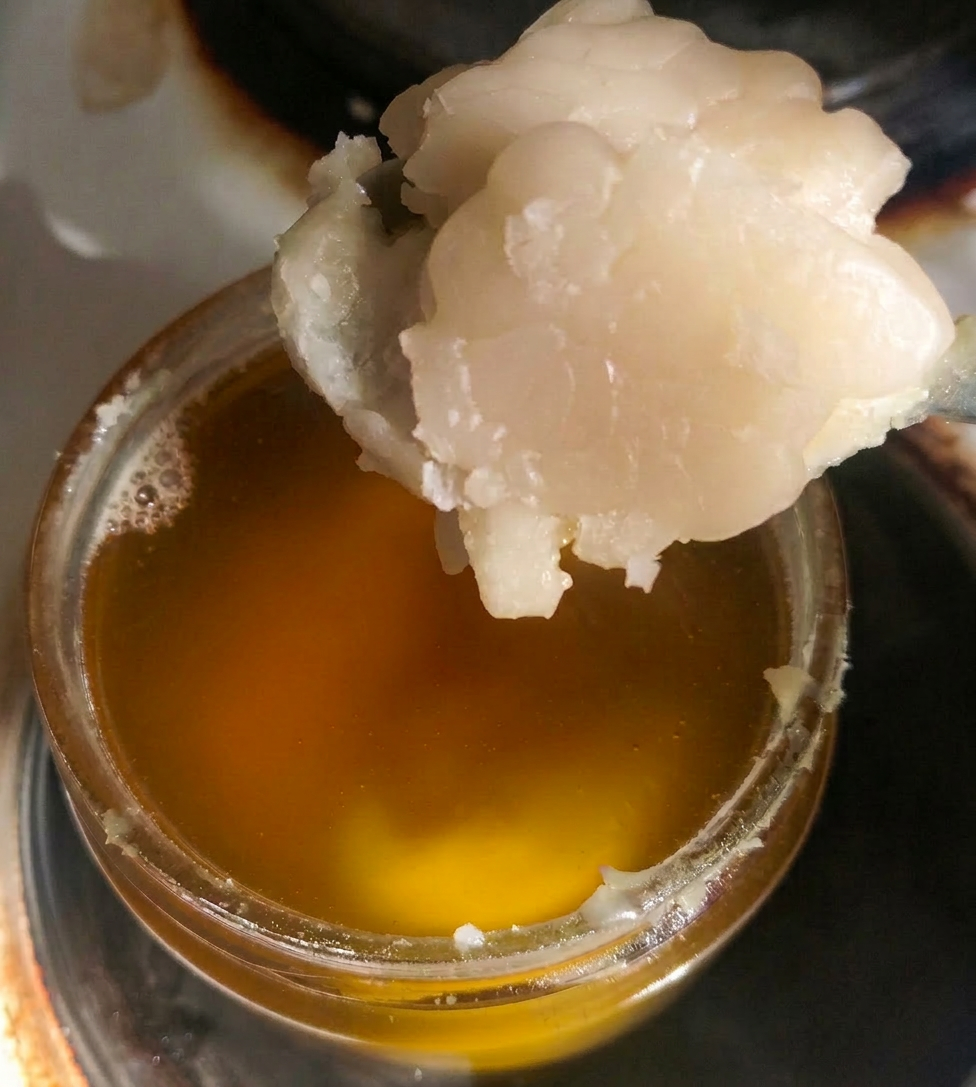
- When all of the Beeswax is dissolved, take your spoon from the freezer and dip it into your oil/wax mix. Give it a minute to set, then feel it on your fingers. If it is satisfactory, start pouring or spooning your liquid salve into your container/s.
- If it isn’t firm enough, dissolve a little more Beeswax into the oil.

Other versions –
The changes aren’t in the process, just the ingredients and the purpose.
For a salve that is more useful for bruises add more English Daisy and incorporate Shepherd’s Purse instead of Yarrow. By using English Daisy, we can use this on open wounds such as kid’s knee scrapes which often combine torn skin and bruising. If you wanted to use Arnica, you technically shouldn’t if the skin is broken.
If the salve is more for conditions such as stubborn rashes, Cold Sores, Herpes, Shingles, Psoriasis and Eczema, mix in St. John’s Wort instead of the English Daisy. Lemon Balm can be used if St. John’s Wort isn’t available but it won’t be as potent an anti-viral blend.
Using your blend
This is such a gentle salve with such a wide range of healing properties that it has become a staple item that I include in my every day man-bag (yes, I carry one) and could do worse than finding its way into everyone’s herbal first aid kit.
You can apply it to minor wounds whenever you feel like it, just dip a fingertip of cotton bud (organic and without a plastic stem, of course) into the salve and apply it directly once you have wiped the wound free of dirt and debris.
Alternative herbs
Other herbs with wide ranging healing properties can be added to the mix or substituted for herbs with similar properties if they aren’t available. Herbs that are good at healing a wide range of external injuries and inflammations are called ‘vulnerary’ herbs.
You could consider, amongst others:
Remember, though, we are extracting in oil, so make sure the herbs you choose can have their constituents extracted in oil, or you won’t get a good salve.
If you have infused oils already made –
If you already have an infused oil for any of the herbs in the recipe, you can use them instead of the dried herb. Simply remove that herb from the list of ingredients and replace some of the Olive oil with your herbal oil.
For example, if I have some Calendula oil ready made, I would remove Calendula flowers from the list. That’s 1/4 of the herbs gone, so I can replace 1/4 of the Olive oil with Calendula oil. In our case, that’s 30g of Calendula flowers removed, and 150 ml of Calendula oil substituted for Olive oil.
If you’re finding this information useful, share it with your community
Other herb pages on Ligaya Garden
We cover a lot of ground on many herb related topics here on our website. There are whole pages devoted to different topics as well as frequent posts. Some of the links are –
