Common names: Prickly Pear, Nopales
Taxonomic name: Opuntia species
Family: Opuntinoideae
Related plants: Cacti
Can be used for: food, dye, skin complaints, stomach upsets, constipation
Area of origin: Americas
Warnings: Very prickly. Fine hair-like prickles called ‘glochids’ can get under your skin and stay there for days.

Prickly Pear can be one of a couple species of the Genus ‘Opuntia‘, with the most common local varieties being Opuntia stricta and O. vulgaris.
Prickly Pears are cacti and share things with others of their kind like spines, large, soft pads, beautiful flowers and edible fruit. The fruit can be yellow or purple/red. The latter are the most tasty locally. In the South of America, both the plant and the delicious food made from it are called ‘nopales’.

The fruit are what foragers look for. The beautiful (and edible) yellow flowers turn into fruit in Spring and early Summer. Bulbous fruit appear on he edges of the pads and ripen until they turn a red/purple. They are a bugger to pick, as they are covered in fine bristles called ‘glochids’, not the good, solid bristles that you can easily see, but those annoying, fine things that get stuck in your skin and are hard to see to remove from your skin. They’ll work their way out over a couple of days but are really irritating in the mean time. I hit them with the flame from a match to burn as much of the offenders out. I’m made of sterner stuff!
There are several ways to remove the spines before using the fruit. I hit them with a blow torch before picking. That burns off the bristles. Some folks rub them in water with a cloth, others wait until cooking time and roast them over an open flame. that burns the bristles off too. Luckily, there are spineless varieties available to the home gardener. If I have a lot of fruit, I like to steam juice them. They yield a lot of tasty juice and this technique also means I don’t need to worry about the spines or the seeds. Juice and fresh roasted fruit are heavenly!
The fruit is full of hard seeds, so don’t bite down too hard until you’ve had a look inside and separated some of the pulp.
To add even more to your meal, the flowers are quite edible too. They can make a colourful addition to your plate and when chewed, become slimy in your mouth, they remind me of Okra in this and in their taste. I’ve never cooked them, though I suppose you could do that.
The fruit contains approximately 85% water, 15% sugar and has a powerful antioxidant in it. Prickly Pear flesh is a good source of minerals and several amino acids (alanine, arginine, and asparagine), Vitamins C E, K, and beta-carotenes. flavonoids and other antioxidants.
The green pads are edible too. Remove the spines and roast slowly. Cut off the skin and enjoy the inner bits. These bits are medicinal too. The mucilage inside the pads can be used similarly to the more effective Aloe vera for sunburn, rashes and stomach complaints. They have traditionally been used to treat symptoms of diabetes too.
Remember also, Prickly Pear is a noxious weed here in Australia and can take over areas easily. Every bit you eat helps to stop its spread!

Cochineal

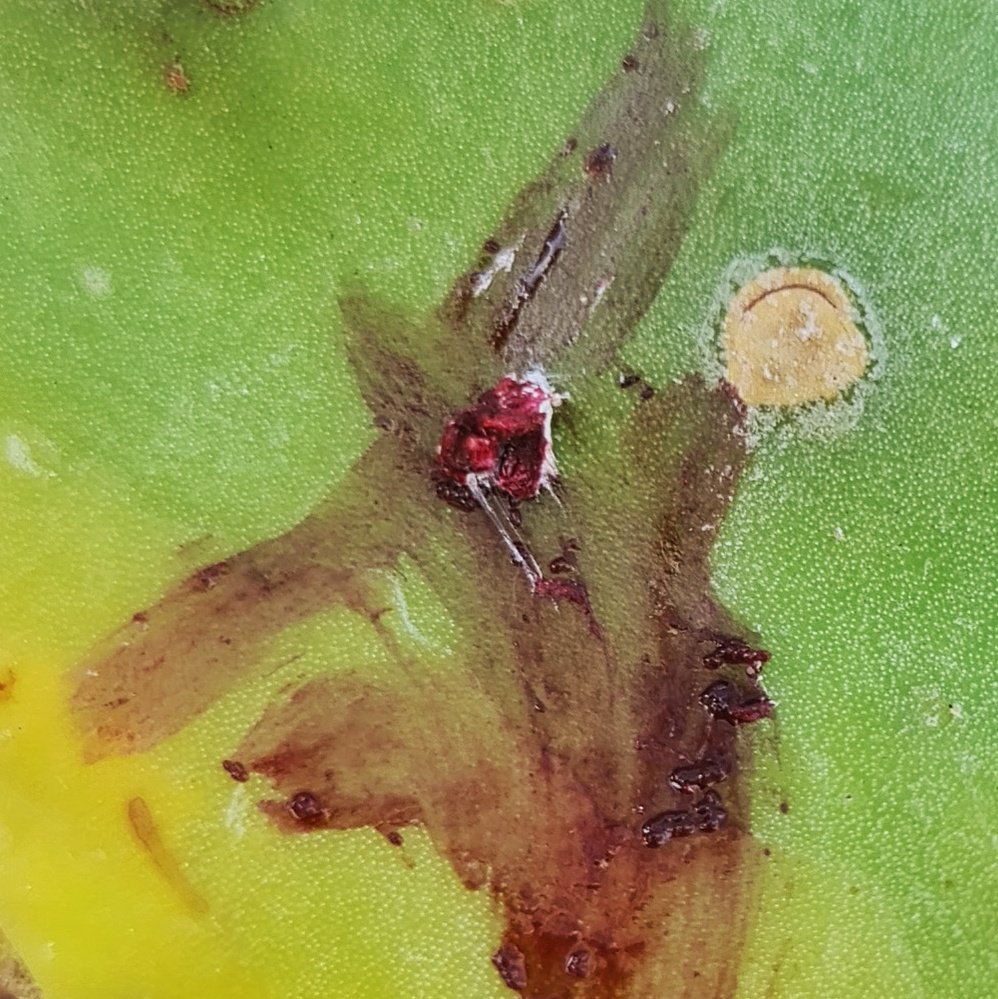
Prickly Pears have been purposely infected with a scale type bug that builds and shelters under ugly, white, lumps on the pads. This was done to keep down both the size and the numbers of the cacti in the wild but can affect garden plants too. The big win with this is that, should you have the patience, you can collect a heap of the bugs, squish them and use the red dye that that crushing them forms. It is otherwise known as Cochineal!