Common names: Mallow, Buttonweed, Cheeseweed, Cheeseplant, Small Flowered Mallow,
Taxonomic name: Malva species. Our local one is M. parviflora. You can also find Malva sylvestris but less frequently.
Family: Malvaceae
Related herbs: Marshmallow, Holly Hocks, Other Mallows
Area of origin: Eurasia, Africa
Parts used: Leaves, seeds
Can be used medicinally for: diarrhea, constipation, gastrosis, gastritis, urinary tract infections, kidney infections and kidney stones, inflammation (literally any ‘-itis’), dry irritating coughs, hay fever,swellings, sores, boils, dandruff, bad hair, itching, burns, sunburn, chapped lips, chapped hands, blood sugar issues, menstrual pain
Organ/System affinities: Lungs, Bladder, Stomach, Large Intestine, urinary tract, integumentary system, eyes, digestive system, respiratory tract
Healing Actions: nutritive, anti-inflammatory, antioxidant, vulnerary, demulcent, emollient, pectoral, hypoglycemic, hepatoprotective
Taste: Bland, slightly salty
Tissue states: Heat, dry, excitation, atrophy,
Energetics: Cooling, soothing
Healing constituents: Vitamins A,B,C,E flavonoids, fatty acids (inc.palmitic, linoleic, and linolenic acids, omega 3 and omega 6), minerals – calcium, iron, magnesium, zinc, potassium and selenium. sterols, phenolic compounds, terpenes, glycosides, alkaloids, and saponins, immune modulating polysaccharides, mucilages (trehalose, galactose, sucrose, glucose, fructose, mannose, rhamnose, galacturonic, and glucuronic acid), tannins.
Warnings: Too much can give you the trots. Mallows have been listed as possibly affecting the uterus and fetal development. Mallow can accumulate soil toxins such as cadmium and chromium. It can accumulate nitrates in its leaves too, so watch out if the soil has possibly been contaminated with excess.
Description
Here in S.A. our Mallow isn’t the Marshmallow of renown. Ours is generally Small-flowered Marshmallow (Malva parviflora), that’s the small one around on the roadsides going brown at the moment. It can also be Malva nicaeensis, which is a bit bigger.

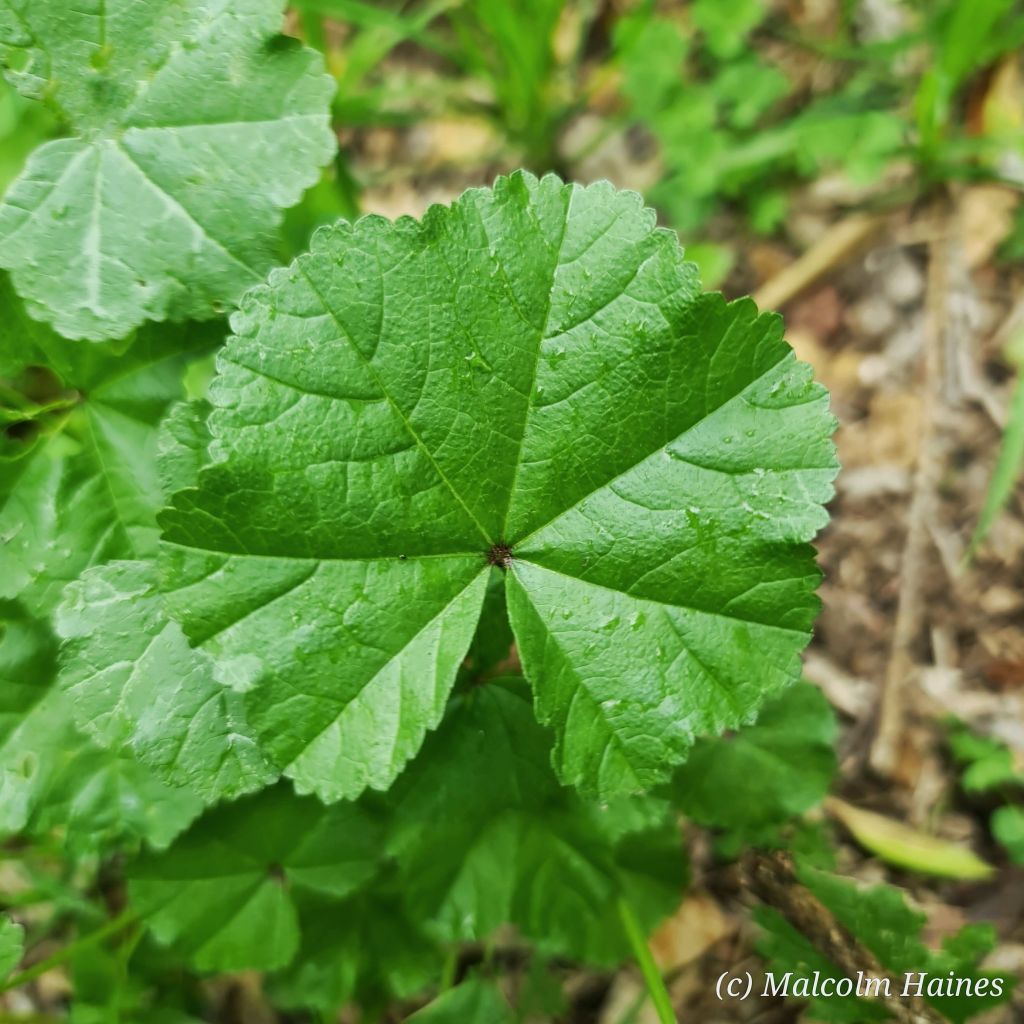


Small Flowered Mallow is a semi-erect to erect short lived perennial It has rounded, slightly lobed leaves that grow on stalks and have 5-7 lobes . Flowers occur in clusters from late Autumn through Spring and early Summer. They are symmetrical with 5 petals, white/pink and in clusters of 2-4 nestled in the axils of the plant (that is the base of the leaf stalks.) and have little notches in the ends of petals.
Seeds are small discs that break into wedge shaped parts like a wheel of cheese wedges – that’s why it’s called ‘cheese plant’ or ‘cheese wheel plant’ in some parts of the world.
In many parts of Australia, Mallows are host to a variety of rust that discolours the leaves with yellowish dots.

Medicinal uses
Mallow is highly nutritious and grows most of the year round, so it’s easy to get when you get the urge. Mallows also contain Vitamins A,B,C,E flavonoids; essential fatty acids, and important minerals like calcium, iron, magnesium, zinc, potassium and selenium.
Mallow contains a mucilage – that’s a sugar which, when exposed to water, turns to a slimy substance that coats and soothes dry and irritated tissues. In herbalism, that property is called ‘demulcent’. Mallow is soothing and kind of sweet. In fact, ‘Malva’ comes from the Greek ‘malaxos‘, which means ‘to soften’. It’s great when there is any dryness, whether internal or external. In my opinion, it’s a bit of a tonic too.
Taste-wise, Mallows are listed as being slightly salty. Salty herbs use their high mineral content to bring moisture to inflamed or dry areas, whether internal or external. They can in some cases, help dissolve and move kidney stones, while soothing the irritation of their passage out of the body.
The mucilage in Mallows contains immune stimulating polysaccharides which stimulate your immune system to work a little harder. Combine this with their cooling, soothing nature and you can see that Mallows are quite useful for mucus membrane inflammations from a bacterial cause. In fact, it all makes it all the way through to our urinary tract where Mallow can be used alongside other herbs to soothe urinary infections.
That lovely mucilage also has another property, in common with many wound healing (vulnery) plants. As it dries, it shrinks, pulling and binding the edges of wounds such as cuts, together. The tannins also help coagulate blood, making Mallow a reasonable band aid in a pinch but not as good as Plantain.
Mallows also contain fatty acids, namely palmitic, linoleic, and linolenic acids , which are all necessary for the production of myriads of bodily chemicals, cell membranes and hormones. With all of that soothing stuff going on, is it any wonder that Mallows have been used for burns?
Small Flowered Mallow and relatives have also been researched for their hypoglycemic effects. Their flowers have been used for relieving menstrual pain.
We can use any part of the Mallow, but leaves and fruit are the most easily accessible. We don’t need to worry about the root with ours, as the Americans and Europeans do, but we do miss out on its concentrated mucilage, although you can dig up our local variety, if you want – it won’t hurt.

To me, the seeds are the most effective part, chew on one for a bit and you will feel a smooth slime in your mouth. The longer you keep it in your mouth, the slimier it seems to get. Fresh and green seeds are best, but the dry seeds in summer are reasonably effective.

Mallow soothes and moistens dry and irritated tissues. The demulcent property isn’t restricted to direct physical contact, it can also affect internal tissues suffering from dryness and atrophy. That makes it great for rashes, skin inflammations, even sunburn. It can be taken internally to soothe sore eyes and even hay fever and urinary tract infections.
An interesting effect is that the demulcent effect of Mallow can even reduce your mucus production. This is great in cases of hayfever! I reckon that by adding mucus, it suggests to the body that it doesn’t have to produce as much and helps you to produce less. I know of several people around Gawler who have benefitted from it this.

Preparing and using Mallow
Mallows are pretty nutritious in their own right. European cultures have been using the young leaves in meals for millennia.
Chewing the leaves or seed pods lets you build up a soothing goo in your mouth. You can swallow this or make a spit poultice. Crush the leaves well and apply them directly to irritated or damaged skin as a poultice. Sometimes, the leaves are large enough to cover the crushed material as a rudimentary bandage.
You can get the maximum benefits from Mallow by making a cold infusion. That extracts its properties more effectively than hot infusions. A cold infusion is made by using room temperature water on the leaves and seeds and leaving them covered for one hour. Then strain and drink. You can leave it longer. I like to make overnight infusions of most of my daily herbs.
A decoction of the roots and leaves has been recorded as having been used for dandruff and to soften and improve the lustre of honor.
Mallow seeds contain good amounts of pectin and other polysaccharides, so you can make marshmallows from them. Extracting the polysaccharides in this way allows you to cool and separate the soothing mucilage for short term storage in your fridge. separate. This can be then added to inflamed areas as a soothing gel.
Don’t try ‘and ‘to make a tincture from Mallows. Some constituents are a little alcohol soluble but the good stuff we’re after will only settle out as a goo if alcohol is added.
There are a few Mallows around this way, here’s how to tell the two main ones apart:
Small-flowered Mallow (Malva parviflora)
Malva parviflora grows up to waist high, though it can develop as an almost prostrate form with regular, overzealous Council mowing. It has small, pale pink/white flowers in the leaf junctions. This is the most common Mallow in this area.

Mallow (Malva nicaeensis)
Malva nicaeensis grows up to shoulder high around this way (it’s often shorter in other areas) and has pale purple flowers with darker purple veins. The petals don’t overlap as in Malva arborea. The leaves are soft and hairy and can grow to be huge.

Malva sylvestris is also quite common in South Australia. I don’t currently have any pics of that one. It is similar to M. nicaeensis but has brighter, showier flowers. M. sylvestris tends to be more erect in form. M. nicaeensis flowers all year round while M. sylvestris only starts to flower around here from late September.
Other herb pages on Ligaya Garden
We cover a lot of ground on many herb related topics here on our website. There are whole pages devoted to different topics as well as frequent posts. Some of the links are –