Common names: Fumitory, Fumaria, Fumewort, Parpata (Ayurveda),
Shaahtara (Unani), Celine’s foot, Earth gall, Jaundice grass, Earth smoke, Widow’s grass
Taxonomic name: Fumaria species – F. officinalis, F. capreolata
Family: Papaveraceae
Related herbs: Poppies
Area of origin: Eurasia, Africa
Parts used: above ground parts
Can be used medicinally for: eruptive rashes, dermatitis, eczema, acne, itchiness, rheumatism, gallbladder congestion, gallstones, high blood pressure, low blood pressure, arteriosclerosis, conjunctivitis some cancers, fluid retention, bladder stones, inflammation, rheumatism, scabies,
Organ/System affinities: Liver, digestive, urinary, skin, liver, kidney
Healing Actions: aperient, laxative, diuretic, alterative, febrifuge, hepatic, cholagogue, choleretic, amphicholeretic, anaesthetic, anticholinergic, antihistaminic, antispasmodic, depurative, diaphoretic, litholytic, hypertensive, hypotensive, sedative, antiseptic, bradycardic, slow digestion, immunomodulation.
Taste: bitter
Tissue states: congestion, heat
Energetics: cooling
Healing constituents: isoquinoleic alkaloids (fumarine, stylopine and fumaricin) protopine and allocryptopine, fumaric acid esters, glycans, phenolic acids, flavonoids (isoquercetins), mucilage, magnesium salts
Warnings: Folks who have large gallstones may need to be cautious as Fumitory may cause them to move causing pain.
Very large doses of protopine can cause excitation and convulsions.
Because of its immunomodulatory effect, Fumitory should be used with caution if you are undergoing treatments that use immunomodulating or suppressing drugs as there is a potential for interaction.
Description
One of the herbs showing its vigour after Winter is Fumitory. There are two distinct species around here – Fumaria officinalis and F. capreolata.
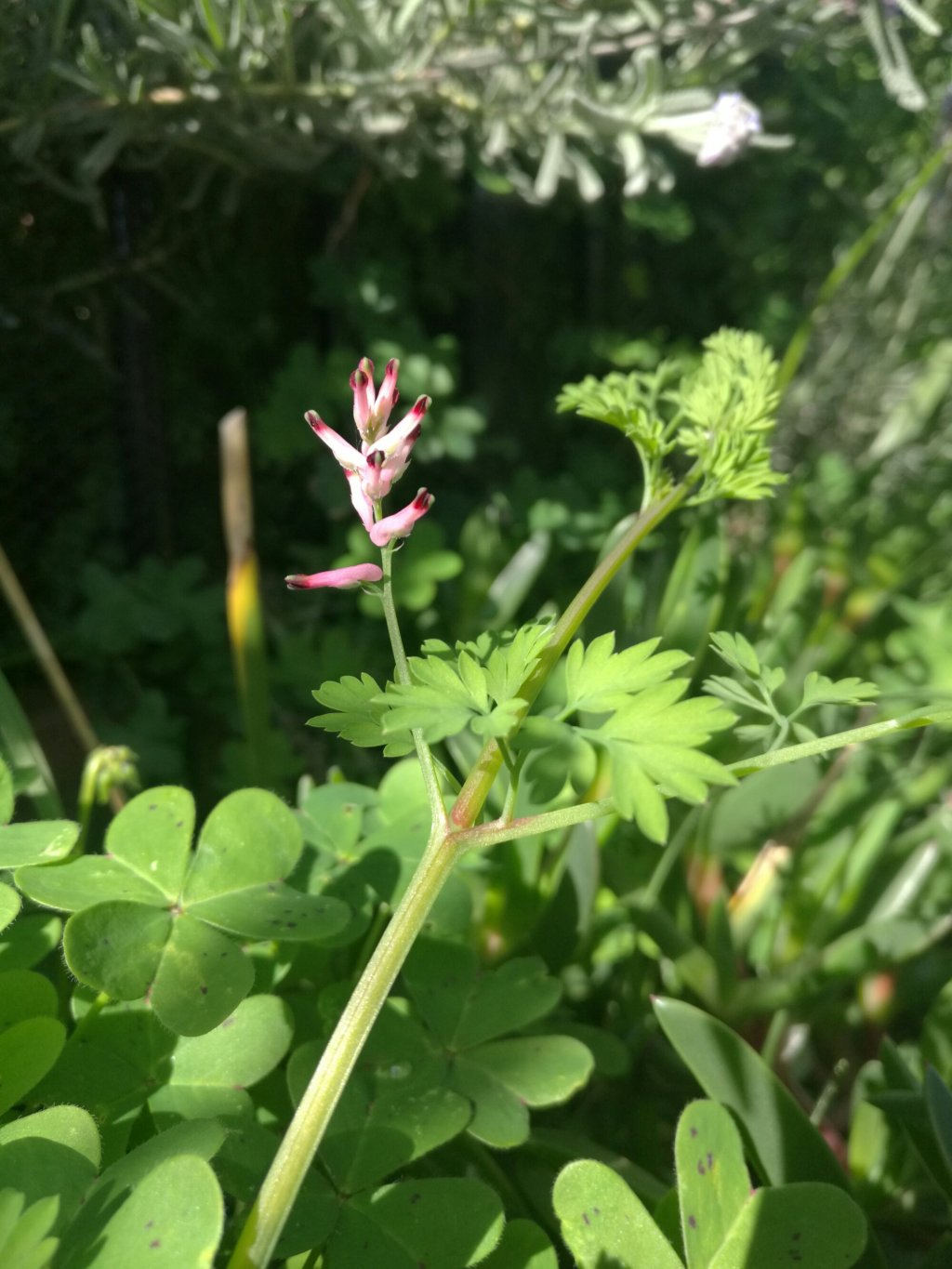
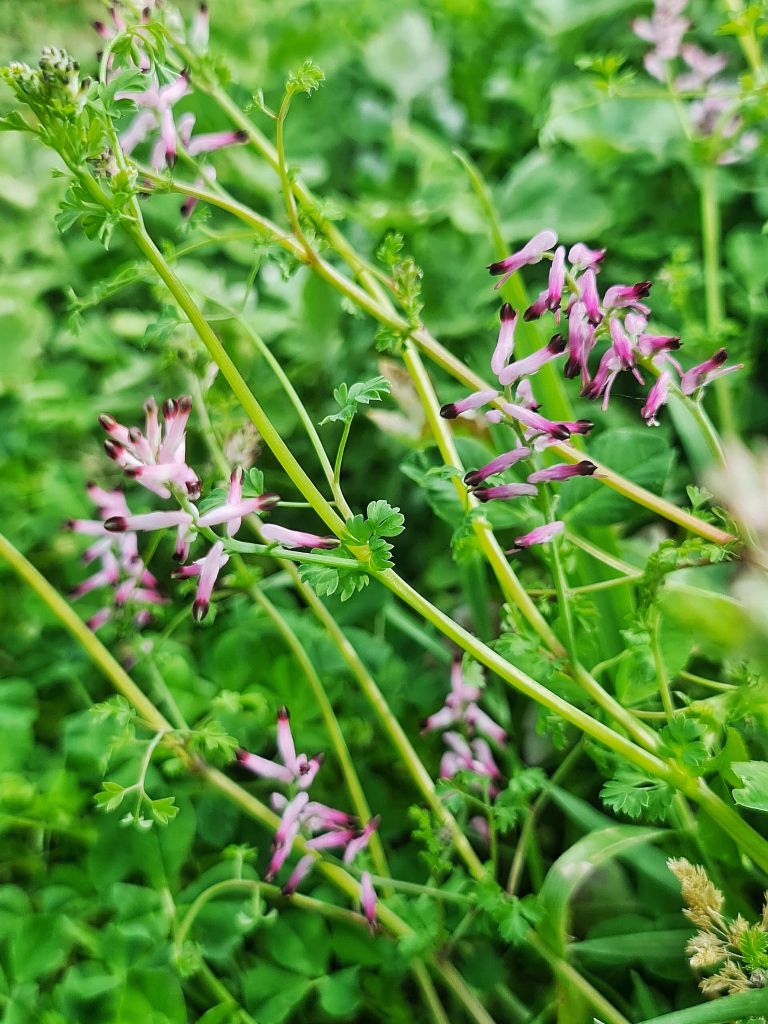
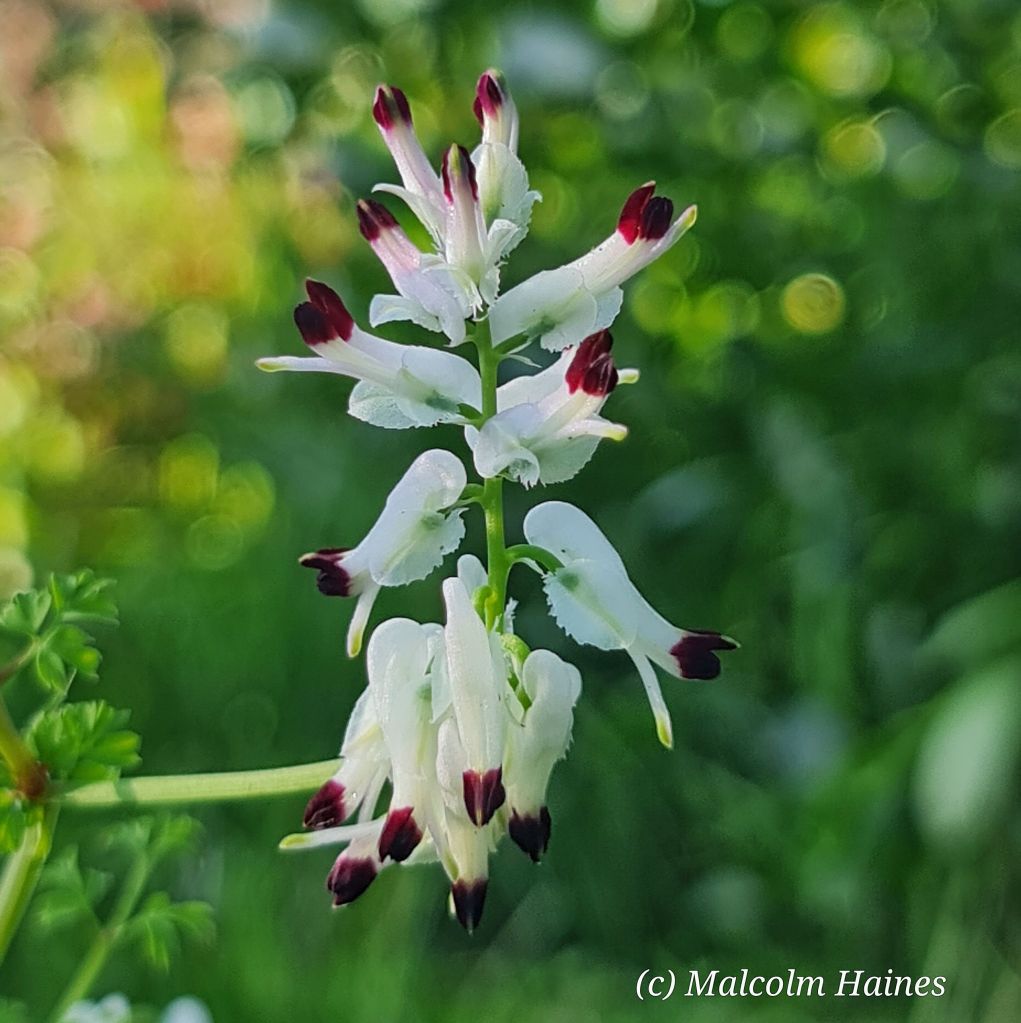
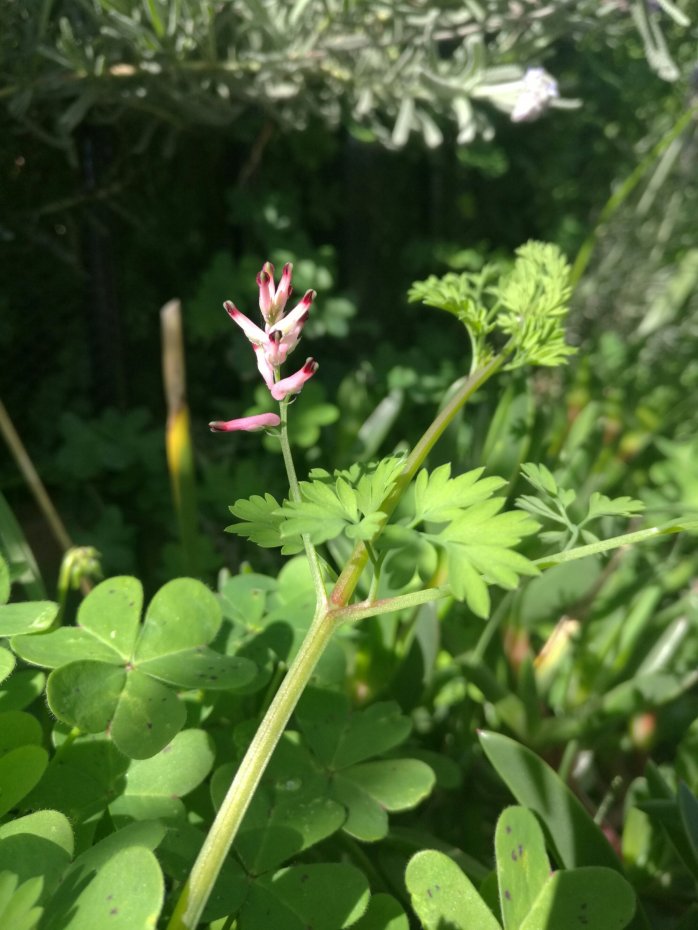
You can easily identify Fumitory by its soft green leaves and trailing stems and its distinctive flowers. You can tell the two species apart by their flower colour – F. officinalis is pink, F. capreolata is white. For our purposes, we can treat them as the same.
Fumitory is a delicate, almost wispy herb that loves moist, sunny locations. Tubular white or pink flowers, each with two lips and a spur grow in clusters on the end of stalks above soft, lobed leaves.

Medicinal uses
Externally, the fresh juice of the plant or just some crushed up leaves applied externally is an old standby for skin diseases such as eczema and psoriasis. Folks who have used it have told me that it burns a little for a few seconds then relief from itching is rapid. Fumitory has antihistaminic and anti-inflammatory properties that help with those issues that result in redness, rashes and irritation. It can also help modulate the immune response that causes and results in histamine release. I wish I knew about it when I was a kid – I suffered terrible eczema until my late teens.
A tea made from the fresh leaves is used for complaints of the liver and gallbladder. When you taste Fumitory, you will know that it is very bitter. Bitter plants have a long history of being beneficial to our bodies because they stimulate the production and release of bile, which is vital for the digestion of fats and oils. With our modern diets being full of fat, we definitely need a little help in this department. The same benefits can help with stomach issues such as slow digestion and the magnesium salts help with spasms in the digestive tract. The treatment of skin problems is through Fumitory’s actions on the liver and kidneys, taking the pressure of excretion off of the skin. The diuretic and other kidney related effects help with both high and low pressure.
Funitory has been found to help regulate dyskinesia (irregular opening and closing) of the bile duct, which is the main action for relieving gallstones and pain from obstructions in that area.
Fumitory’s actions on the liver and kidneys also contributes to its litholytic (stone breaking and moving) properties for gall and kidney stones, though caution should be used here, especially if the stones are obstructing the passages – then professional advice should be sought. However, if you have a propensity to stones, Fumitory can help prevent them from forming. The anti-inflammatory effect of Funitory also contributes to pain relief in the liver and kidneys because stones can cause a lot of painful irritation to surrounding tissue.
In some styles of traditional medicine, eczema and psoriasis are seen to be related to conditions of these two organs. More specifically, they are caused by an excess of heat in the liver and gallbladder. In this school of thought, energy rises in Spring, affecting the organs of spring, the liver and gallbladder. The ancients were really on to something when they related Fumitory, which pops up at the end of Winter with ailments caused by an excess of energy building up or blocked in these two organs.
If you’re finding this information useful, share it with your community
Preparing and using Fumitory
Crushing the fresh plant and applying it as a poultice is the best way to use Fumitory for external purposes – the soft, green leaves lead easily to such a use. Juicing Fumitory to make succus and wash the area of make a poultice with the juice. for itchy, inflamed patches of psoriasis, eczema, and shingles is my preferred method of application.
A Fumitory infusion can be made and used as a wash or fomentation. It can be drunk too but it is foul! Better to tincture it so that only a few drops are needed and that bitter taste is reduced.
Fumitory is one of the few herbs that I suggest people think about taking in capsules because of its bitterness, however, as you would have read in other parts of this website, bitterness is a key taste that stimulates a LOT of physiological processes in our bodies, especially in the digestive tract.
I haven’t tried a Fumitory salve or ointment yet…maybe something for this year.
Other herb pages on Ligaya Garden
We cover a lot of ground on many herb related topics here on our website. There are whole pages devoted to different topics as well as frequent posts. Some of the links are –