
Common names: Blackberry Nightshade, Black Nightshade, Common nightshade, Glossy Nightshade, Manakw, Vwevwe, Fragrant Tomato
Taxonomic name: Solanum nigrum
Family: Solanaceae
Related herbs: Kangaroo Apple, Tomatoes, Pepino, Boxthorn, Solanum Americanum
Area of origin: Eurasia
Parts used: Fruit (when they’re black only), leaves, roots
Can be used medicinally for: food, acute nephritis, edema, dysuria, urethritis, urethrosis, vaginosis, leucorrhea, sore throat, mouth ulcers, canker sores, toothache, dermatitis, ringworm, shingles, eczema, carbuncles, and furuncles, pain relief, sedative effects. When combined with some other drugs – lung cancer, cervical cancer, breast cancer, esophageal cancer, stomach cancer, liver cancer, and bladder cancer. Constipation, dyspepsia, , hiccups, lumbago, infertility, priapism. Bacterial dysentery, prostate conditions, chronic bronchitis, whooping cough.
Organ/System affinities: Lung, Kidney, urinary system, skin, nervous system
Healing Actions: alternative, analgesic, anaesthetic, antipyretic, antispasmodic, antiulcer, aperitif, aphrodisiac, cholagogue, depurative, diaphoretic, diuretic, emetic, emmenagogue, emollient, expectorant, hypotensive, laxative, narcotic, sedative, tonic, tranquilizer, sudorific, detumescent, hepatoprotective
Taste: leaves – bitter. Ripe berries – salty, sweet
Tissue states: heat, excitation
Energetics: cold, draining, clearing heat
Healing constituents: phenols, and polysaccharide, steroidal saponins (inc. uttroside B, diosgenin) , steroidal alkaloids, coumarin, lignin, organic acids, volatile oils, cholesterol, allantoin, GABA, flavonoids (inc. quercetin, isoquercetin, kaempferol), benzoic acids, solanigrosides, solanine
Warnings: Overdose can cause headache, enterosis, gastrosis, vomiting, nausea and diarrhoea. Don’t eat the green berries or leaves without boiling and throwing out the water.
Description
Blackberry Nightshade (Solanum nigrum) is a common plant that suffers from a common misconception.
Many people believe that, because the common name contains ‘nightshade’, it is as poisonous as the unrelated Deadly Nightshade (Atropa belladonna), which it is only in the same Family with. Deadly Nightshade doesn’t occur locally, unless a plant has escaped someone’s garden. Australia also sees American Black Nightshade (Solanum Americanum) which looks very similar.
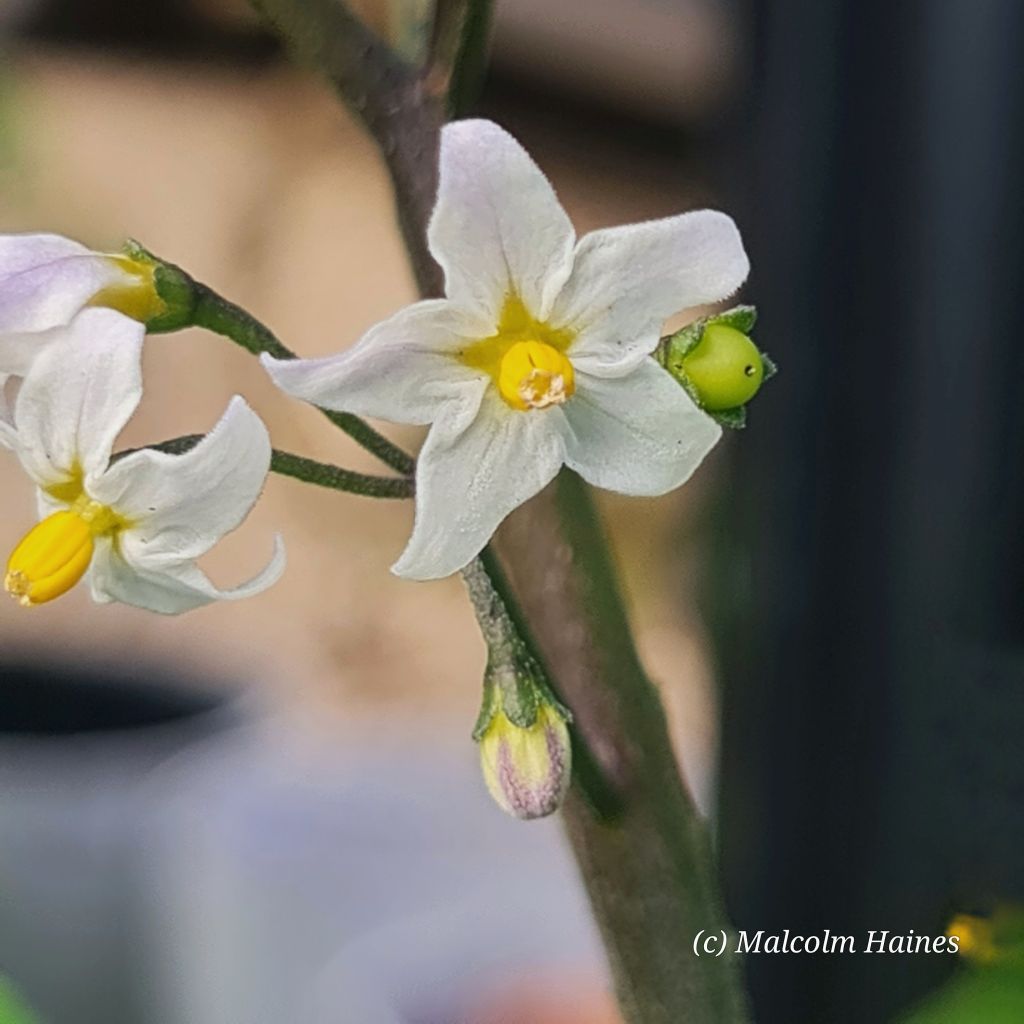
If you’re concerned that you have Deadly Nightshade, the easiest way to tell the difference is that Deadly Nightshade has single berries while Blackberry Nightshade berries are in clusters. The flowers are different too, Deadly Nightshade has single flowers that are a pink or purple colour, Blackberry Nightshade flowers are white and are in clusters. Blackberry Nightshade is one of the Solanum family, and so is related to more commonly eaten vegetables such as Tomatoes and Potatoes.

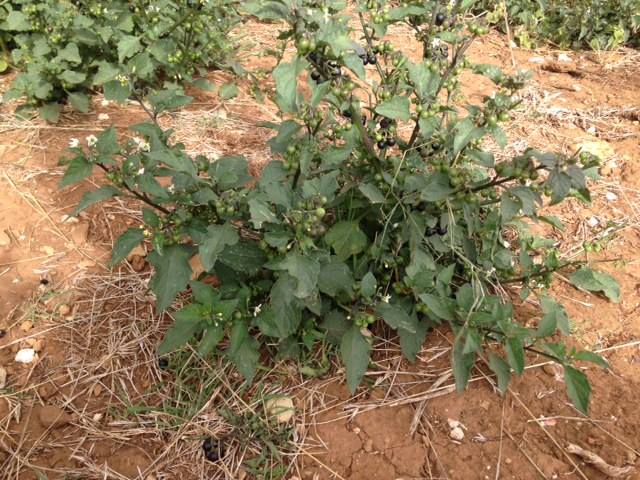
Annual erect plant to 1 m tall. It has a taproot system with a well-developed main root and that is often woody. The stem has no inconspicuous edges, is green or purple in color, and nearly hairless.
The leaves are elliptical, 2.5–10 cm long, and 1.5–5.5 cm wide, with a shortly pointed apex and a wedge shaped base and irregular wavy toothed edges. Smooth or sparse, soft,hairs on both sides with five to six veins on each side, and the petiole is about 1–2 cm long.
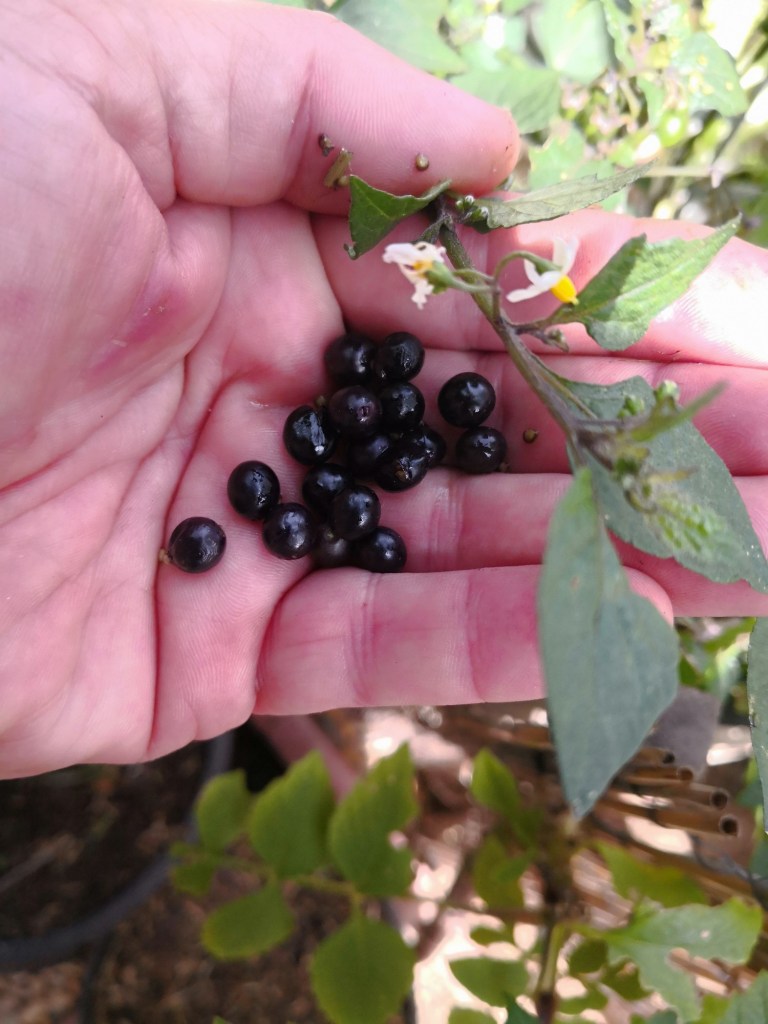
The flowers are in an inflorescence composed of 3- 10 flowers. The 5 petals are fused at the base, white and there and anthers are yellow. The berry is spherical, about 8 mm in diameter, and black when ripe (think of a small tomato). Squeezing the berries yields a number of seeds.
Medicinal uses
Like many Solanums, you must be careful which part you eat and when. In the case of Blackberry Nightshade, we eat the ripe berries. When ripe, they are a purple – black colour and very soft. They fall easily from the plant when ready. The small, white flowers are distinctive of this plant. Most of the plant contains solanine, a chemical common to Solanaceae which can be quite toxic, especially to those with a specific allergy to it. This chemical is why you can only eat certain parts of some Solanums – you can eat the tuber of the Potato but not its leaves or you can eat the fruit of the Tomato but not the leaves. The solanine is present in the edible parts but in very low concentrations.
Whatever you do, don’t eat the green berries. They can make you pretty ill. In small amounts – fever, sweating, vomiting.
188 chemical constituents have been identified from Blackberry Nightshade! Among them, steroidal saponins, polysaccharides, alkaloids and phenols, giving this common plant a wide range of therapeutic potentials, including antitumor, anti-inflammatory, antioxidant, hypotensive, antibacterial, and neuroprotective possibilities.
The whole plant of S. nigrum has good effects for dispersing blood and clearing away heat, making it an excellent fever remedy and great for inflammations and infections too.
Water extract and the boiled leaves themselves have been used to treat mouth ulcers and respiratory issues as well as liver problems, including jaundice. It makes a decent laxative too.
The juice of the leaves has been used on ulcers and has great success in treating mouth ulcers. It can be made into an ointment for skin complaints and tumors, shingles and herpes simplex. Small doses of the freshly squeezed juice of the leaves can be drunk to ease pain and kick off a sweat, though I’m not sure of safe doses. Blackberry Nightshade leaf juice has been used to induce sleep and as a pain reliever, but has fallen out of favour in Western herbalism due to the chemistry of the plant. It hasn’t worked for me but there are many, many mentions of it in the various literature that I have researched.
Juice from the roots has been used in India to treat asthma and whooping cough, suggesting a strong antispasmodic effect.
Though out of the scope of our kitchen herbalism, Solanum nigrum has shown to have constituents that have a strong cytotoxic effect that has been trialled on many forms of cancer. Combined with other drugs, it has been used in the treatment of lung cancer, cervical cancer, breast cancer, esophageal cancer, stomach cancer, liver cancer, and bladder cancer.
If you’re finding this information useful, share it with your community
Preparing and using Blackberry Nightshade
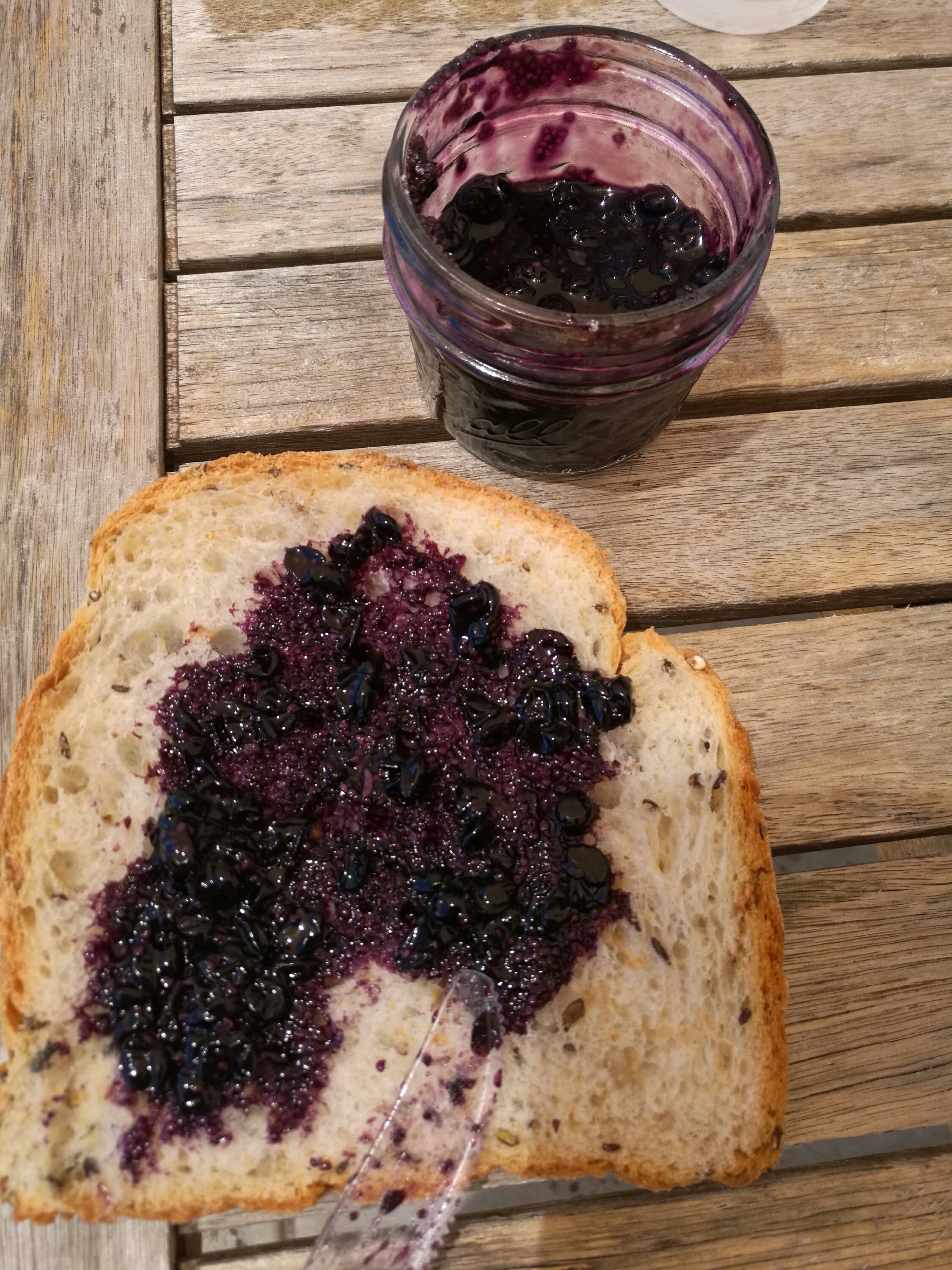
The leaves are eaten in some parts of the world, cooked like Spinach but I don’t find them that tasty. Boiling the leaves and throwing out the water removes some of the solanine group of chemicals (which can cause neurological issues) but I think that the leaves are still unpleasantly bitter. Eat the berries fresh when they are black. You can make a nice jam out of them too.
Most of the medicinal uses that I can find are based on fresh leaf juice (succi) or leaf decoctions. In India, the root has been juiced too. In traditional Chinese Medicine, the main way the herb has been used is as a powder which is then used to make capsules or granules.
Other herb pages on Ligaya Garden
We cover a lot of ground on many herb related topics here on our website. There are whole pages devoted to different topics as well as frequent posts. Some of the links are –

9 responses to “Blackberry Nightshade (Solanum nigrum)”
Sola
LikeLike
Have you ever tried grafting onto it? I’ve been thinking of trying 🌶 on it for a while now. I have one that is about 3 years old in my chicken area. Chooks love the berries!
LikeLike
Haven’t tried that. It might be a good idea though as they’re around all year now. Must try tomatoes next season.
LikeLike
What. Color is the stem? I have a plant I find doesn’t look like the huckleberries I see online
LikeLike
The stems are green, sometimes with a purple tinge
LikeLike
Hello I don’t know how it came to be in my flower pot because I had 1 plant in the pot and it withered. Yet the blackberry nightshade is what came back. It came with avenges too. Its all over my window blocking my other plants. Now in the last couple of days I see the other plant coming back. The blackberry night shade is like a curtain to the window. Its beautiful though.
LikeLike
It can be a pest but, luckily takes cutting back quite well and produces more berries if you do that.
LikeLike
I have just purchased some seeds in Brisbane Australia.
Are the fruits similar to Huckleberries which I am also growing and made a nice jam from.
LikeLike
I can’t answer that, Bob. I’ve never tasted a Hiuckleberry!
LikeLike