Common names: Dock
Taxonomic name: Rumex species
Family: Polygonaceae
Uses: Food, dye, liver tonic, diuretic, cure for Nettle stings.
Area of origin: Europe
Warnings: Contains Oxalic acid which can cause a reaction in some people
Docks are all in the genus Rumex and have varying properties and effectiveness as medicinal plants. They’re related to Sorrel (Rumex acetosa) and share the same sharp bite of flavour due to its levels of Oxalic acid. Docks aren’t especially high in any particular nutrients.
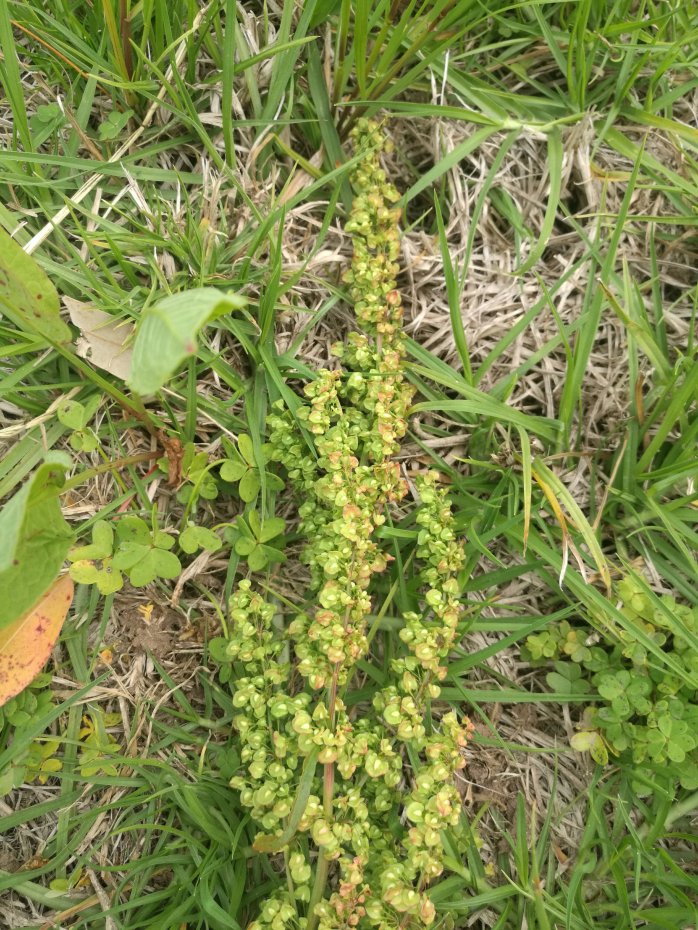
Docks all share a love of damp or wet places and the general way to tell them apart is by their fruit shapes which vary remarkably from species to species. There is some general variation in leaf shapes, but it’s not a great indicator.
Seeds occur on tall spikes. The most common variety of Dock around Gawler is Clustered Dock (Rumex conglomeratus) and its seeds are clustered (hence the name ‘Clustered Dock’) in threes, with a dividing wing in between them.

Docks are the kind of herbs that are best eaten in their raw form, their sharp bite makes them quite tasty. If Oxalic Acid is an issue for you, boil them lightly and discard the water, the Oxalic Acid is readily dissolved in water and easy to remove this way.
Docks are full of tannins, making them excellent for treating minor wounds, they are also the traditional remedy for Nettle stings, being quite acidic (the sting of a Nettle is alkaline). Docks also contain chemicals called anthraquinones which are powerful laxatives, so take care not to eat too much!