When we tincture herbs in alcohol, we sometimes miss out on some of the beneficial constituents; this is true of fungi. To achieve the maximum extraction of goodies from our plant or fungal material, we need to double-extract through decocting.
Double extraction is, as the name suggests, a two step process. There’s actually 3 stages but you’ll see the third later.
The first step is to macerate the material in alcohol, as discussed on our tincturing page. Once you’ve pressed all of the readily available solvents out of the marc, it’s time for stage two.
The second step in double extraction is to make a water extraction from the pressed marc by making a decoction. This draws out the water-soluble constituents and any of the alcohol that may be tucked away deep inside the marc. The heat can also liberate other compounds, depending on the plant.
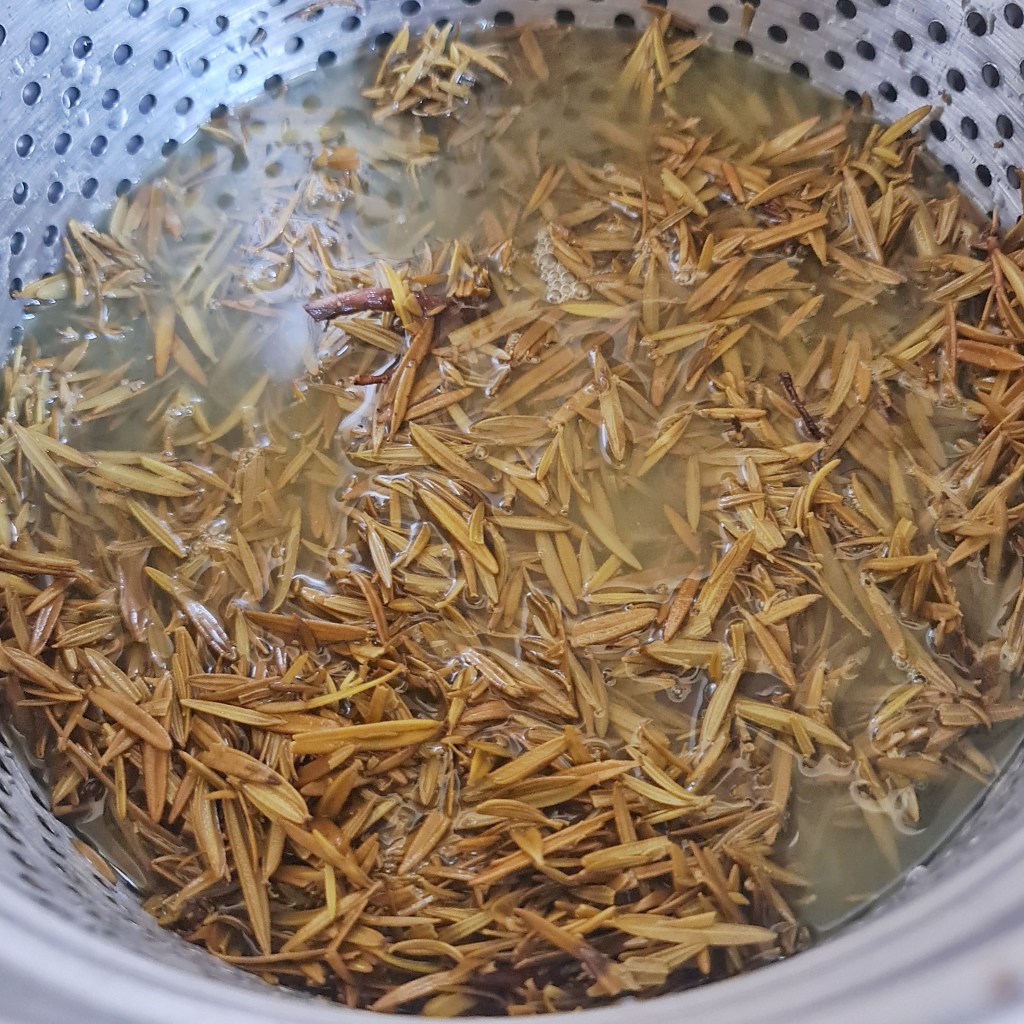
How to do the water extraction.
To make the decoction, we need to place the marc from the tincturing process in a pot and just cover it in water. Bring the water almost to a low boil, then reduce the heat and simmer the brew, with the pot uncovered.
Simmer until the liquid in the pot has greatly reduced. Some folks say by half, some a quarter, but I like to reduce it to about 10%. It takes longer but gives a stronger result that doesn’t dilute the tincture too much and makes it easier to calculate the dilution of the alcohol that is already in the tincture.
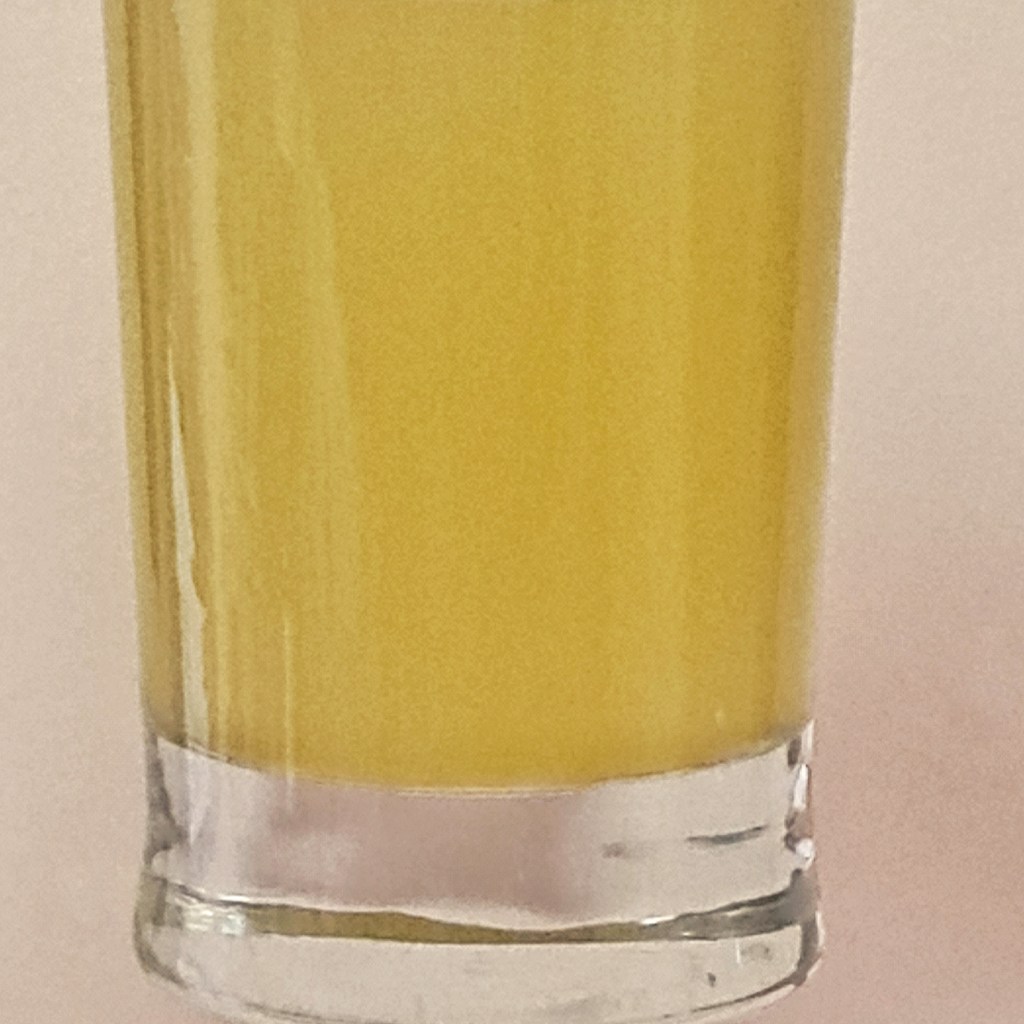
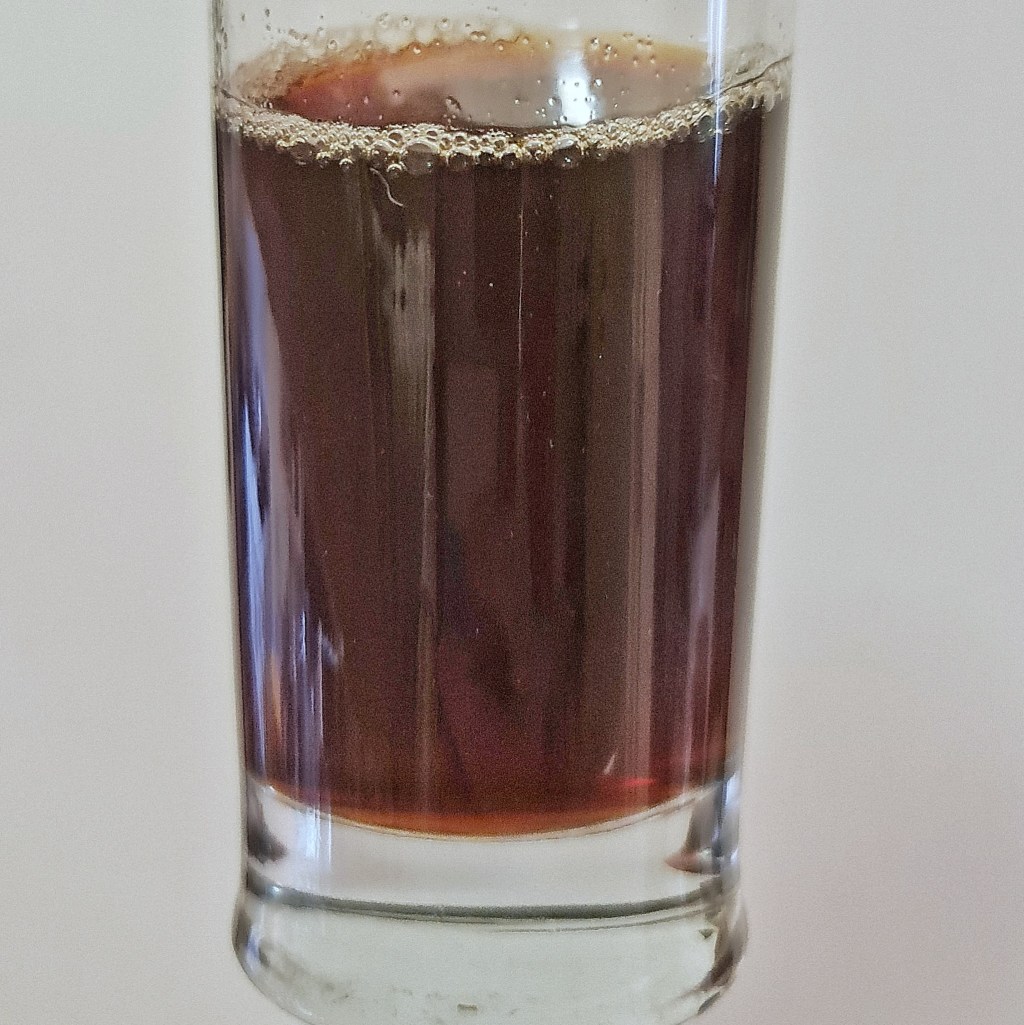
Let the contents of the pot cool. Strain and filter out the marc.
The third stage can be as difficult as you want to make it. You can simply add the liquid extract from stage 2 to the tincture from stage 1 and be done with it.
Or…
You can calculate how much the new solution will dilute the alcohol from the tincturing stage in order to discover the exact concentration of your final tincture. If you are diluting with a lot of water extract, it is important to know the concentration of the final product in order to not dilute it to below 25% or your tincture may not store well.
Rather than bog you down with maths here, we have a whole page dedicated to alcohol and dilution on our ‘A Little About Alcohol‘ page.
I will give you an example here though that steps through one of the methods of calculation.
I recently made some Rosemary tincture. I made 1500 ml of tincture at 70% concentration by maceration. The water extraction after simmering down was 400 ml.
I count the water extraction from stage two of the double extraction as having a concentration of 0%. It may have a little alcohol but it’s pretty close to zero. You may, as an exercise, want to test yours with a hydrometer but it’s generally not worth it.
The formula I like to use is:
(((alcohol1 concentration x volume) + (alcohol2 concentration x volume)) / total volume of liquid)
We calculate (1500 x 70)+(400 x 0) which gives us a result of 105000.
Divide that by the total alcohol volume of 1900ml and we get (rounded to two decimal places) 55.25%
So I ended up with 1.9 litres of tincture with a strength of 55.25%.
But do fungi in reverse…
Because of the extremely tough cell walls of fungi, it is best to do the water decoction first or even cook them in a pressure cooker (I’ll have a page specifically about fungal extractions finished and published soon) That’ll soften the cell walls and start and extract the water soluble constituents. Then, press the marc and tincture that.
Combine the two after the tincture has been macerated for 7 – 14 days and filtered. You may notice cloudiness in the liquid when combining the two extracts. That’s the polysaccharides such as beta-glucans, which are insoluble in water) precipitating out. Don’t worry, though; give your tincture bottle a good shake before dispensing your double-extracted mushroom tincture. That will redistribute the sediment.
Other herb pages on Ligaya Garden
We cover a lot of ground on many herb related topics here on our website. There are whole pages devoted to different topics as well as frequent posts. Some of the links are –