Common names: Plantain, Ribwort, Ribwort Plantain, Narrow Leaf Plantain, English Plantain, Lamb’s Tongue, Dog Ribs
Taxonomic name: Plantago lanceolata
Family: Plantaginaceae
Related herbs: Plantago major, Buck’s Horn Plantain (P. coronopus), Psyllium , Foxgloves, Snapdragons, Speedwells
Area of origin: Eurasia
Parts used: Leaf, aerial parts, seeds
Can be used medicinally for: food, wound healing, cough, mild bronchitis, inflamed and sore membranes, allergies, red rashes with itching, diarrhea, hemorrhoids, cystitis (with bleeding), cuts, grazes, bruises, , swelling, ulcers (internal and external), leucorrhea, dysmenorrhea. Abscesses, boils, bug bites & stings, asthma, some cancers, capillary fragility, parturition, gingivitis, some blockages, strangury (frequent, urgent, painful urination often with little result), urinary incontinence, dysuria (with bleeding)
Organ/System affinities: lungs, intestines, bladder, kidneys, blood, skin. Lungs, Large Intestine, Bladder
Healing Actions: vulnerary, expectorant, demulcent, anti-inflammatory, astringent, antiseptic, diuretic, antimicrobial, lactagogue, laxative, deobstruent, diaphoretic, fungicidal, uterotonic, antitussive, restorative, stabilizer
Taste: salty, bitter
Tissue states: hot, dry, damp, obstructed
Energetics: cooling, drying, moistening
Healing constituents: Iridoids (aucubin, catalpol), flavonoids (apigenin, luteolin, scutellarin, baicalein, nepetin, hispidulin, plantagoside), tannins, oleanolic acid, plant acids (phosphoric, ursolic, palmitic, chlorogenic), allantoin
Trace minerals (zinc, iron, calcium, sodium), silicic acid, bitter compounds, vitamins A, C, K, hexitol, mucilage (xylin)
Warnings: Laxative and uterine activity means avoid using it internally during pregnancy
Description
Our Plantain (Plantago lanceolata) is a close relative of Plantago major and just as useful. Some herbal books only talk about ‘major‘, but for us, this one’s OK.
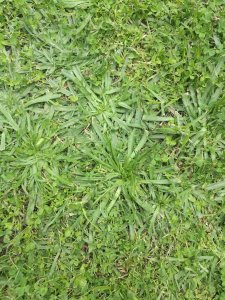
To identify ours, look for a rosette of hairy, long, pointed leaves, they’re a dead giveaway. They’re slightly rough and have long, pronounced ribs. That’s how Plantain gets one of its many names – Ribwort. The leaves are long, ‘lanceolate’ in fact. That’s how it gets its species name ‘lanceolata‘. The flowers are many and tiny, clustered in a bullet shaped head at the end of a single stalk, Flower blossom from the bottom of the flowerhead upwards. Seeds are plentiful and tiny.


This is a humble plant, indeed. It likes well compacted soil, so thrives by paths and roadsides and in lawns, where we often step on or drive over it. Its ecological role seems to be in soil remediation where its strong taproot reaches deep down into and breaks up compacted soil while the rosette of tough leaves provide a protective cover for that same soil, before breaking down into nourishing mulch as they die. Plantain occurs pretty well everywhere in the world that Europeans have invaded (or just visited on their off days). It occurs in a few other places, but that generalization gives it one of its nicknames ‘White Man’s Footprint’ although there are a couple of other plants with that epithet.
Medicinal use
You’ll see two Plantains listed in herbal books, P. lanceolata and P. major. There may be some differences at the clinical, expert level but for us as kitchen herbalists, they are interchangable. In fact, David at the Kapunda Community Garden is successfully growing and sharing P. major plants and seeds by the bucketful, so you may son get the opportunity to compare the two yourself.
Plantain’s nature is cooling, softening, and moistening while being astringent. It’s the astringency that gives it one of its most common uses – it is used to help heal wounds such as cuts and scrapes. Just mash up some leaves and apply directly to minor wounds. It is this property that helps with rashes, stings and bites.
Plantain is a premiere wound healer, so great in fact that Schroeder named it a ‘polycrest’ (a herb that has many, wide and varied uses). The herbal constituents tannins dry and clot wounds, the mucilage soothes wounds and irritated tissues and as they dry, pull together the edges of wounds. The glycosides make it a great healer and pain killer too. Along with Yarrow, Comfrey and English Daisy, it is a herb that should be in every herbal first aid kit and can work well in combination with any of them.
Along with Comfrey, Plantain also contains allantoin, the constituent that makes cells proliferate faster, helping heal wounds in no time.
Given these properties and constituents, one can easily understand Plantain’s next ability – to help draw out things from the body that are not wanted, whether that be stings, splinters, or pus. It can , literally, pull foreign objects out of tissues. It’s great then for pimples and boils. where it can bring them to a head (think Silica in the Tissue Salts, which it combines well with), then both its astringency PLUS its soothing, moistening nature helps relieve the inflammation and irritation associated with them. A few mashed up leaves held on by a bandage for a while will do the trick. In fact, some specimens of Plantain can get leaves so long that they can be the bandage themselves!
Plantain was used in the old days by poor folks and pilgrims (often one and the same) who had to walk many miles. They would put Plantain leaves into their shoes (they probably didn’t wear socks) to prevent blisters. Clever! Those same folks had another herbal ace up their sleeves (or in their shoes) too. When a shoe’s sole got a hole in it, the wearer would use a tough Mullein leaf as an insole to stop water and dirt from getting in all the while, probably, helping their lungs in the process.
If you’re finding this information useful, share it with your community
Plantain isn’t just good at external wounds, its abilities can heal inflammations internally too and the tannin content helps to irritated, dry damp and congested mucous membranes throughout the body but especially the respiratory system where its soothing and, cooling nature offers relief for inflamed membranes while its astringency helps tone them up, reduce the production of mucus and help with irritating coughs. Plantain also acts as a mild expectorant. I like to use if for acute, upper respiratory conditions where it pairs well with the Tissue salts Ferr Phos and Nat Mur.
It’s drying, toning, drying nature reaches throughout the body into the lower digestive tract (diarrhea and hemorrhoids) and urinary tract, where it can be used for all kinds of urinary issues, especially if there is a little blood or swelling involved. It can then be helpful with what is termed ‘strangury’ in both men and women. Strangury is the frequent urging to urinate that yields little result but can even be painful. Think of Plantain as astringing and toning the bladder and urethra, reducing irritation and swelling.
Plantain is also useful in some kidney disorders too, soothing inflammation and improving efficiency by nourishing the organs, rather than forcing them to work harder.
For those with vaginas and ovaries, Plantain is useful in cases of leucorrhea, especially when the discharges are profuse. I haven’t used it for its post -parturitic effects but it can apparently be quite powerful in that respect. I’m guessing that a strong infusion used as a douche or a wash is the best way to use the herb in these cases. Plantain is also listed in some books as a galactagogue, so it helps in milk production. I’m wondering if its astringent nature can be used to slow milk production when breastfeeding is finished, similarly to Sage. and a uterine tonic, which means that it can help tone, tighten and strengthen the uterus.
You may have noticed a contradiction in Plantain. It is astringent drying but soothing and moistening. That’s the amazing thing about some herbs, they can resolve seemingly opposite problems! Herbs are complex organisms, composed of a wide array of constituents and energies that can, in fact, handle these contraindications as necessary. In Plantain’s case, its tannins help to astringe and dry by drying membranes and constricting blood vessels, while its mucilage and iridoids can moisten, quell and soothe the very same membranes if required. You might have read about that above when I was writing about pimples and boils.

How to prepare and use Plantain.
Plantain can be used straight from the plant. Leaves can be pulled off and crushed or juiced and the seeds eaten or cooked. A Plantain spit poultice (fresh leaves chewed up and mixed with your saliva) can be applied as a quick fire dressing for minor wounds, where it can be removed and a fresh one applied as necessary. It also works that way for redness and inflammation and, if held in place over a splinter or sting remaining under the skin, can help draw it out, while healing the wound that it caused.
You can actually eat Plantain’s taproot and leaves, though there are better things out there. They’ll do in a pinch though. The seeds are edible too and have a high fibre content. Psyllium, the high fibre dietary booster, is a member of the Plantain family of plants.
Like Chickweed, think of Plantain when you see redness associated with skin problems. Like Chickweed, Plantain goes nicely into a salve or ointment and the two combine together nicely.
An infusion of the leaves (fresh or dried) of Plantain can be drunk to soothe internal complaints or used as a wash or fomentation for external issues. Swirling the infusion around the mouth can help with bleeding gums and a gargle of it help with sore throats and even hayfever.
You can make an infused oil of Plantain to it for use in salves. A tincture can be easily made too but after making and using several batches, I find that I prefer infusions or salves. They’re quicker to make and, for our kitchen and garden uses, have equal effect in my experience.

Don’t forget this one!
Buck’s Horn Plantain (Plantago coronopus)is another very common Plantain around Gawler. I’ve tested its wound healing properties and they’re up there with the other Plantains mentioned. I don’t know about its ability to heal chest problems though. It has a slightly saltier taste, growing in more degraded, saltier soil than the other Plantains, so may be even better at drawing foreign objects from the skin and relieving swelling. I first, (consciously) encountered it down at the Coorong and, sitting with it and tasting it, found it to be so. Now that I see it around Gawler, and at Dad’s place on his verge where cars have been parking for deceased and poisons liberally applied, I see that my instincts are right.
Other herb pages on Ligaya Garden
We cover a lot of ground on many herb related topics here on our website. There are whole pages devoted to different topics as well as frequent posts. Some of the links are –