Division: Basidiomycota.
Class: Agaricomycetes. Order: Agaricales. Family: Psathyrellaceae
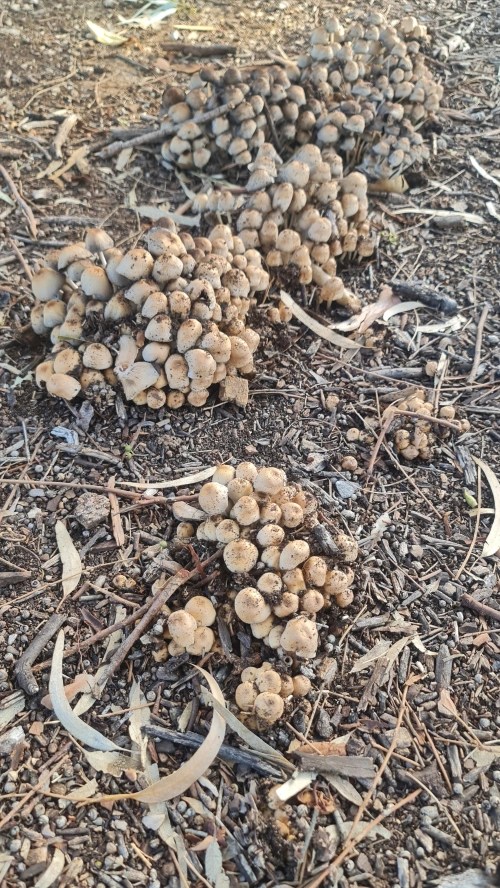
Mica Caps (Coprinellus micaceus) are common inhabitants of roadside verges, gardens, and parks. Their large colonies fruit in the same place, year after year, and elicit many comments as they deliquesce (turn to goo) at the end of their fruiting.


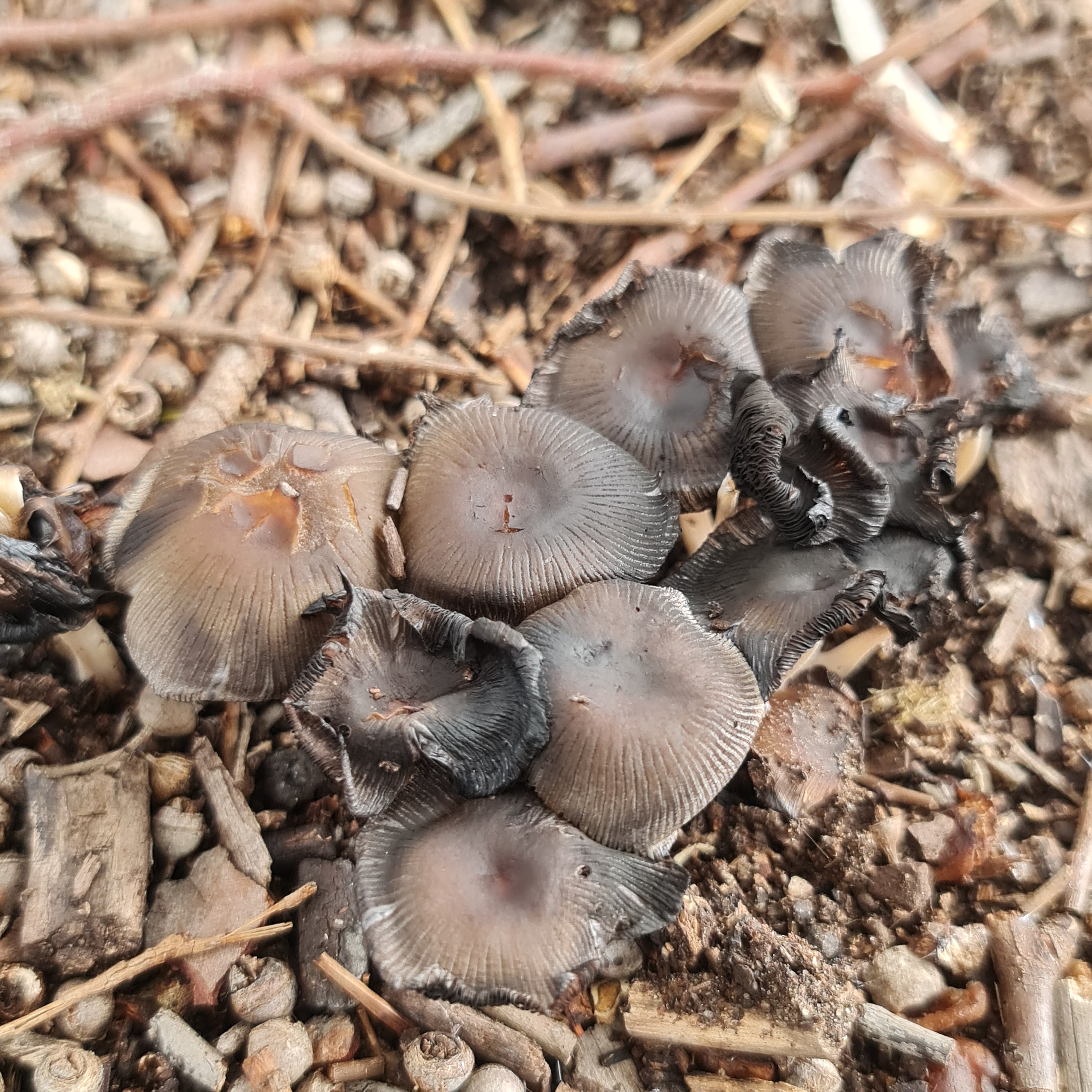
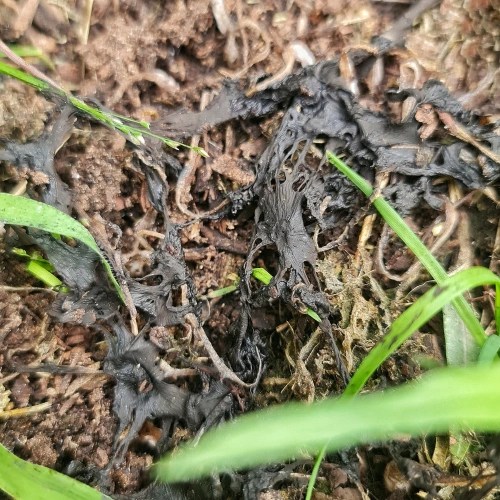
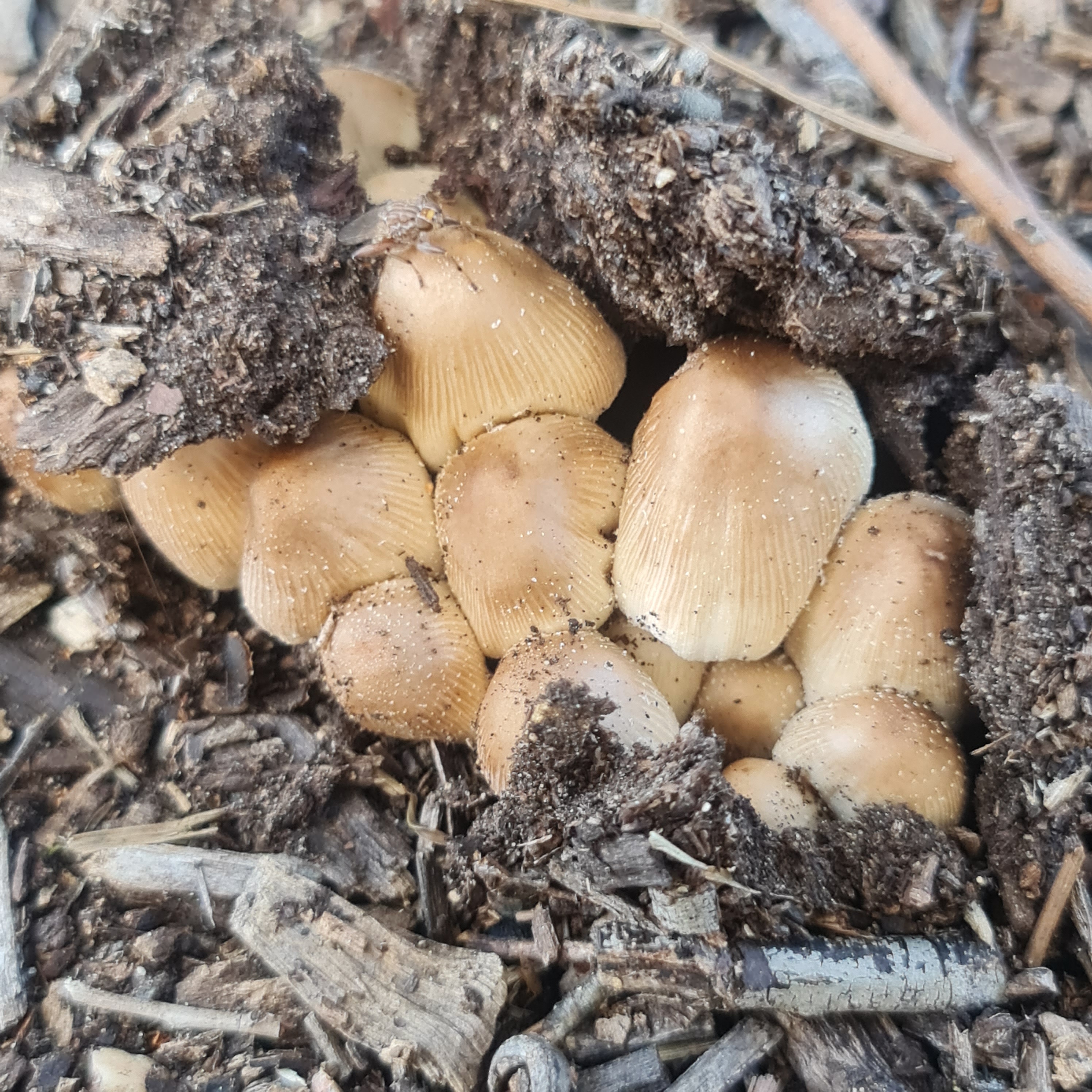

They are one of the Ink Cap group of fungi, with the self-digesting enzyme common to the species in this genus. You might have read my post last year about Shaggy Manes, which does the same. Turning to goo is their way of ensuring that their spores are spread. Anything that touches them gets inked and carries the spores with them. Inking also makes them more easily transportable by water.
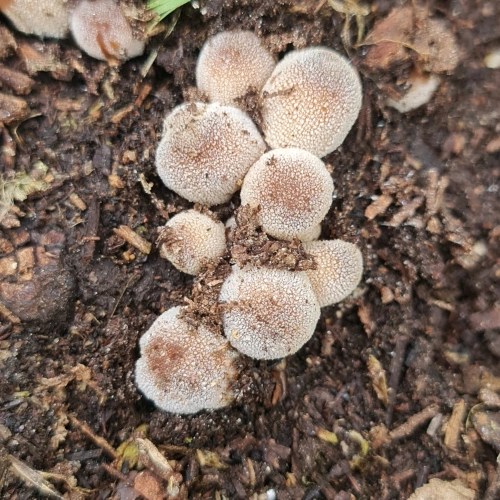
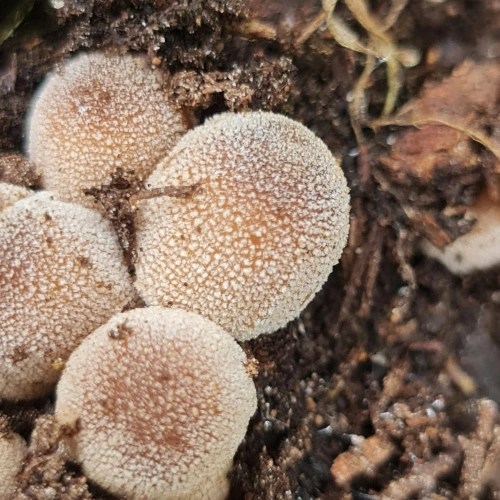
Young caps showing the mica flakes the species is named after.
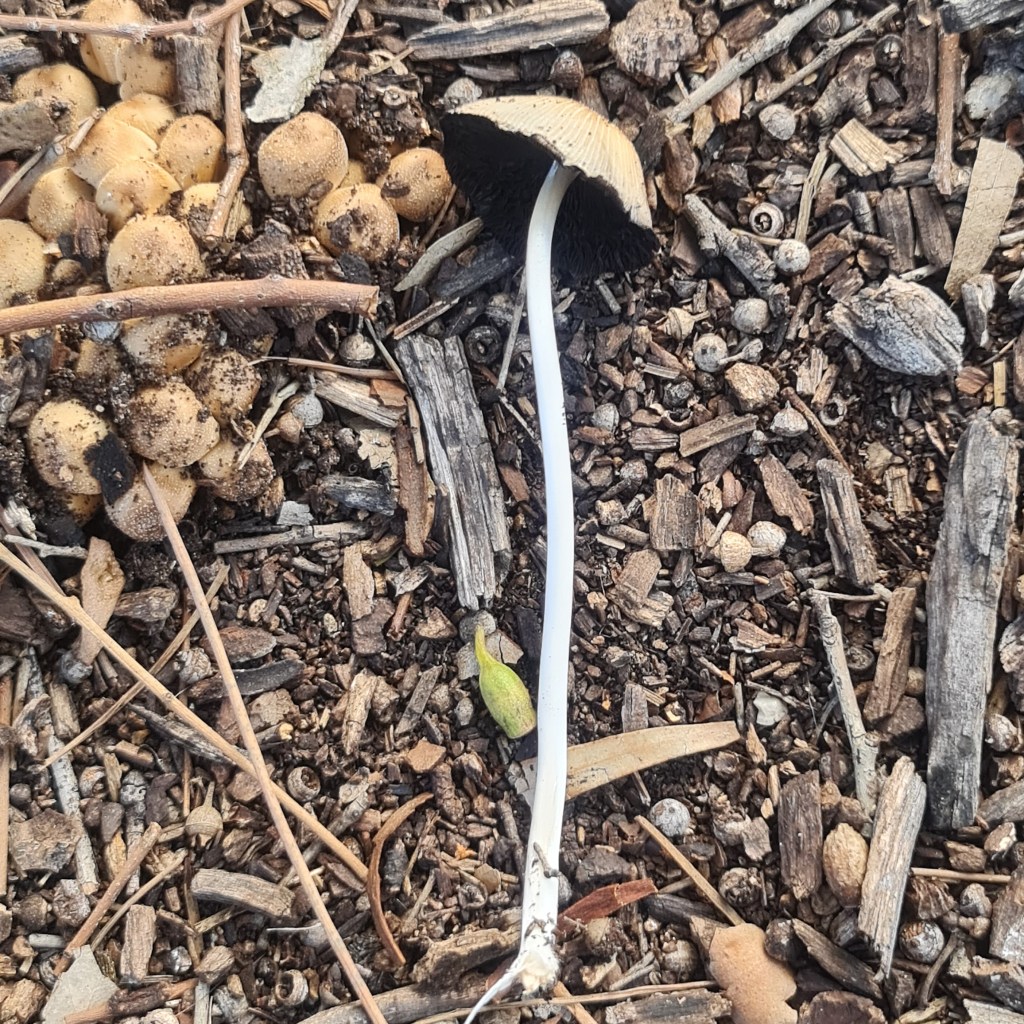
Identifying Mica Caps –
If you find a large troop of light brown mushrooms poking up through the soil, they could be Mica Caps. Here’s how to ID them –
- Light brown or tan caps when young, darkening with age, turning to black liquid after maturity.
- Shiny scales like flakes of Mica on young specimens. Rain easily removes it, so it may not be easily visible.
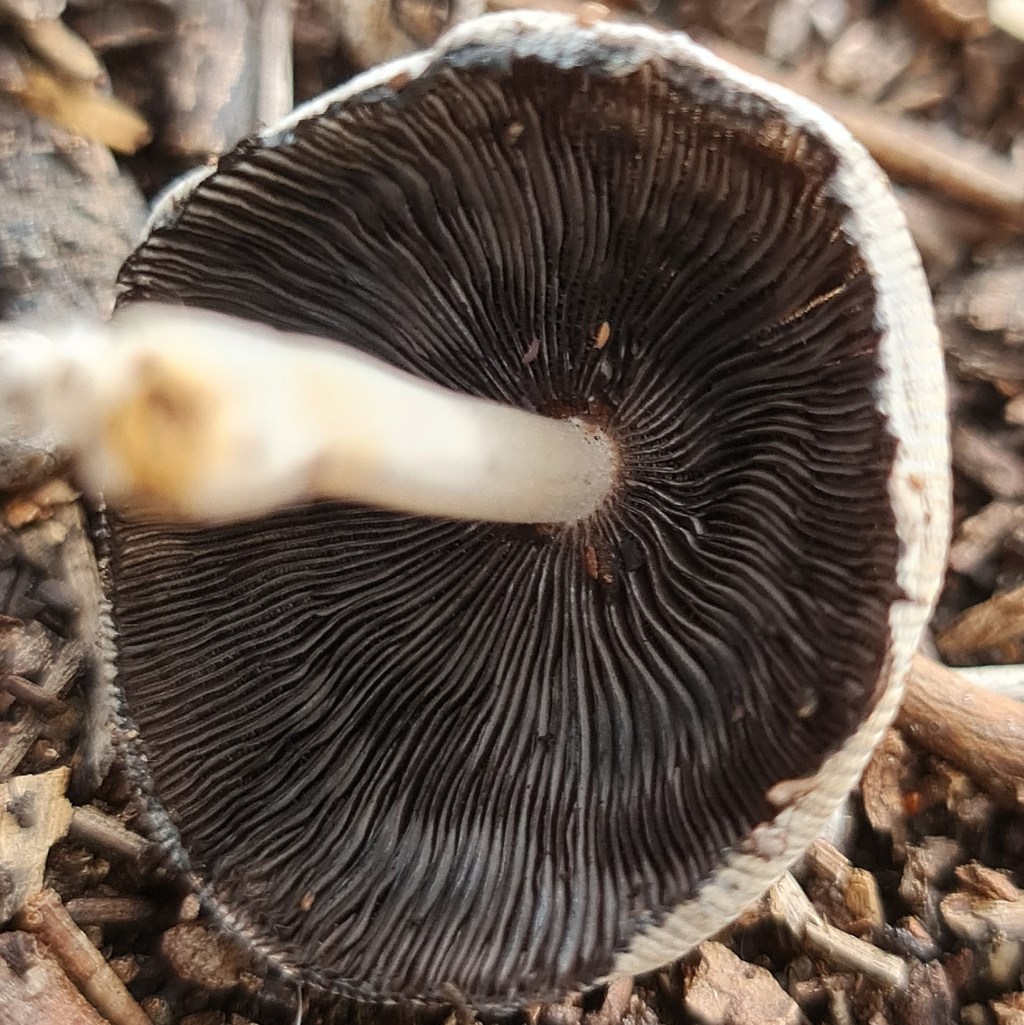
- Gills black
- Stem solid and white, no annulus, can be very long.
Caution: Eat Mica Caps to your heart’s content, but don’t consume them with alcohol. Doing this can cause an allergic reaction.
Mica Caps are excellent bioaccumulators of heavy metals and other toxins, so don’t eat any from roadsides or factory areas.