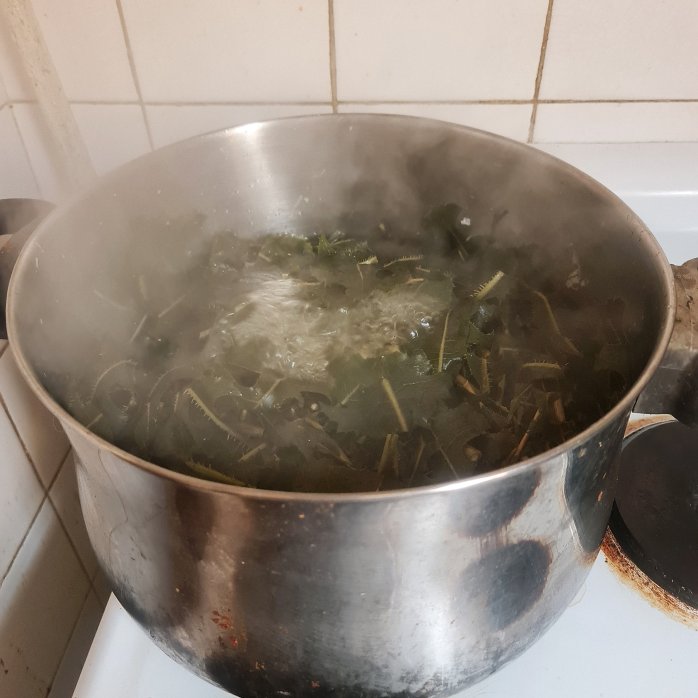
Decoctions are heavy duty extracts but don’t worry, they’re easily made in your kitchen.
Decoctions are a great way to extract useful. goodies from hard, woody material like dried rhizomes, bark, dried berries and seeds.
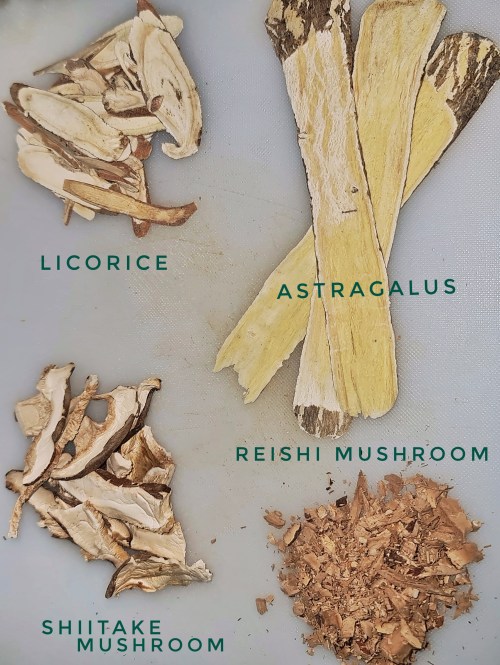
Dried Elderberries and Hawthorn berries decoct nicely and this technique is excellent for extracting some of the goodies in dried mushrooms such as Reishi and Shiitake. I use decoction as my preferred technique for Chicory, Ashwagandha and Burdock roots.
Decocting isn’t a good technique for aromatic herbs such as Peppermint, Lemon balm or Catnip because nearly all of the aromatic compounds that make them so beneficial are driven off during the decoction process. Horses for courses, as they say.
A decoction is also the second stage of the double extraction method of making herbal tinctures.
How to decoct
To decoct, you only need a covered pot, water, and herbs. A decoction is more like cooking than any of the other herbal remedy-making methods.
You decoct with the pot uncovered, though I like to leave the cover partially on so that some of the steam gets caught and recirculated before being lost later. If you have a cover with a small hole in it, as is common now, use that instead.
There’s several ways to make a decoction –
Basic decoction
Dry herb decoction – Use 30 – 60 grams of dried herb to 1 litre of water, bring to a boil and simmer until water is reduced to a quarter. You can use more herbs if you want a super strong decoction, but this amount will do for us mere mortals.
Fresh herb decoction – cover 300 grams of fresh herb with 1 litre of water. Bring it to a boil and simmer until 25% of the water is gone.
After simmering the liquid down to the required strength, measure the volume, then subtract that volume from 1 litre. Wash the marc with the resulting amount of water to get to more of the remaining constituents in the marc. Press or wring out the marc, and the finished product will be 1 litre of pretty well fully extracted herbal goodness.
Let your decoction cool, then strain, filter, drink, or store. If you make a lot and want to store it in your refrigerator. Don’t make too much at once unless you’re going to use it; it will go off after a few days (less in the hot weather). It’ll store for about 3 days.
My favourite technique
Use 1 tablespoonful of dried herb for every 1 cup of water.
Bring to the boil and simmer until the liquid is reduced to 50%
Strain the liquid of=f and add the same amount of water and simmer until reduced to 50%
Combine the two liquid amounts together and you have a super potent decoction. This is my preferred method for Burdock.
Optional: You can repeat the process several times until the herb is exhausted (i.e the liquid has no more colour, taste or aroma) and combine all of the liquids into one larger, but more dilute amount.
Use a slow cooker
You can take a slow way to make decoctions with a slow cooker or crock pot.
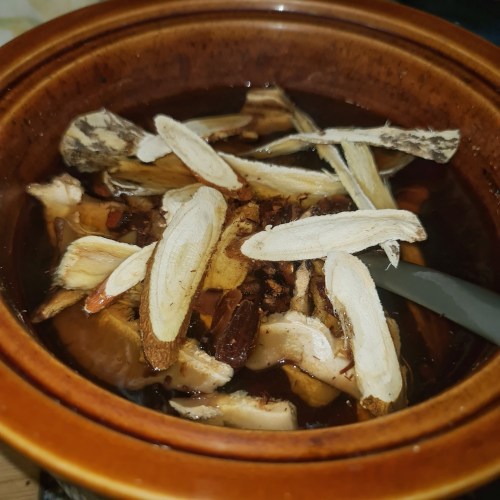
Just put your ingredients in the pot, put it on high and leave it. Use the low setting if your slow cooker makes your water boil on the high setting. Low and slow is the trick here.
I leave it to brew, covered, overnight for a great, hot brew in the morning. Enough steam escapes over that time to reduce the volume of liquid quite a bit.
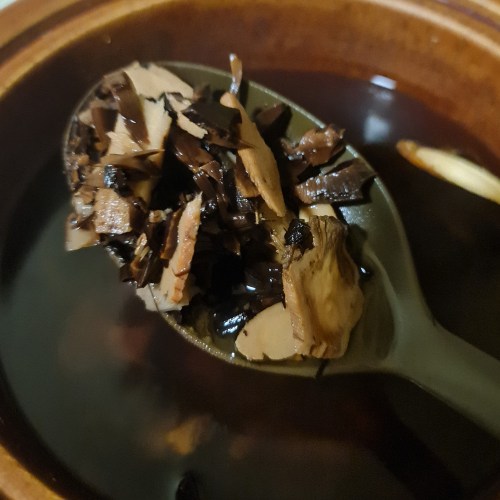
A simple technique for decocting, and it is especially good for dried fungi such as Reishi, Shiitake and Cordyceps that require a lot of heat to break down their super tough cell walls to get access to beneficial compounds that can be extracted in water. It’s also a good first stage for a double extraction of those mushroom materials because it allows the alcohol into the cells to extract the alcohol-soluble compounds. Fungi have both water-soluble and alcohol-soluble goodies that must be extracted separately. I’ll do a full page on mushroom extraction soon, so keep an eye out for that!
Bulk decoctions
You probably won’t be wanting to make fresh decoctions every day, so you can make up a larger amount and store it in the fridge for several days and use a little every day.
To do this, just scale up the amounts that you used for the above techniques. For example, when making a Burdock decoction fro Jelina and I to use over a week, I use 5 tablespoonfuls of dried burdock to 5 cups of water. That gives a total amount of around 1 litre, which is enough for us.
Prickly Lettuce decoction
This is a special decoction that I make every year from wild harvested Prickly Lettuce plants. It makes an amazing pain reliever and, because of the nature of the constituents, it can be rendered down to a thick goo or even dried completely for storage.
We have a post detailing how to make it right here.

Dried tea powders
Another application for decoctions is making dried tea powders. I haven’t got a page about it on this website, though it is the same one linked to on the Mushroom Medicine page.
Essentially, you make a very strong decoction, reduce it down as far as you dare, then dehydrate the result , which you then powder and store. Using dried tea powders has the advantage over using standard tea or infusion techniques because the constituents of the herbs have already been extracted during the manufacturing process and are instantly ready, just add water. You can make a stronger brew much faster.
Using your decoction
You can use a hot (fresh or reheated) or cold decoction. I can’t resist a sip or two straight from the pot when it’s nearly finished, especially in the cold weather!
A good starting point is 30ml in a glass of water, but you can really go to town with decoctions. You can have them straight or diluted with good-quality water. Take your time and start very diluted, then build up to what you like.
Combine your decoctions with your tinctures or glycerites to give them extra potency. To do this, when diluting your alcohol, instead of using water to dilute it, use the your decoction instead of the water. Powerful stuff!
Other herb pages on Ligaya Garden
We cover a lot of ground on many herb related topics here on our website. There are whole pages devoted to different topics as well as frequent posts. Some of the links are –