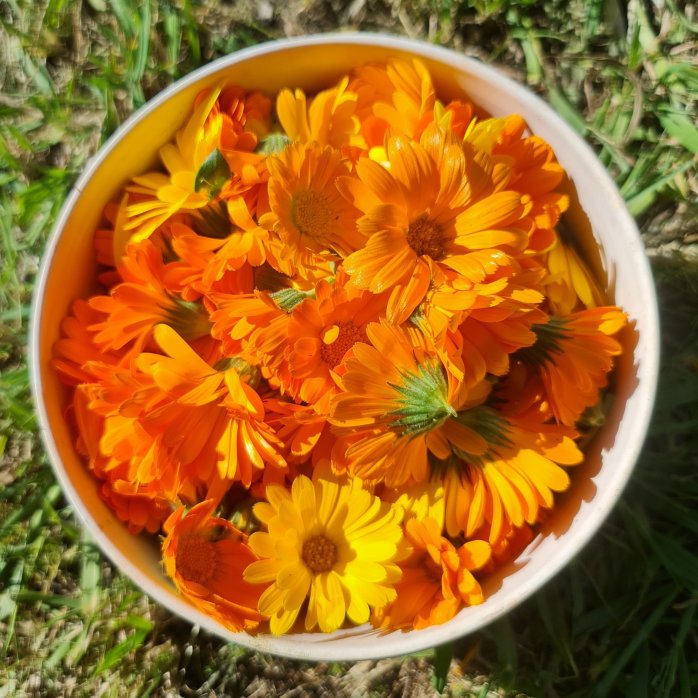
Common names: Calendula, Marigold, Pot Marigold, Jin Zhan Ju, Me tog gur gum
Taxonomic name: Calendula officinalis
Family: Asteraceae
Related herbs: Dandelion, Prickly Lettuce, Thistles, Lettuces
Area of origin: South Western Asia, Western Europe, Mediterranean
Parts used: flowers
Can be used for: food, dye, inflammation, wounds, post surgery recovery, infection, sepsis, swollen lymph nodes, fever, moves the lymphatics, liver detox ands cleaning, eczema, rashes, dermatitis, varicose veins, candida, ulcers, bites, and stings, leucorrhea, reduces scar formation
Organ/System affinities: Heart, Liver, Spleen, blood, lymph system, stomach, intestine, liver, gallbladder, skin, uterus
Healing Actions: astringent, cholagogue, hepatic, vulnerary, haemostatic, antiseptic, antifungal, antimicrobial, emmenagogue, diaphoretic, analgesic, antigenotoxic, reduces scarring, emollient
Taste: bitter, pungent,sweet
Tissue states: heat, damp, stagnation
Energetics: cooling, drying, wind/heat
Healing constituents: Volatile oil, terpenoids saponins, triterpenes (calendulosoides A-D), bitters, phytosterols, resi, flavonoids (including narcissin, rutin2, kaempferol, quercetin, isorhammetin3)
Carotenoids (including carotene, calenduline, lycopine), volatile oils (including alcohols, terpene lactone), quinones, amino acids. Mucilage, polysaccharides, trace minerals, calcium sulphate, potassium chloride and potassium sulphate. Palmitic, malic and salicylic, oleanolic and chlorogenic acids
Warnings: As an amphoteric for menstrual issues and its ability to tonify and cause contractions of the uterus, Calendula should be avoided during pregnancy. Because of its blood moving properties, Calendula should be used with caution in cases of blood pressure issues and clotting.
Description
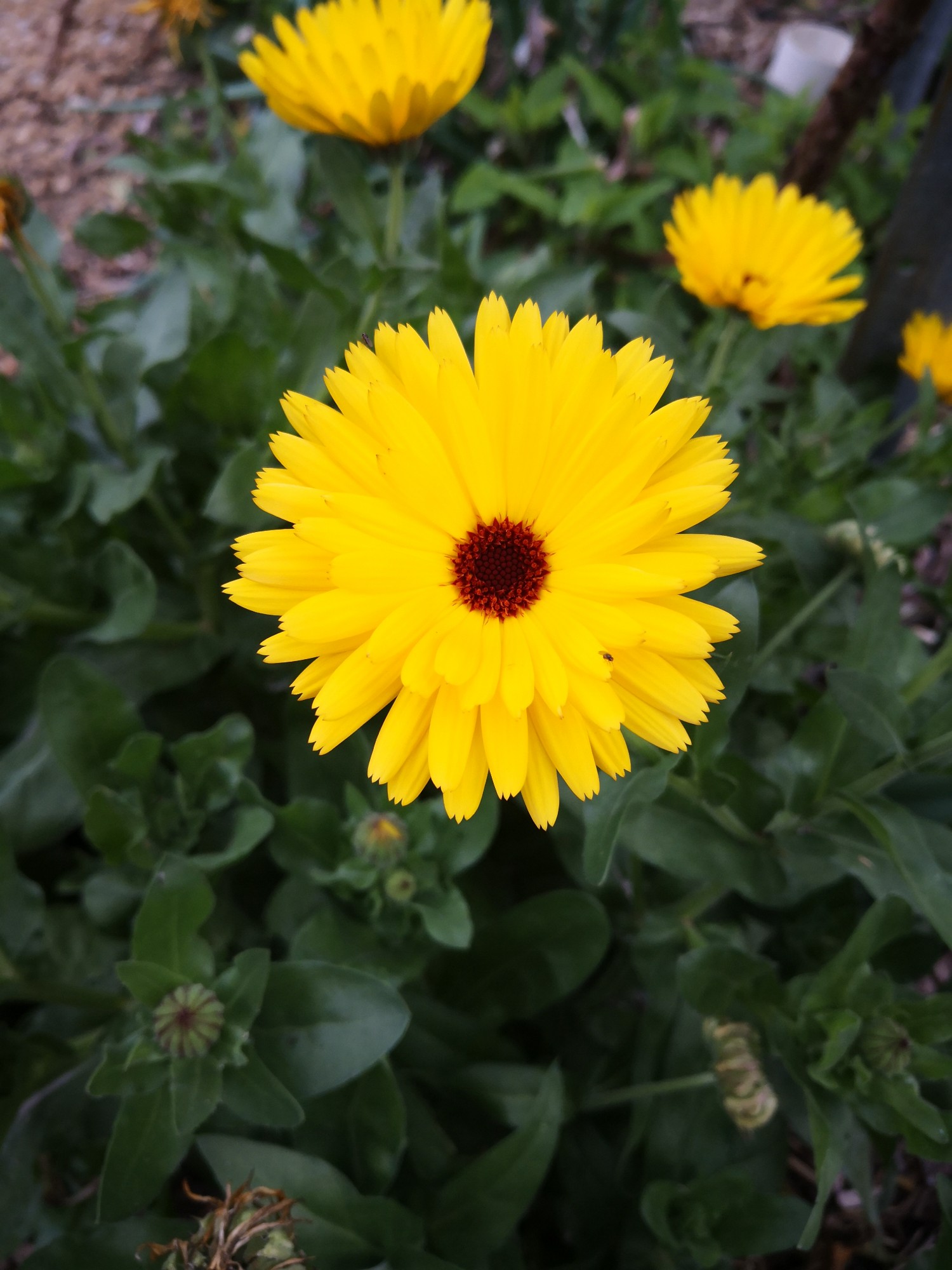
Calendula is such a bright, sunny plant that people have had a hard time leaving its form alone. This means that there are many cultivars and varieties available. They all have some medicinal property but the best to go for are the traditional orange flowered plants. Calendula comes in two main varieties – double and single petals (see the comparison below). I believe that the single petal variety is closer to the original.
C. officinalis is a perennial plant, used as a ground cover. It’s leaves are oblong-lanceolate, hairy on both sides and with slightly wavy or toothed edges. The thick flower head is surrounded by hairy bracts. The base of the flower head has a resinous property that shows on your fingers after picking a few Calendula flowers.
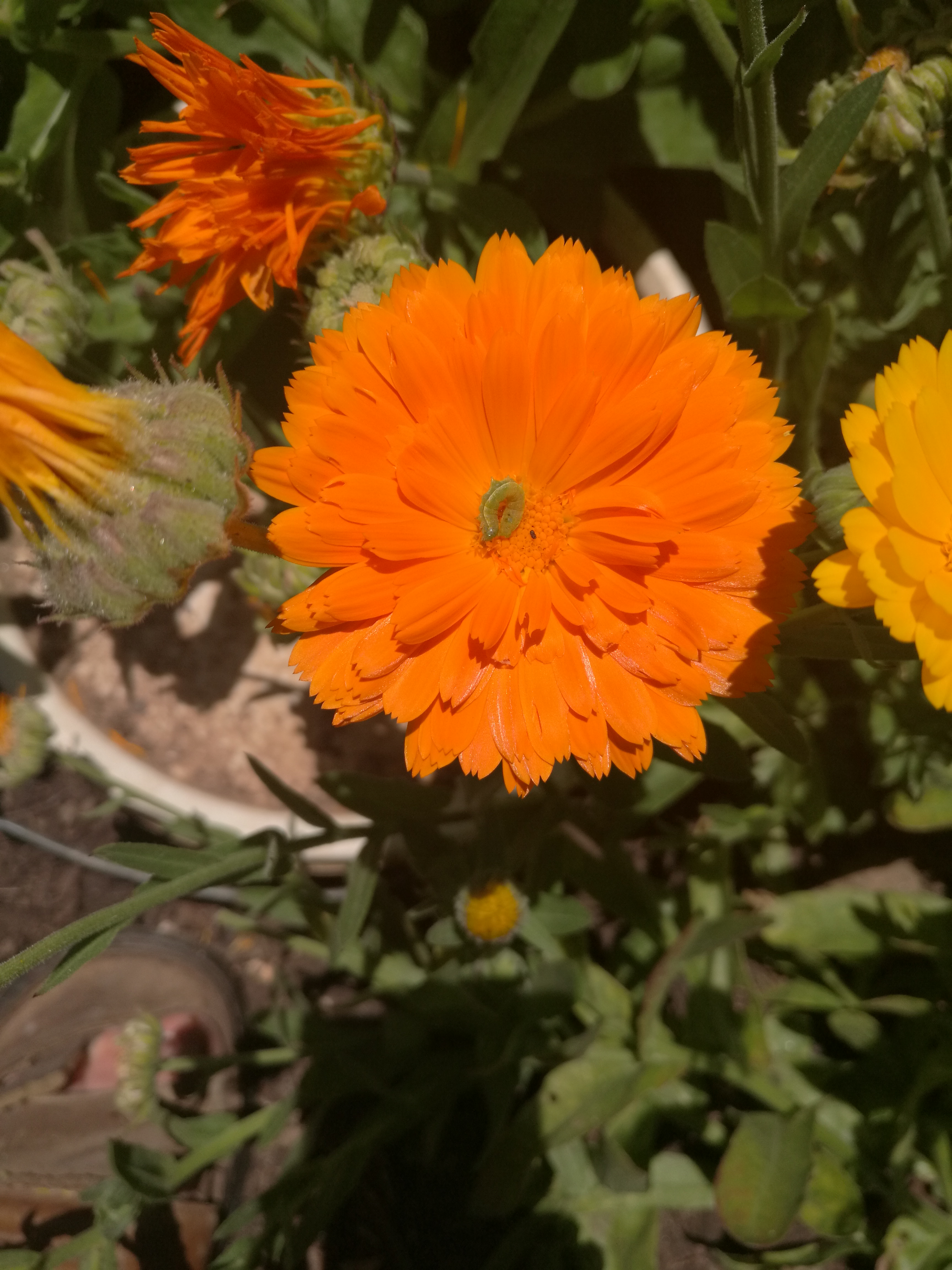
Calendula (Calendula officinalis), is that bright, sunny splash of orange or yellow that could be brightening everyone’s garden about now at the end of winter and, depending on where you live, most of the rest of the year. As with all the herbs we’ll be covering, Calendula is prolific, easy to find and just keeps on giving. The name ‘Calendula’ has the same root as the word ‘calendar’ and refers to the fact that it is available all year round in some places.
There is some disagreement as to which varieties of Calendula are the most useful. As always, the oldest, purest varieties are more medicinally potent, that means the orange varieties but use what you’ve got, they all have some good in them, particularly if you’re not just using the petals but the whole flower head.

Medicinal uses
The bright yellow or orange of the flowers indicates that Calendula is great for soothing inflammations, whether applied internally or externally. Colours that tend toward red are caused by anti-oxidant compounds called flavonoids in the flowers and work to reduce inflammation. Flavonoids also help strengthen the walls of blood vessels.
When I use it, I look at its energetics of cooling and drying and its taste, which is bitter, I think of Calendula’s ability to heal and strengthen capillaries throughout the body, reducing inflammation by moving stagnant lymph fluid and blood.
Calendula works best on capillaries, healing and strengthening them and increasing their flow and building new capillary beds in areas where damage has occured, I think this is the key to most of their healing properties. Stronger capillaries, better flow, better drainage…you can see the picture. This sunny herb can be used both externally and internally for cases of varicose veins which is where nearly all of Calendula’s properties shine.
Calendula is probably most famous for its external use on wounds of all sorts, from cuts and scrapes to nasty lacerations. It can also be used internally for wounds from surgery to speed healing and reduce inflammation and infection. We used Calendula tincture in her water recently to help a friend’s dog after an operation. Calendula’s antimicrobial and antiseptic properties stop infection and its propensity for moving blood and lymph help reduce inflammation in the wounded area., cooling it down. Through helping to build new tissue, Calendula also reduces scarring. In fact, it can be used to reduce the size and severity of old scars with regular application – this is one reason why it can be paired with Yarrow in wound healing treatments.
You can use Calendula for many cases of lumps, cysts, swellings, fibroids, lesions and tumors where its cooling, softening character helps – it can be used alone as an oil or salve or combined with another emollient herbs such as Mallow. Acne, boils and carbuncles can be equally effectively treated by Calendula’s antiseptic, blood moving, softening and cooling properties.
Calendula is a mild herb in its actions and suited to gently treating infections in children and sensitive people who stronger antimicrobials such as Garlic may be too strong for. I’ve yet to try it but a Calendula and Lemon Balm glycerite is on my ‘to make’ list as a general treatment for kid’s ailments.
Even though sunny and bright, the properties of Calendula are very Yin. It is said that Calendula tonifies Yin. We can see that in its cooling, soothing uses by people over the centuries. Improving blood flow and moving the lymph, Calendula helps with some heart issues.
Calendula has the ability to help regulate menstrual flow and timing. The physiology of this is quite complex, and not limited to one or two compounds, it is a dynamic interaction of forces. Flow is not increased further if it is already enough, nor decreased further if already too little. Rather, Calendula helps to normalise flow and timing. Calendula is indicated post partum, when its healing properties can help with any tearing and inflammation, Calendula salve can also be used to help reduce scarring and stretch marks. It’s antifungal properties can also help women afflicted with Candida and men suffering from jock itch.


Calendula is a great one for the liver. – it helps it to clean wastes by supporting the tissues that help do that job. It’s also known for its ability to help move the lymphatic fluid in the tissues, making it a doubly good healer.
Preparing and using Calendula
It is simple to make a healing oil, salve or cream from the flower heads (though it is a plant best used dry, as the petals have a high moisture content). I like to wilt the flowers away from the full sun for a couple of hours before using if I’m in a hurry and need to use fresh plant material. We’ve a whole page on making a Calendula oil.
Some say to use only the petals but I like to use the whole flower head when preparing a remedy because the base of the flower has resins in which many additional herbal properties lie.
Making a Calendula tincture is an interesting exercise. Using an alcohol concentration of over 95% brings out the sunny orange of the flower spectacularly. The high alcohol concentration also extracts the resins and oils well. If you want to dilute the alcohol concentration, please read ‘what’s this goo in my tincture‘ first or you may see some concerning but harmless things happening to your precious extract. If you only want to extract the basics from the petals though, a lower percentage can work well.
Culpeper recommended bathing an aceta of the juice of the leaves soaked in vinegar to help with swellings and others have recommended applying it to varicose veins or using it as a vaginal douche for purposes covered above.
Direct application of the juice from the flower heads is said to help with insect stings.

Other herb pages on Ligaya Garden
We cover a lot of ground on many herb related topics here on our website. There are whole pages devoted to different topics as well as frequent posts. Some of the links are –