It’s very easy to make herbal oils. One of the easiest to use is the Solar method.
Check out our page Herb infused oils oils to help you decide which oil to use and get the low down on other aspects of the oil making craft.
I’ll step through the solar oil making oil process using Calendula (Calendula officinalis) flowers. This style suits Calendula and St. John’s Wort because they absolutely adore the full Sun. Other herbs are not as affectionate towards heat , so I’ve added a bit at the end of this page to help you utilise the Sun but not the direct sunlight for more delicate herbs.
Why make Calendula oil at all?
Calendula is one of the premiere wound healers, it soothes and reduces inflammation, moves lymphatic congestion and helps wounds to heal. Having some Calendula oil on hand all of the time will be a great way to boost the healing capabilities of your apothecary of herbal first aid kit.
Because it is such a wonderful healer, I make big batches of Calendula oil and, when making some other herbal oils, use the Calendula oil as the carrier oil that the other herbs will infuse into. That gives me more bang for my buck!
How to make Calendula oil the Solar way

Step 1
Gather your flowers and leave them in a safe place for a couple of hours. This lets them wilt, removing some of the moisture from the flowers. Moisture will cause the oil to go rancid quickly.
Optional – You can weigh the flowers before beginning the process and again after the next step (wilting) and make sure the flowers wilt to around 50% of the previously measured weight. This allows you to be more consistent between batches but isn’t necessary if that’s not something you’re aiming for.

Step 2
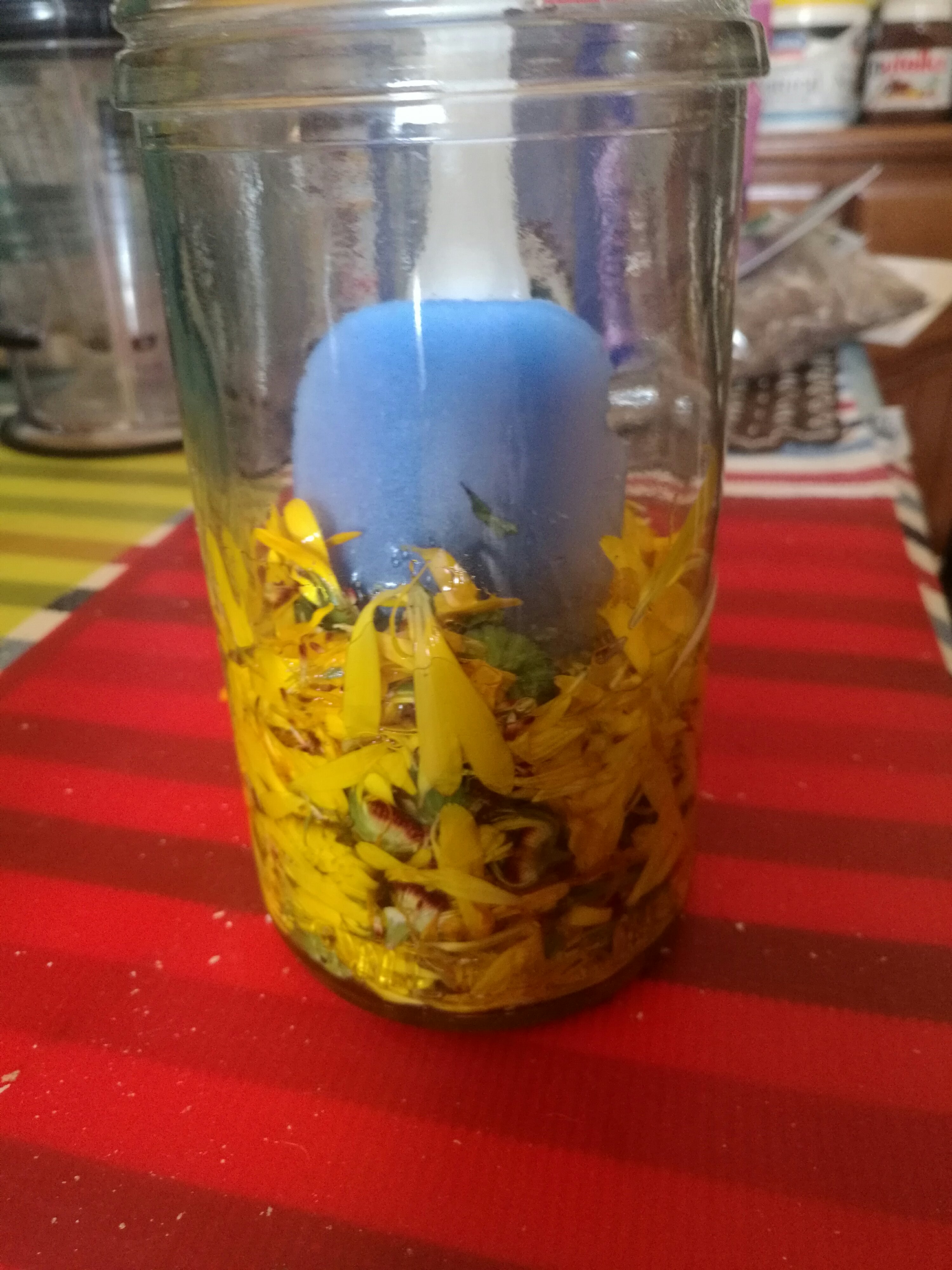
Once they’ve wilted a bit (this can take varying amounts of time, depending on the weather and season) chop or tear the petals finely and put them in a jar. Include the base of the flowers and unopened flower buds to make sure that you get all of those beautiful, oil soluble resins.

Step 3
Cover the petals with oil. You can use many kinds of oil. Avocado oil is great, you want an oil that will permeate the skin, not one that stays on top and doesn’t soak in. My favourite is Grapeseed oil. It’s relatively cheap and penetrates the skin well. It doesn’t leave an oily patch on your clothes in the way that Olive oil does.
Make sure that the oil covers the ehrb by about 2 cm. This helps keep out oxygen and moisture that can help
Step 4
Gently stir or agitate the mix of oil and flowers. The idea here is to release any air bubbles that may have been trapped. Oxygen and moisture cause mould growth in the oil and both contribute to it going rancid.
Step 5
Cover the jar so that bugs and dust can’t get in. Place the jar in a warm, but not hot, place for a week or so. Windowsills in the sun, the top of the fridge or near the stove are good locations. Calendula and St. John’s Wort are two herbs that love the Sun but other herbs need to be put somewhere warm but out of the direct Sun to infuse.
If you have a good, oil proof cover on your jar, you can try inverting the jar every couple of days.


Here’s a little tip – if you cover the jar with plastic wrap, when the mix gets warm, moisture will evaporate and then condense and collect on the plastic. You can remove the plastic and dry it off. That removes a little more moisture from the oil and will help it keep longer. I do this every day until the moisture stops forming.
Step 6
Every couple of days, stir the flower and oil mix, this helps to distribute the herb’s goodness throughout the oil a bit more evenly. This also helps moisture to evaporate out of the nmix, improving the lifespan and potency of your remedy.
Step 7
After a week or so, strain the oil and remove the solid materials. Put the strained oil into a jar or bottle, close it tightly and store it away from light.
Optional – you can use this oil to infuse another batch of Calendula into, making a super potent remedy!
If you’re finding this information useful, share it with your community
Some herbs aren’t Sun lovers.
As mentioned at the top of this page, some herbs don’t love the heat of the Sun directly on them, either when growing or when infusing into oil.
You can still take advantage of the heat of the Sun though by covering your infusing oil with a cloth or towel to block the direct light yet still allow the oil to heat up.
Many times throughout your remedy making research you will find mention of keeping herbs and remedies out of direct sunlight. This is because the UV (and maybe other rays) can break down some herbal constituents that are exposed to them, making your remedy less effective.
There you go! You’ve made Calendula oil!
You can use it as it is or you can you can find out how to make your oil into an Herbal Salve by clicking on the link.