Drying is least laborious of the techniques to preserve your herbs. As with anything, though, there are different ways to achieve the same goal. It’s really a case of ‘horses for courses’ as the old saying goes but this page will see you right.
We dry herbs to enjoy them and use them after their season has finished or to make them into a more convenient form to use. They are generally more convenient and save a lot of space.
What does drying actually do?
Drying allows you to store herbs by removing the moisture that is one of the primary causes of spoilage. The presence of water in an herb allows chemical reactions (enzymes) to break down the herb, destroying its value to us. The presence of moisture also allows bacteria and fungi to live in the herb material, which also leads to spoiling.
Drying breaks down cell walls, making the cell’s contents easy to extract. It also concentrates the beneficial constituents into a smaller volume, making them easier to use and store.
What do we need to dry herbs?
To dry herbs, we only need a space where we can dry our herbs out of direct sunlight and where there is a gentle, dry air source. Warm air is preferred, but as long as it isn’t humid, cool air can work.
Many foods can be dried in full sunlight, but most herbs tend to lose their potency when dried this way. The heat and UV react with plant constituents, breaking them down.
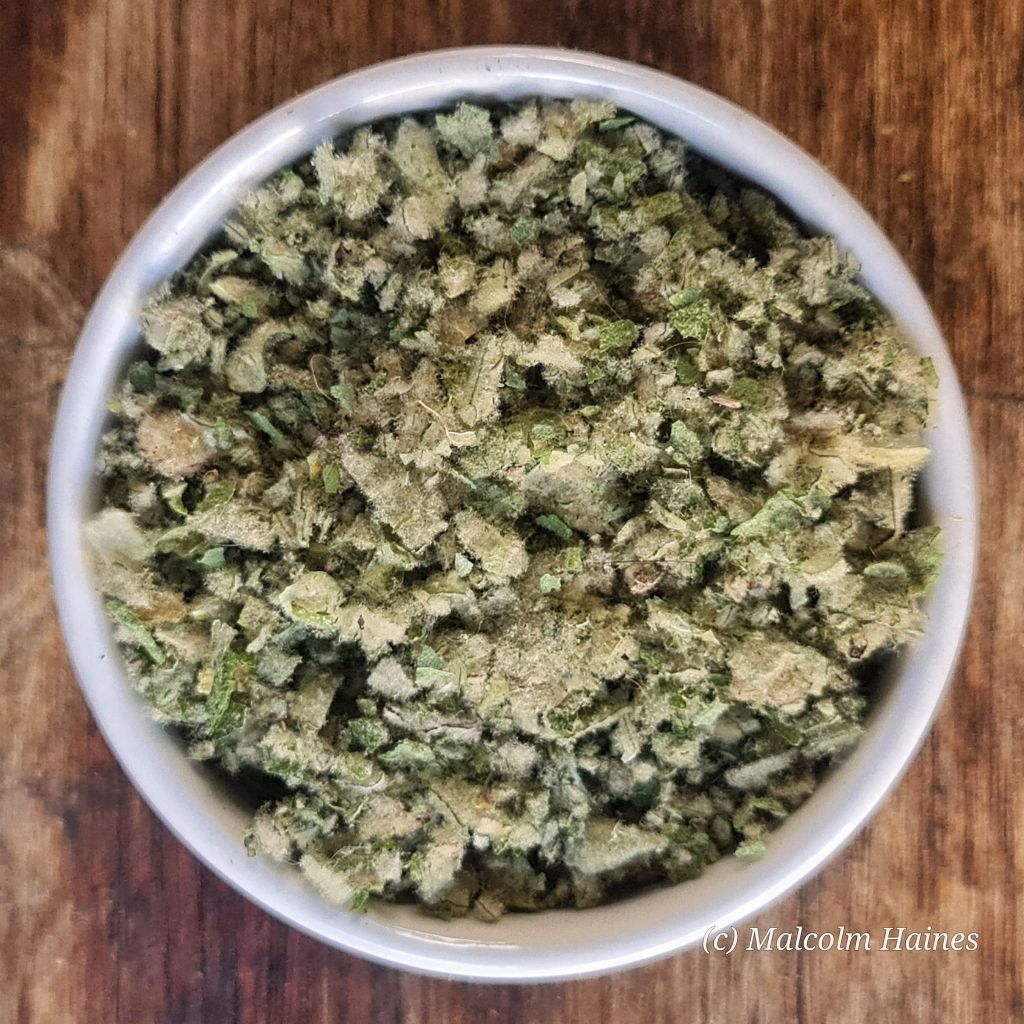
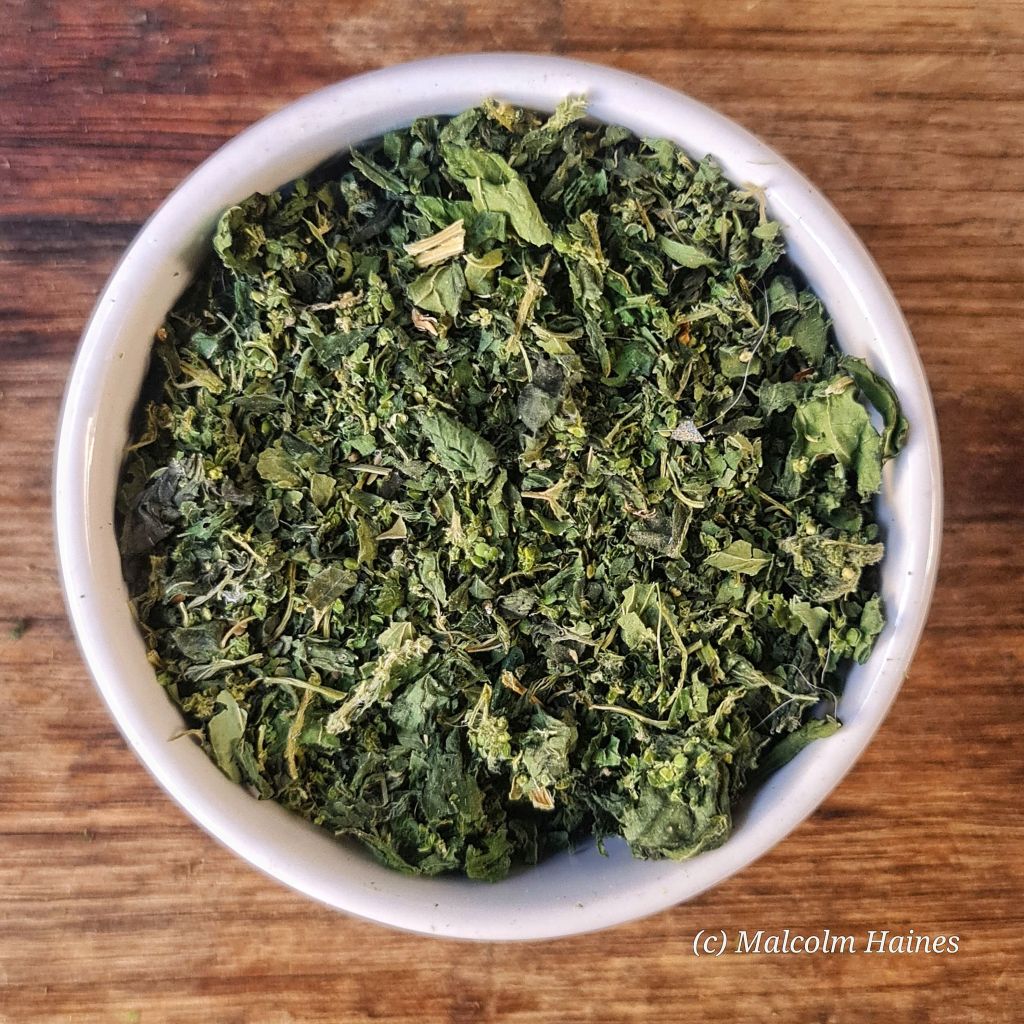
Drying herbs at home has many advantages over buying dried herbs from the shop. You can see this clearly in the pic below. Both are Rosemary but the sample on the left is from a health food shop. It is organic and has a lot of aroma but looks dry and lifeless and those are probably the characteristics of the remedy you make from it. The sample on the right of the pic is home grown and dried Rosemary, You can tell immediately from the colour that it is more vibrant and alive than the other sample, much better for making remedies from. It smells good too.

However you dry your herbs, ‘low and slow’ should be your motto.
How will I know when the herb’s dry?
Perfectly dried herbs retain the look and most of the smell and taste of the undried source. They will be crisp and crumble easily when rubbed between your fingers. Harder plant parts, when fully dry, will snap when bent.
Flowers will usually discolour a little. Some folks are incredibly good at drying their flowers and keeping them looking like the original. I’m not that good yet!
Leaves should look a similar colour to the parts you harvested and have a similar smell to the original, too. At least they should have a plant smell. It’s hard to describe it, but they should still smell like they have some life in them.
Plants containing oils and resins such as St. John’s Wort and Calendula should still be just a little sticky when dry.
If your dried leaves are brown, dull and insipid looking, those will be the type of results that you will achieve with your remedies. They’ll probably still work, but they won’t be great. Of course, some herbs parts are dry and brown anyway, so keep that in mind! Most commercially available herbs are dried to that dull brown colour. If you ant to store your herbs for years and years, that’s what you’ll have to do but if you harvest and use them annually, use this post as your guide.
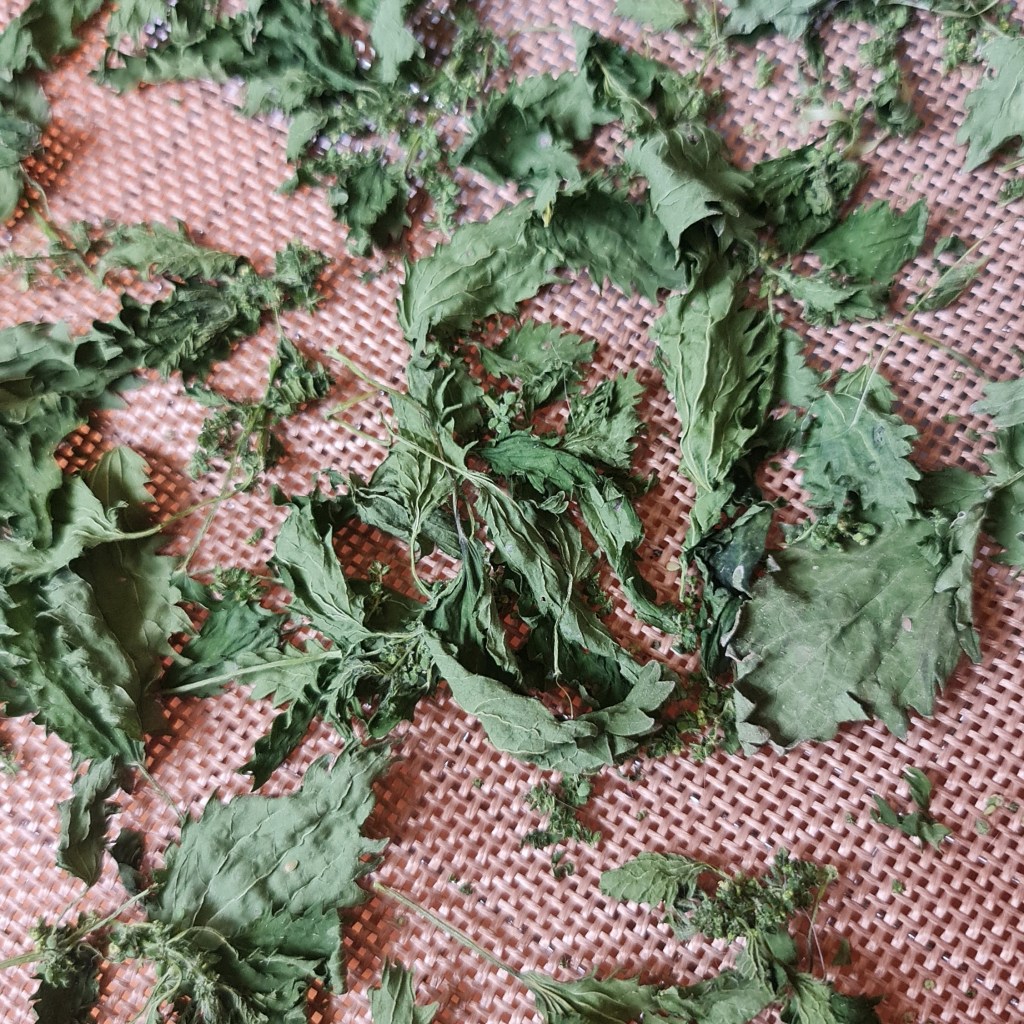
The gallery below shows a range of herbs dried to perfection.





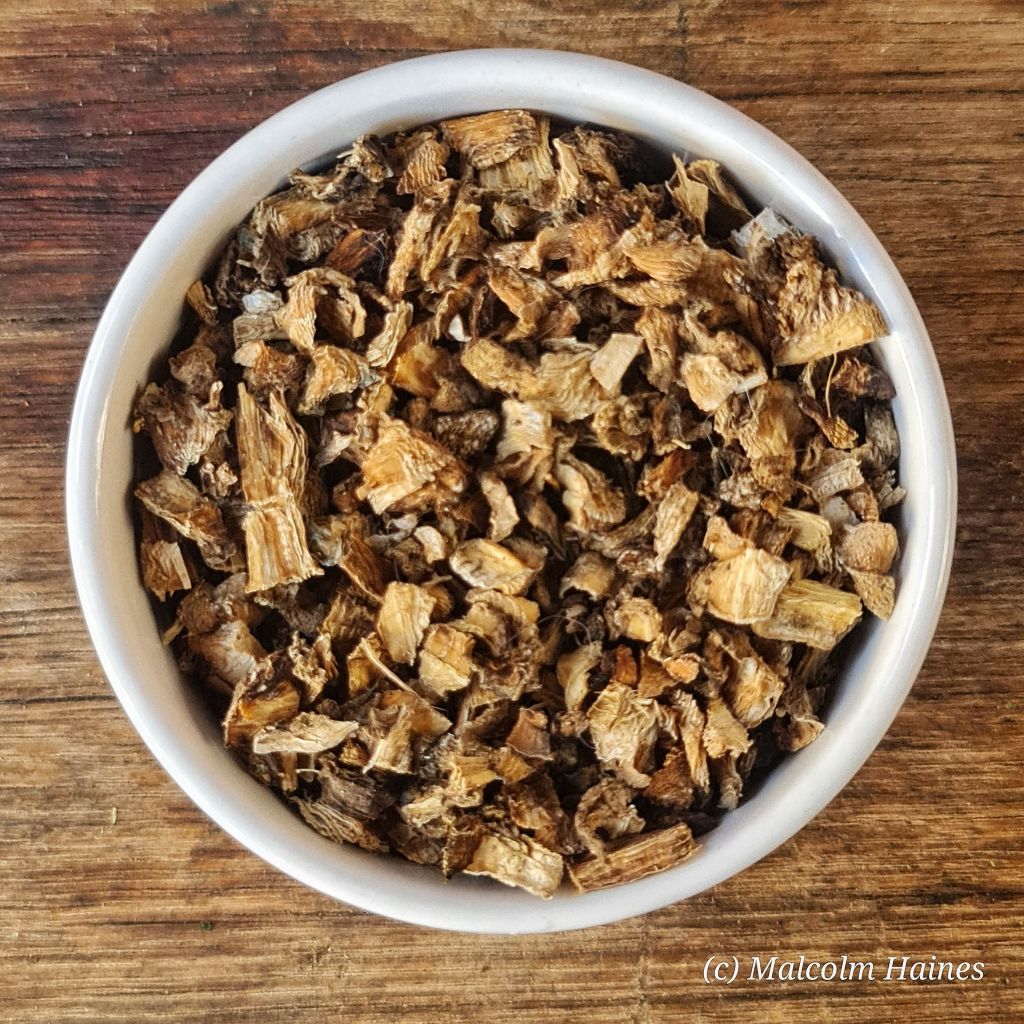
Preparation for drying
Whatever drying method you have chosen, you may want to rinse your herbs to remove dirt and other contaminants. This is important if you’re wildcrafting on roadsides or public spaces in cities.
Pat dry your herbs to remove as much excess surface moisture as possible. Make sure you flip them over and get the back too. If you’re hanging your herbs to dry, ignore the next couple of paragraphs about size and spacing.
If you are drying leaves, make sure that the stems are removed. With some herbs, these can take much longer to dry than the rest of the leaf. Cut or tear them into smallish pieces, similar in size. That will help speed up moisture loss.
Space your herb evenly on the tray or rack. It can be hard but try not to let pieces touch. Having space between the herbs to be dried allows good airflow, which is the secret to good drying.
Doing these things will help your herbs dry quicker and more evenly.
Natural air drying
Air drying using natural air is the probably the oldest and certainly the easiest way to dry herbs.
You can dry your herbs laid out on open racks or trays or tie them in bundles and hang them somewhere convenient. There are also mesh racks that can be suspended from above to allow excellent air flow and prevent access to bugs. Cane baskets work a treat for small amounts.
If you use a wire or plastic mesh tray or rack, you will have no more work to do until you pack the herbs for use or storage. You can use solid trays, such as you will find in your kitchen but the airflow will be restricted. In this situation, I recommend turning the herbs several times during the drying process to ensure even and complete drying.
Before drying, make sure that your racks or trays are clean. Depending on how fine the spaces are between the wires, you may want to place a layer of paper over them but don’t use newspaper or paper printed with inks, the toxins in those can leach into the herb, ruining it.
My preferred way of naturally air drying herbs is in hanging mesh driers such as you can buy from hydroponics shops. There are several different designs of these but I prefer the design of the one in the pic above. The mesh is very fine and the zips that allow access to the layers are well thought out and make accessing the whole tray easy. Some designs have a vertical zipper in each section that makes it difficult to get your hands all the way in. Other designs have a horizontal zipper that has a similar problem and causes the dried herb to pile up near the entrance. Mesh size is also important – too coarse a mesh allows smaller herb pieces to fall through when disturbed by the wind or when you are emptying the hanger. Putting a sheet or something below helps with this but its best to buy a hanging drier that has the finest mesh you can find.

Then there is the question of how many layers? It’s not a problem with fixed driers but the hanging ones come in variations ranging from 1 to 8 layers. Too many layers means that the whole thing is wobbling as you try to load or unload layers, which can be a bit frustrating. My preference is 2 layers.
An option for drying very small amounts is one of the mesh document trays that you can see in the pic below. I found this metal one for $2 in a local opshop and it dries small amounts quite well.

Hanging bunches – very traditional.

Tying your herbs into a bunch and hanging them somewhere safe with good ventilation is the easiest way to dry them. It’s probably the method with the longest history too. You generally leave the leaves attached to the stems until the whole bunch is dry before removing them.

Simply tie together 6 – 10 stems or small branches and hang them in the appropriate place. Rubber bands work better than string or wire because, as the stems shrink with drying, the bands tighten automatically. With herbs that shrink a lot, wire or string may let them slip through.
Don’t be tempted to make too big a bunch or the air won’t be able to get to the middle stems and that will allow moisture to hang around and spoil the batch.
If you are drying plant parts that have seeds on them, you may want to place a piece of paper or fabric below the bunches to catch the seeds as they drop.

Solar drying
Drying herbs in a solar dryer is an excellent use of abundant, free energy when the Sun shines. It can be a bit awkward in Winter though.
Solar dryers work by creating a convection current of warm air that rapidly dries herbs. They’re not as ferocious in their heat as solar ovens but can still get quite warm.
Dehydrators and ovens
Dehydrators are the perfect way to dry your herbs. You can control the both the heat that the herbs are dried at and the time that they dry for.
You have good control of the temperature, allowing you to keep it constant rather than it being subject to the vagaries of Sun and clouds. The air flow is also constant.
They do, however, use electricity and generate heat. The perfect solution is to use them in Winter and to use them in living areas where they can take the chill off of a room.
I’ve found that the box style dryers are better than the round, stacked tray variety but other folks swear differently. The trick with both is to keep the temperature below 40°C. That ensures slow, even drying as well as the preservation of most of the medicinal constituents of the herb. If you’re buying your first dehydrator, look for one that allows you to set the temperature to 35°C or below.
Leaves can take 4 – 12 hours to dry in a dehydrator.
The best way I’ve found to make it rain is to put out some herbs to Sun dry!
Dry weight
Plants contain a lot of water and this amount varies from plant to plant, season to season and therefore, batch to batch. As you become more proficient with preparation methods such as tincturing, this water can become important.
Here’s a couple of examples of fresh weight vs dry weight bases on 100g of fresh plant material.
- Chickweed 10 grams dry = 90%water
- Fumitory 12 grams dry = 88% water
- Nettles 25 grams dry = 75% water
- Hoarhound 27 grams dry = 73% water
Part by part
Drying flowers and leaves
I much prefer to dry flowers and petals very slowly. I never do large batches and lay the petals out on a coarse cloth somewhere where there is good airflow.
Spread evenly on a tray and try to make sure parts don’t touch. Don’t overload your trays, you will get faster and better results from a tray with plenty of space for airflow than you will from a densely packed one.
Don’t succumb to the urge to crank up the temperature at any stage, keep things even.
Leaves are ready when you can crumble them between your fingers.

Bark and wood
Cut into small pieces and allow to dry slowly in a warm place with good airflow. Turn regularly to ensure even drying. They ae usually ready when you can snap piece between your fingers.
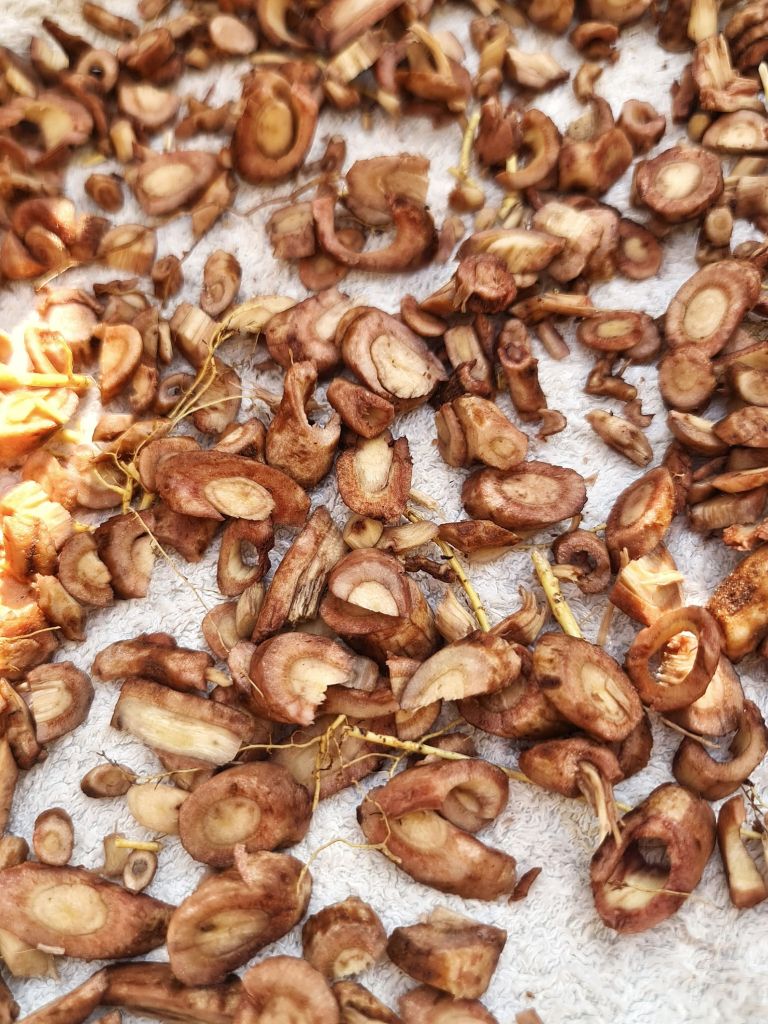
Roots and rhizomes
Wash and pat dry, cut into small, even sized chunks or thin slices. I like diagonal slices, a couple of millimetres thick and about 2 cm long. Turn regularly to ensure even drying. They’re ready when they’re tough. Slices should be hard and snap when bent.
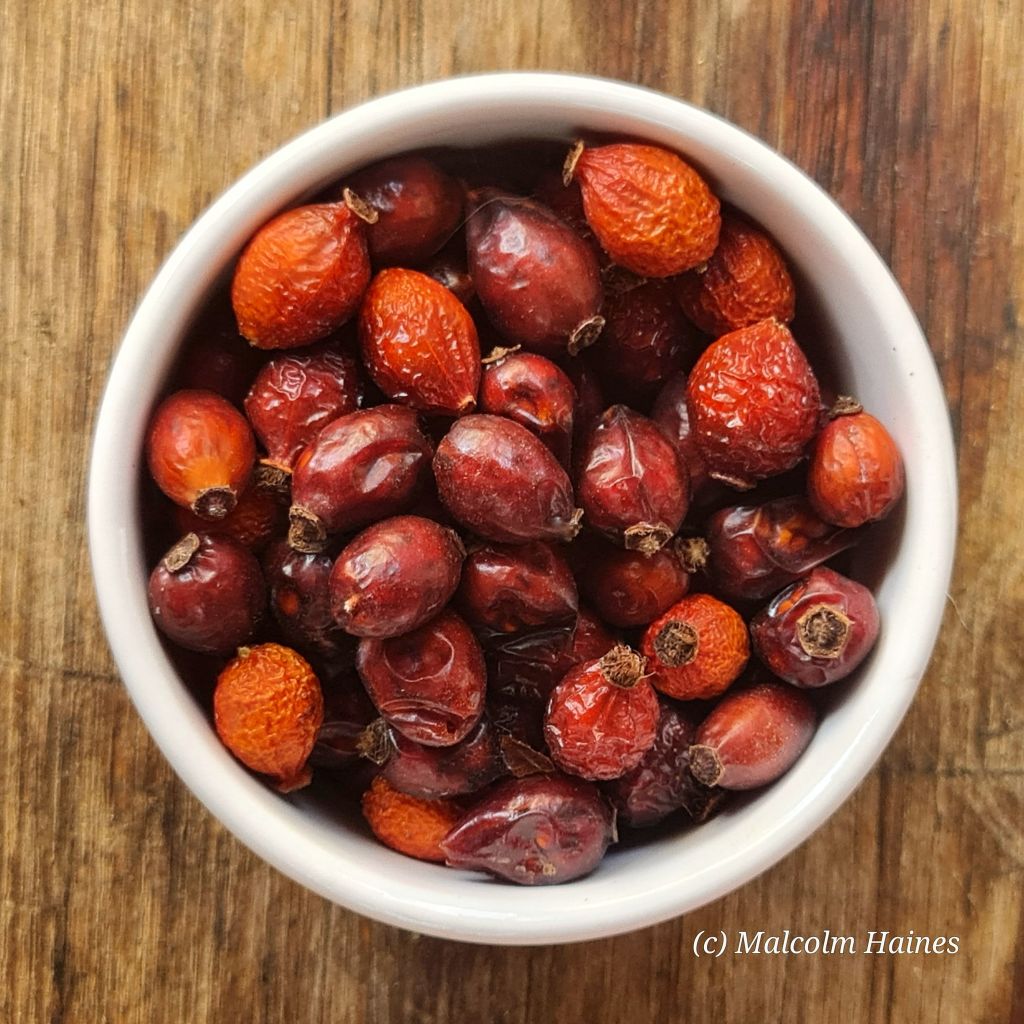
Berries and fruits
Berries such as Elder and Hawthorn and fruits such as Rose Hips can take a long forever to dry are best dried outside in natural air at least until partially dried in order to save electricity. They look ‘done’well before they are, so my technique to check if they’re done is to dig my thumb nail into the flesh. If it goes in easily, the herb isn’t dry.
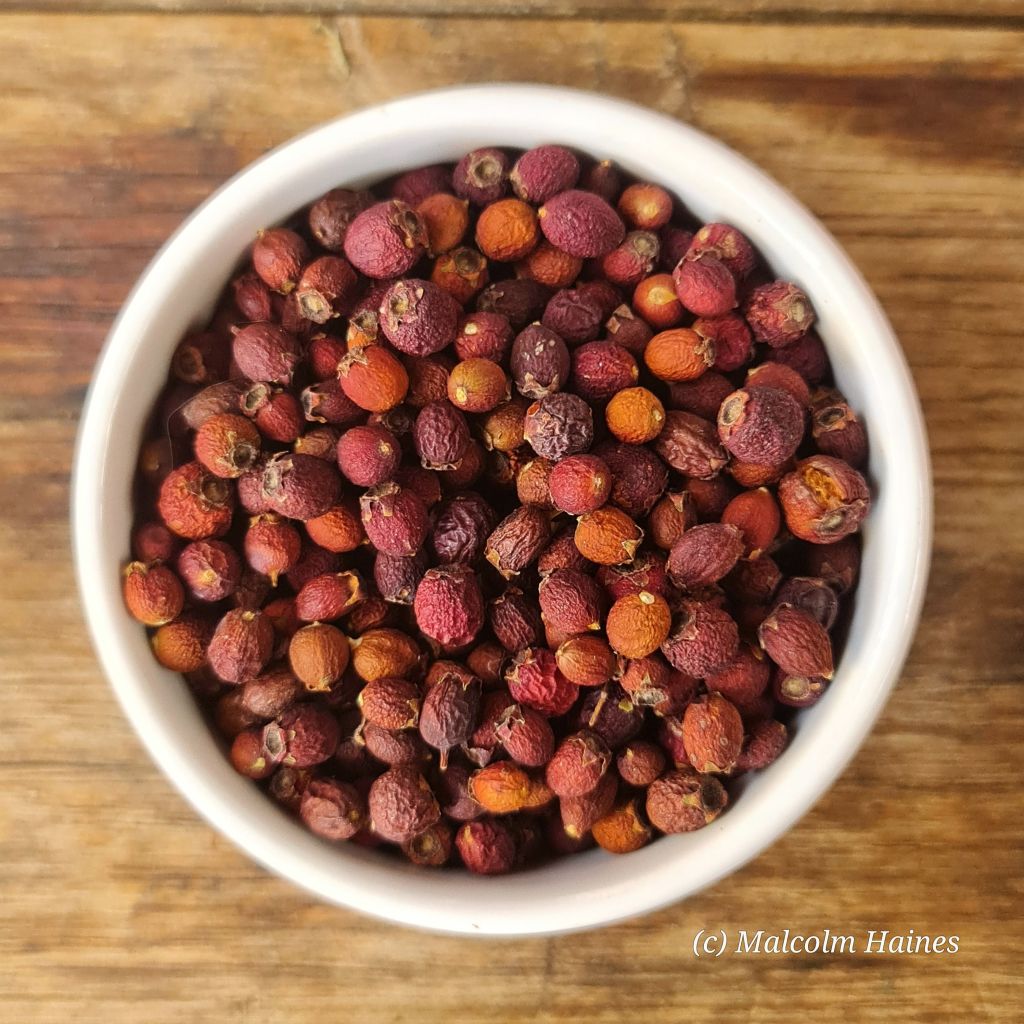
Bulbs and corms
There are two great ways to dry bulbs. One is to clean them and hang them, singly or in bunches, somewhere where the airflow is good. Think of Onions or Garlic hanging with their leaves braided together.
Another way is to remove the leaves and slice the bulb or corm thinly and dry as you would a root or rhizome.
Normalising (or equalising) the freshly dried herbs
When your herbs have been dried to your satisfaction, gather them and place them in a sealable container for 12 -24 hours. This allows any remaining moisture (and there’s always traces) to become more evenly distributed throughout the herb material. It’s a way of reducing the chance of moister spots in parts of the herb that may have not dried completely such as a particularly thick piece of stem that you didn’t notice.
Getting the right size.
To achieve better consistency in your remedies, it’s better to reduce your dried herbs to an (almost) uniform size. You can do a lot of this when you are cutting your herbs for drying or you can put them through a grinder (the blade type, not the crushing variety) or pass them through several sieves of reducing mesh size. I like to crush them by hand to a reasonable size, then pass the herbs through a 6 mm stainless steel soil sieve. Anything that can’t be broken up and passed through this size aperture is put aside. Then I pass the finer material through a #6 sieve (stainless steel of course) which reduces the pieces to approximately 3 mm which is perfect for teas, infusions and tinctures.
The larger pieces that didn’t make it through are then put into a small coffee grinder and reduced to a finer size. I don’t reduce them any further, to powder, until they are needed.


Storing your dried herbs
There are many ways to store your herbs and some things that you can do to ensure that they are stored correctly. We have a page here that is dedicated to storing your herbs.
Other herb pages on Ligaya Garden
We cover a lot of ground on many herb related topics here on our website. There are whole pages devoted to different topics as well as frequent posts. Some of the links are –