Common names: Thyme, Common Thyme, German Thyme, Garden Thyme, Wild Thyme, Mother of Thyme:. Serpillum, Serpyllum, Quendel, Ajagandha (Ayurveda), Hasha, Jangali Pudina (Unani), Bai Li Xiang (TCM)
Taxonomic name: Thymus vulgaris (Common Thyme), T. serpyllum (Mother of Thyme, Wild Thyme)
Family: Lamiaceae
Related herbs: Sage, Rosemary, Oregano, Marjoram, Mints, Basil
Area of origin: Mediterranean
Parts used: leaves and flowers
Can be used for: sore throats, laryngitis, colds and flu, coughs, chills, internal and external infections, inflammations, wounds, fevers, menstrual issues, body odour, muscular tension, urinary tract infections
Organ/System affinities: Lungs, Spleen, Stomach, Kidney, urinary tract, respiratory tract, digestive system
Healing Actions: Antiseptic, antibacterial, analgesic, anti-inflammatory, antioxidant, antispasmodic, antipyretic, antitussive, astringent, carminative, choleretic, cicatrizant, depressant, deodorant, diaphoretic, expectorant, emmenagogue, immunostimulant, hypotensive, mucogenic, myorelaxant, nervine, rubefacient, stimulant, tonic, urinary antiseptic, vermifuge, anthelmintic, uterine stimulant
Taste: pungent, bitter
Tissue states: cold, damp, stagnation, wind, tension
Energetics: warming, drying, dispersing, relaxing, toning
Healing constituents: Volatile oil (inc. terpenoid phenol thymol, isomer carvacrol, cymol, linalool, borneol, pinene, 1.8 cineole, geraniol, bornyl/linalyl acetate, thymol methyl ester) – very variable in composition. Flavonoids (apigenin, luteolin, thymonin, naringenin and others). Acids (labiatic, caffeic). Tannins, Bitter, Triterpenoids, Saponins, Resins.
Warnings: Taken internally, the volatile oil may irritate GI tract. Overdose of the oil can cause abdominal pain and collapse. Never use Essential Oil neat on the skin, it can be irritating, as it does its job too well!
Avoid if you have thyroid problems.
Like many of the Lamiaceae family, Thyme can act as a uterine stimulant, and emmenagogue, so should be avoided in pregnancy.
Should not be given to children under 3.
May interfere with: anticoagulants, antiplatelet drugs, blood thinners, anticholinergic drugs, estrogens, antihypertensives, anti-diabetics, ain killers (codeine, paracetamol), CNS depressants (diazepam, pentobarbital).
Description
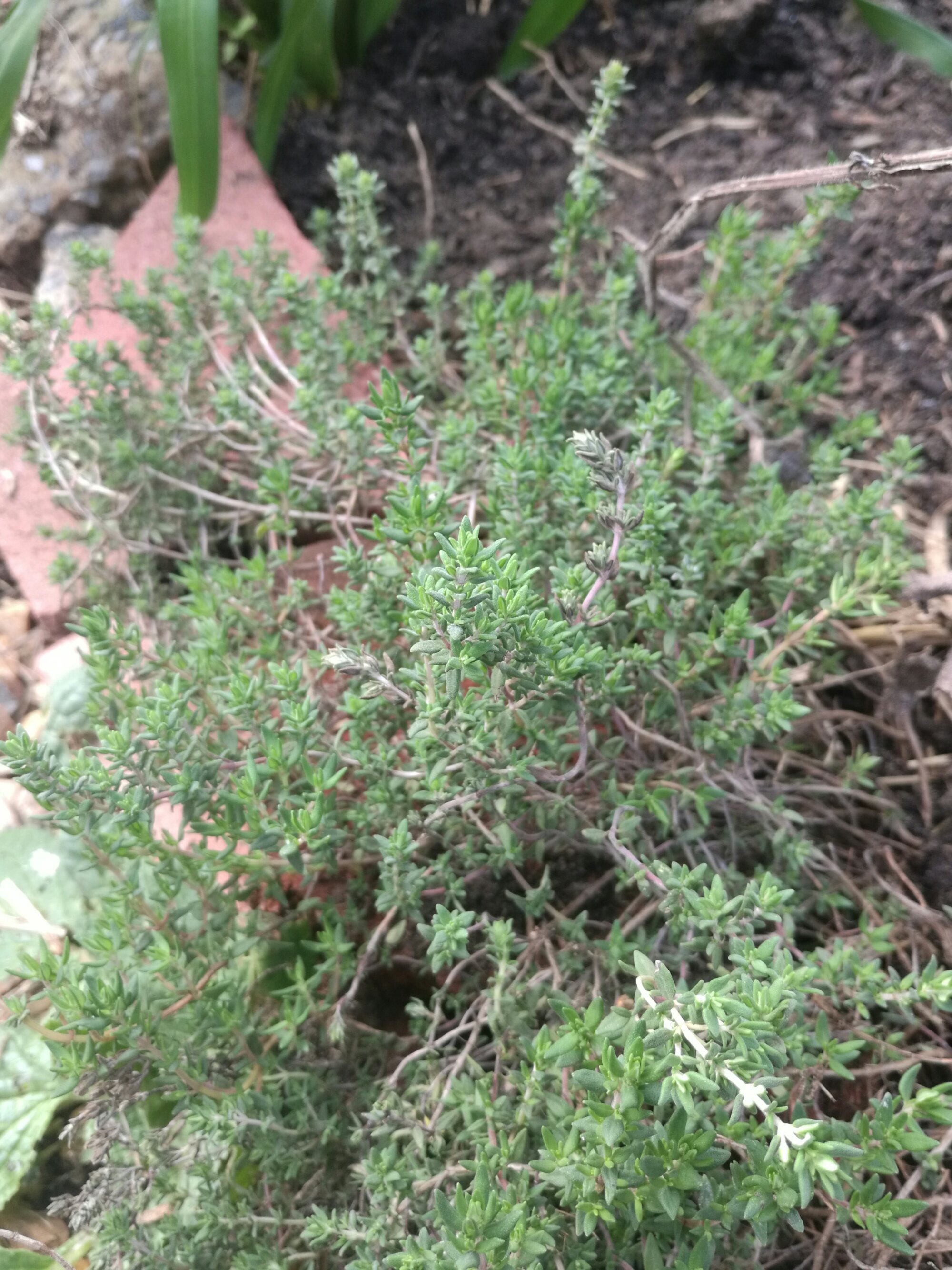
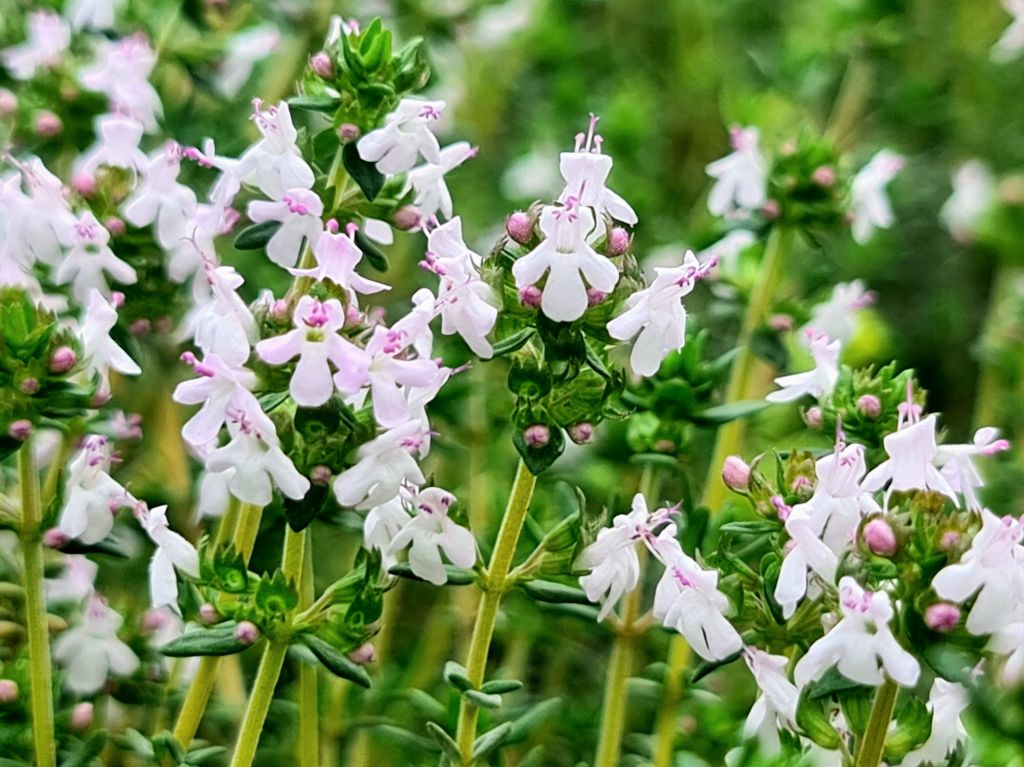
A perennial, mat forming herb, Thyme has slightly rounded grey green leaves which are in opposite pairs and are highly aromatic. They are held on squarish, sprawling stems that tend to become woody over time. Prolific purple or pink flowers have the characteristic lipped form of the Lamiaceae family.
T. serpyllum or Wild Thyme is very similar but has distinctively lilac flowers and is generally a little more hairy than T. vulgaris. Both can be used interchangeably for our purposes.


Medicinal Uses
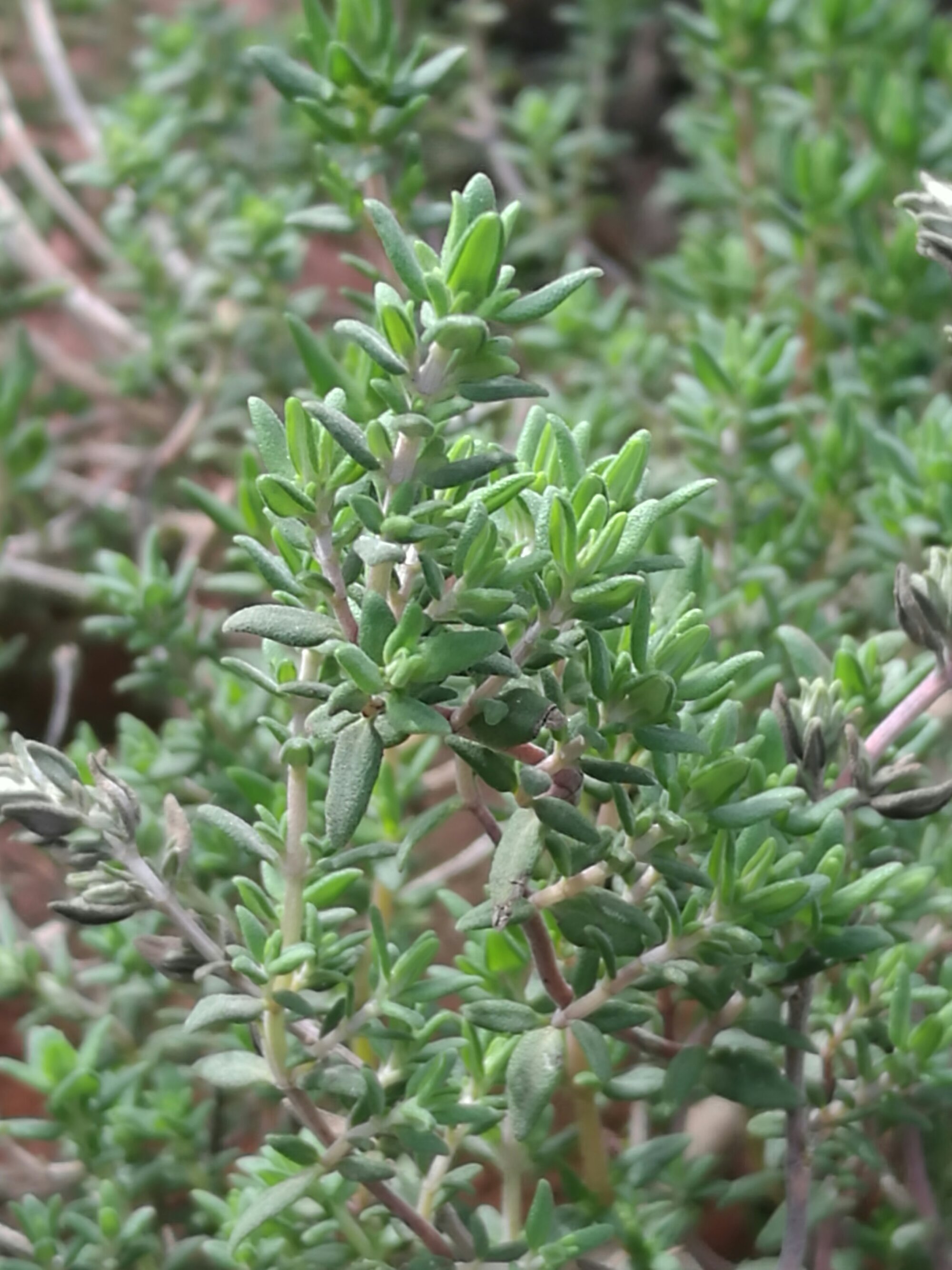
Thyme (Thymus vulgaris) is one of the herbs that we immediately think of when thinking of cooking. It’s another of the amazing Mint family (Lamiaceae) and is a close relative of Marjoram and Oregano. There are many species and cultivars related to the ‘original’ but long as you can get that great Thyme smell from them, they will be beneficial in the ways covered on this page.
Thyme gets its kitchen reputation from its wonderful taste and its traditional use as a meat preservative (many of our favorite kitchen herbs were used to preserve meat, long before refrigeration became the norm).
Many of Thyme’s amazing properties can all be traced to an oil that it contains called Thymol. This oil has the ability to kill many infective organisms in any part of our body, how it works best for each case is more a feature of the method of preparation. Thymol can be rubbed externally, drunk, inhaled, taken in capsules, used in teas, ointments and creams.
Looking at its other properties, we can see that Thyme is a warming herb, useful in conditions that feature cold, chills, stagnation and decay that results from this lack of warmth and movement. That’s the key to it’s properties that help our digestion that’s also why it’s such a popular kitchen herb. As a warming herb, it makes a gentle carminative for cases of upset stomach, especially when caused by too much cold food or drink. It works well for stomach infections too, killing off the invaders , calming the mucosa and moving the fluids.
Thyme is effective in moving fluids through tissues that are afflicted with cold, damp and stagnation by moving blood to the surface and opening pores in the skin to allow this fluid to leave as perspiration, making it a diaphoretic and highly appropriate in colds where the fever hasn’t broken into a sweat. The moving, dispersing, property of Thyme helps to thin mucus that has been thickened by lack of movement and stagnation (Penelope Ody points out that is especially useful in cases of deep seated chest infections marked by thick, yellow phlegm). If we add to this it’s ability to kill infective organisms, we can build the picture of Thyme being an excellent herb to reach for when we have respiratory issues caused by infections, especially those with thick phlegm and chills. The Thymol is easily inhaled into the respiratory tract as steam or an essential oil. Here it acts directly on the mucous membranes, killing infection and thinning mucus.
Thyme is a mild diuretic – there’s that fluid moving property again. In fact, I’ve found that after taking a good amount of Thyme, infusion, urine can begin to smell like the herb. That’s a good thing and points us to its use in kidney and urinary tract infections where its antimicrobial and diuretic properties can be of great use, though I’d combine it with Corn Silk to make an extra effective and soothing blend. While in the pelvic area, it is good to note that Thyme also helps the flow of the menses, especially in cases where congestion or blockage is showing as congealed blood. It also benefits sufferers of leukorrhea.

If you’re finding this information useful, share it with your community
The psychological effects of Thyme are fascinating and worth a look too!
As Thyme gets deep into our body and moves fluids and warms tissues, releasing many things that it helps our body dredge up, it acts similarly on our mind. Thyme is a relaxant for our parasympathetic nervous system, as can be seen in its effects on dreams, an excess of which come from a tension in that system. Thyme aids sleeplessness due to dreams and nightmares that result from problems in our unconscious, it helps to release these energies from deep down and improves sleep by easing their passage. As with some other herbs in the Mint family, Thyme is useful for people who just can’t relax. In TCM, Thyme is similarly used to clear Wind, that usually means spasm and tension in both body and mind and results in dizziness, epilepsy and headache along with muscle spasm and colic.
Matthew Wood also points out that Thyme works on the Thymus gland (are the names a coincidence?) which is responsible for not only our immunity but our sense of self-identity.
Aren’t herbs wonderful things? How many of us, seeing Thyme in their kitchen, would have thought of it as being helpful with such deep issues? Once again, think of ‘movement’ when you think of Thyme.
In all of the ways that we’ve looked at Thyme, we can see how it is a most wonderful herb for respiratory ailments, it kills bacteria, clears phlegm, eases breathing through its effects not only on the tissues but on the nervous system itself. It can aid in sleeplessness that comes from with the flu. I think that ticks most of the boxes!
Thyme is also a well known vermifuge, meaning that it kills worms like hookworm, tapeworm, threadworms and roundworms. I haven’t had the pleasure of trying it myself for this purpose but as our water and food supply become less reliable (thanks capitalism!), knowledge of these benefits may become necessary.

Preparing and using Thyme
Thyme makes for a wonderful tea or infusion which, when drunk hot can help relieve many of the symptoms of a cold. Drunk before bedtime, Thyme tea can help with sleeplessness due to too many dreams or a too busy mind. It combines nicely with the Bach Flower Remedy, White Chestnut which helps to turn off the radio in our mind.
A wash or a fomentation made from a strong infusion can also help with external injuries and infections. It is also useful for both respiratory external infections when used in a bath, whether a sitz bath, foot bath or regular bath. A steam with Thyme can be positively rejuvenating when one has a cold.
A gargle made from a Thyme infusion can help soothe sore throats.
Thyme tinctures well in alcohol and can be used internally for everything listed in this post. A couple of drops of Thyme tincture applied to a cotton all and left on inflamed gums or teeth can help reduce the inflammation and provide relief from pain – and who doesn’t hate toothache?
You can make an infused oil of Thyme and use it instead of or in addition to Oregano infused oil. This can be used for external infections and inflammations and can be used for gum and tooth infections by soaking a cotton ball in the oil and holding it to the infected area.
Thyme stuffed pillows or sachets were once a favourite way of preventing nightmares. I wonder if it can be combined with Mugwort , which is famous for its dream qualities?
Applied externally, Thyme in vinegar is said to to soften warts and dry skin, though this is one of the properties of Apple Cider Vinegar too. Thyme’s ability to clear heat, along with its antimicrobial and antiseptic properties make it applicable in cases of eczema, especially when it is weeping and abscesses. Also external application of Thyme helps soothe joint pain from arthritis and gout.
Thyme essential oil is another very popular source of healing. I’m not that familiar with essential oils but it is one of the more popular plants prepared in this way.
Other herb pages on Ligaya Garden
We cover a lot of ground on many herb related topics here on our website. There are whole pages devoted to different topics as well as frequent posts. Some of the links are –