Common names: Sage, Garden Sage, Common Sage, Shenreg (TCM)
Taxonomic name: Salvia officinalis
Family: Lamiaceae
Related herbs: Mints, Rosemary, Lavender
Area of origin: Mediterranean
Parts used: leaves, flowers
Can be used for: food, stomach problems, liver problems, fluid problems, infected cuts and sores, amenorrhea, sinusitis, throat and respiratory infections, stopping milk flow, menopausal symptoms
Organ/System affinities: Heart, Pericardium, Liver
Actions: alexipharmic, astringent, diuretic, emmenagogue,, uterine stimulant, cholagogue,
Taste: bitter, pungent
Tissue states: cold, damp
Energetics: warming, cooling, drying
Healing constituents: thujone, cineol, camphotannins, diterpene bitter principles, triterpenes, steroids, flavones, and flavonoid glycosides.
Warnings: Sage can be used as a uterine stimulant, so caution should be taken during pregnancy
Description
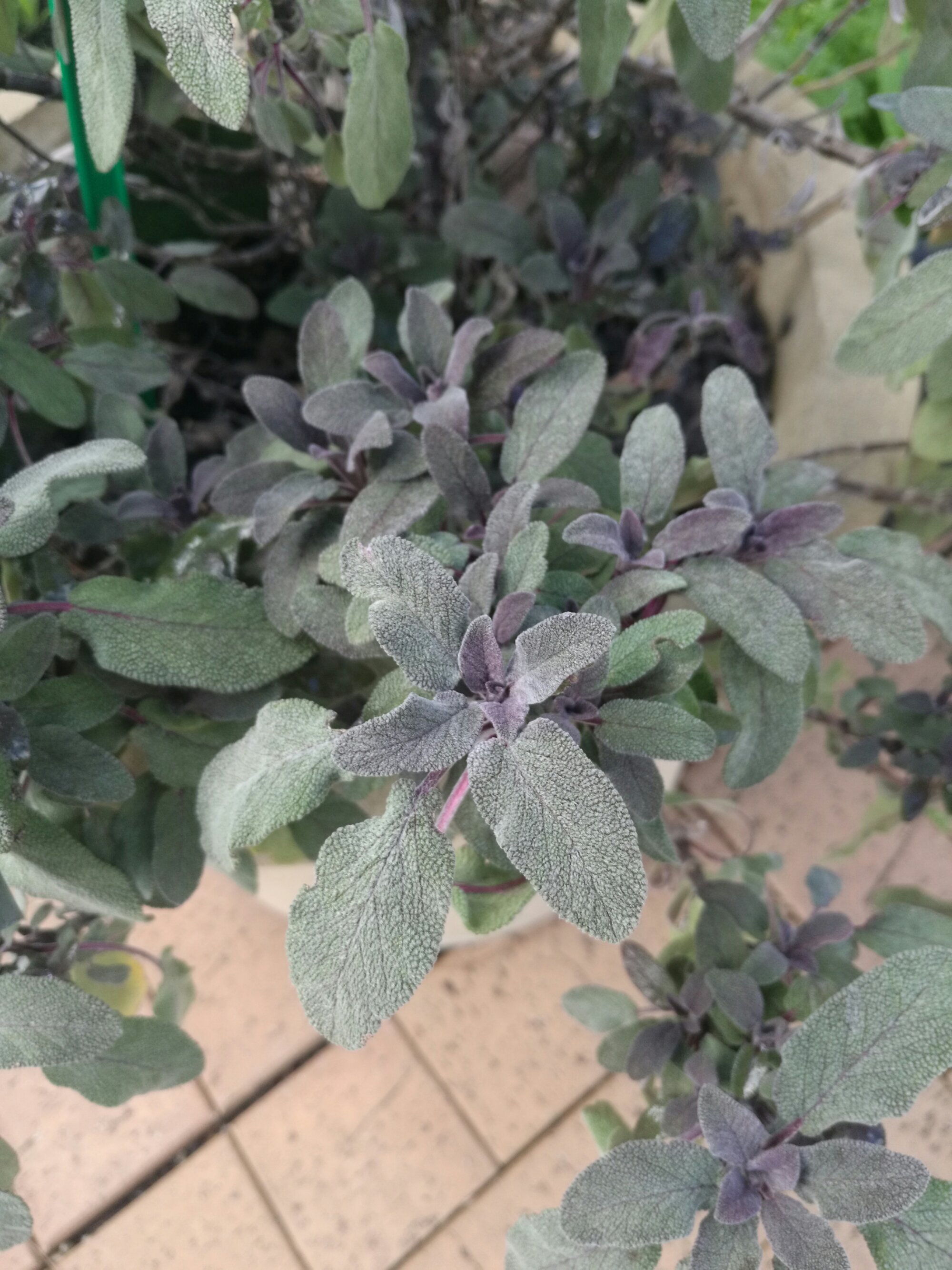
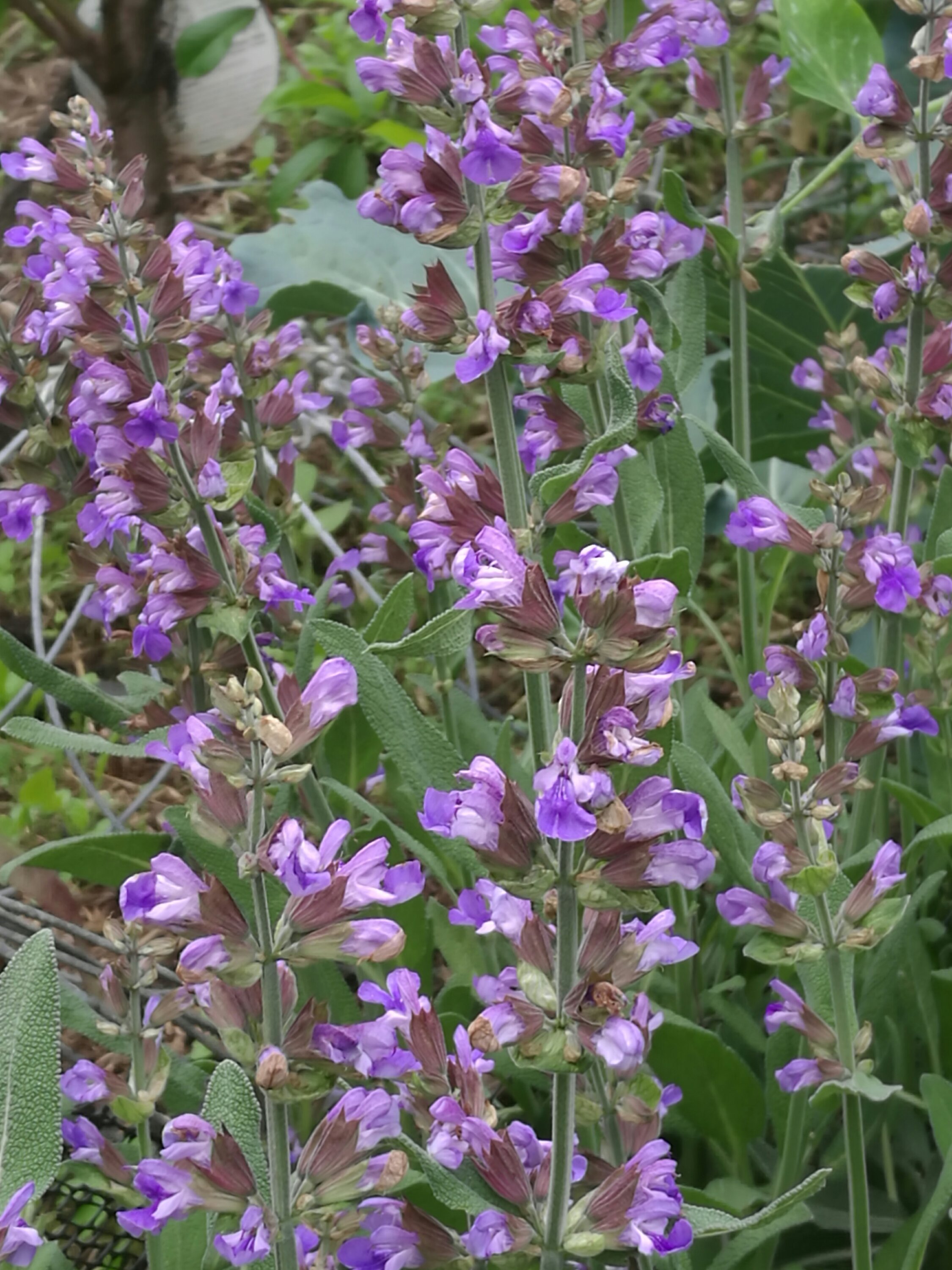
Perennial to 60cm tall with rough,slightly downy, oval leaves and possibly wrinkled leaves that are grey/green in colour. The leaves are aromatic and when crushed smell the distinctive smell of Sage. Purple flowers are borne in spikes and feature tubular two-lipped corollas which are characteristic of the family.
Medicinal use
Sage (Salvia officinalis) is another of those favorite kitchen herbs that has uses beyond being a tasty additive to meals. It’s great for body and mind.
Sage is well known as an antibacterial and is used as a tea and a gargle for sore throats, gum conditions, bad breath…anything that can relate to bacteria in the mouth and throat. It can also be used externally as a wash for skin infections, cuts, and sores. Its antimicrobial properties go some way to explaining why it was so commonly used in the days before refrigeration – it can help preserve food!
Salvia officinalis is useful in many cases of inflammation because of its astringent nature, its antimicrobial effects and its ability to relax peripheral blood vessels, allowing blood to flow better both to and away from the site of inflammation.
Sage is, what was in older times, called a masticatory – a substance that was to be chewed but not swallowed in order to maximise its benefits. Sometimes, chewing a Sage leaf or two is all you need to numb pain in the mouth and throat by swallowing the juice mixed with your saliva (there’s a memory hook for you ‘Salvia’ and ‘saliva’). While we’re on the subject of odd and weird herbal terminology, Sage was also used as a ‘sternutatory’, that is a herb used to cause sneezing. It was used as an ingredient in snuff. An even better word that I recently found applies to Sage is ‘alexipharmic’. It means that Sage is an antidote to poisons or venoms, having been listed for snake bites, insect bites as well as several forms of poisoning. In the old days, you may have seen it recommended for scorpion stings. Many herbs were listed as being useful for snake bites or scorpion stings and wondered ‘how many snakes and scorpions were in England when the old herbals were written? The place must have been overrun with them or maybe there were only one or two but they were very busy? Well, there were not as many as you would think, the terms get used a lot because the old term for, literally any bite or sting from an unidentified source was listed as a ‘snake bite’ or ‘scorpion sting’.
Sage has bitter properties and oils. In other posts, I’ve covered how bitters have an amazing range of actions on our bodies, but here we’ll stick with the traditional one. Through it’s bitter action, Sage stimulates the gallbladder to produce and excrete bile. Bile is the stuff that helps break down fats and oils and also stimulate the intestines to get to work and move food stuffs on through and out. Bile is an intestinal lubricant too and makes up a large part of our stools – the amount of bile in them will dictate their colour and buoyancy (whether they float or not).
We can see why Sage is used for a lot of stomach, liver and gall bladder symptoms such as nausea, biliousness, constipation and the like. Use it and you’re helping your whole digestive tract digest, assimilate and pass food.
Like all of my favorite herbs, Sage has even deeper effects. Sage works on the hypothalamus, you can’t really get much deeper than this. For those who have forgotten their high school biology, this gland pretty well controls all the other glands in the endocrine system – support it and you’re supporting all of them.
The hypothalamus reads the blood content and adjusts our hormones to make changes that are needed. Several key areas that this gland works on are; body temperature regulation, fluid levels and sex hormones. I think that this is also why Sage can be used to stop milk flow in nursing mothers who need that to happen. Sage influences so much in our body!
We mentioned that Sage promotes bile production, and therefore fat and oil digestion. The products of this digestion are called lipids and they influence and distribute key hormones like steroids and sex hormones. Better production of lipids means that these hormones are carried and distributed better. These hormones affect the skin and it’s fluid and oil levels as well as all of the other endocrine glands and so much more.
Sage is a normalizer for fluids. Blood, lymph, sweat, milk, urine, all can be balanced using Sage. Think of Sage when you see dry, withered skin, especially during menopause (when hormone production changes drastically). That is the distinguishing feature of an illness that needs Sage as a remedy. Its effects on the hypothalamus also explain Sage’s effects on blood sugar – this is regulated by the pancreas, which is in turn regulated by the hypothalamus.
If you read some superficial texts and articles, you will see that Sage is ‘good for’ increasing sweat, in others you will see it as being used to decrease sweating. Some will have it as good for increasing mucus production, others for decreasing it. Sage is similar to many other herbs that affect fluids in the body. They promote sweating when taken as a hot tea, decrease it when taken cold. Some will act to make us sweat when taken hot and make us urinate when cold. The term for this phenomenon is ‘amphoteric’ or ‘normalizing’ – they take the tissue state back to how it is supposed to be. I think the hypothalamus is key to how Sage does this. The hypothalamus’s effect on body temperature and fluid distribution goes some way to explaining this.
Preparing and using Sage
Sage works wonderfully for acute conditions when prepared as a hot tea. You can drink it for mouth, throat or upper respiratory complaints. The heat of the tea can be wonderfully soothing, especially if you add a little honey. Infusions, of course are more potent but you will have to warm a Sage infusion before using it in that way. Infusions of Sage and other aromatic herbs, when warmed are excellent for settling stomach problems through their carminative effect.
Sage also tinctures well in strong alcohol. It’ll work in Vodka but really shines when the concentration is higher.
I haven’t tried Sage as an oil or a glycerite yet but by all indications, it should be a ripper!
Some folks like to make Sage herbal salt. In a jar, use 60 grams of rock salt, mix in 20-30 grams of Sage . Put the lid on the jar and leave it somewhere warm until the salt has developed the taste of Sage. Delicious!
Other herb pages on Ligaya Garden
We cover a lot of ground on many herb related topics here on our website. There are whole pages devoted to different topics as well as frequent posts. Some of the links are –