

Common names: Feverfew Midsummer Daisy, Featherfoil, Featherfew, Xiao Bai Ju, Bachelor’s Buttons
Taxonomic name: Tanacetum parthenium
Family: Asteraceae
Related herbs: Chamomile, Dandelion, Lettuces, Prickly Lettuce
Area of origin: Eurasia
Parts used: Leaves picked just before flowering are strongest, though they can be used any time.
Has been used medicinally for: Migraine and severe recurring headaches, arthritis
Emmenagogue especially for sluggish flow with dark clotted blood. Helps with hormonal swings during menstruation. As a bitter tonic for digestive, liver and gallbladder issues, biliousness,. Colds & Flu (especially with headache and irritability). Inflammatory and chronic skin conditions (psoriasis and dermatitis). Toothache.
Healing Actions: anti-inflammatory, vasodilator, anti-migraine, analgesic, anti-oxidant, antimicrobial, febrifuge, emmenagogue, digestive stimulant. NOT a diaphoretic.
TCM: clears wind‑heat from the head, moves constrained qi, relieves pain
Taste: Bitter (so very bitter…yuck!)
Energetics: Slightly warming to neutral. Cooling
Tissue states: Irritated, hot, dry, tension
Organ/System affinities: Nervous, circulatory, digestive, reproductive and integumental systems. Liver, Gallbladder, Lung, Stomach, Chong and Ren vessels.
Healing constituents: A volatile oil (containing pinene and several pinene derivatives, bornyl acetate and angelate, costic acid, b-farnesine and spiroketal enol ethers).
Sesquiterpene lactones (parthenolide, with santamarine (=balchanin) and several others including esters of parthenolide, reynosin, artemorin and its epoxide, 3 b-hydroxyparthenolide, 3 bhydroxycostunolide, 8-hydroxyestafiatin). ,flavonoids such as luteolin and apigenin. Traces of canin, artecanin, partholide and chrysantholide. Acetylene derivatives.
Contraindications and warnings: Avoid before surgery because of its effects on blood clotting,
Pregnancy (it is a uterine stimulant). Can cause contact dermatitis. Some folks get mouth ulcers from chewing it. Gallstones and chronic liver conditions. Diarrhoea.
Apparently, stopping taking Feverfew abruptly after long term use can cause withdrawal symptoms such as headaches and joint pain
Drug/herb interactions: Feverfew slows blood clotting (inhibits platelet activity) so can interfere with anticoagulants and blood thinners such as warfarin (Coumadin), clopidogrel (Plavix), or aspirin.
Description
Feverfew is a short, bushy, short lived perennial. It is highly aromatic with a strong, bitter odour. In our area, it we treat it as an annual because it gets knocked back in the depths of Winter and the extreme heat of a South Aussie Summer.
Feathery, yellow-green leaves are alternate, pinnate–bipinnate, downward turning and hairless or with short hairs. Crushed leaves had a pungent, sharp, bitter smell that distinguishes it from Chamomile, Chrysanthemums or Daisies.
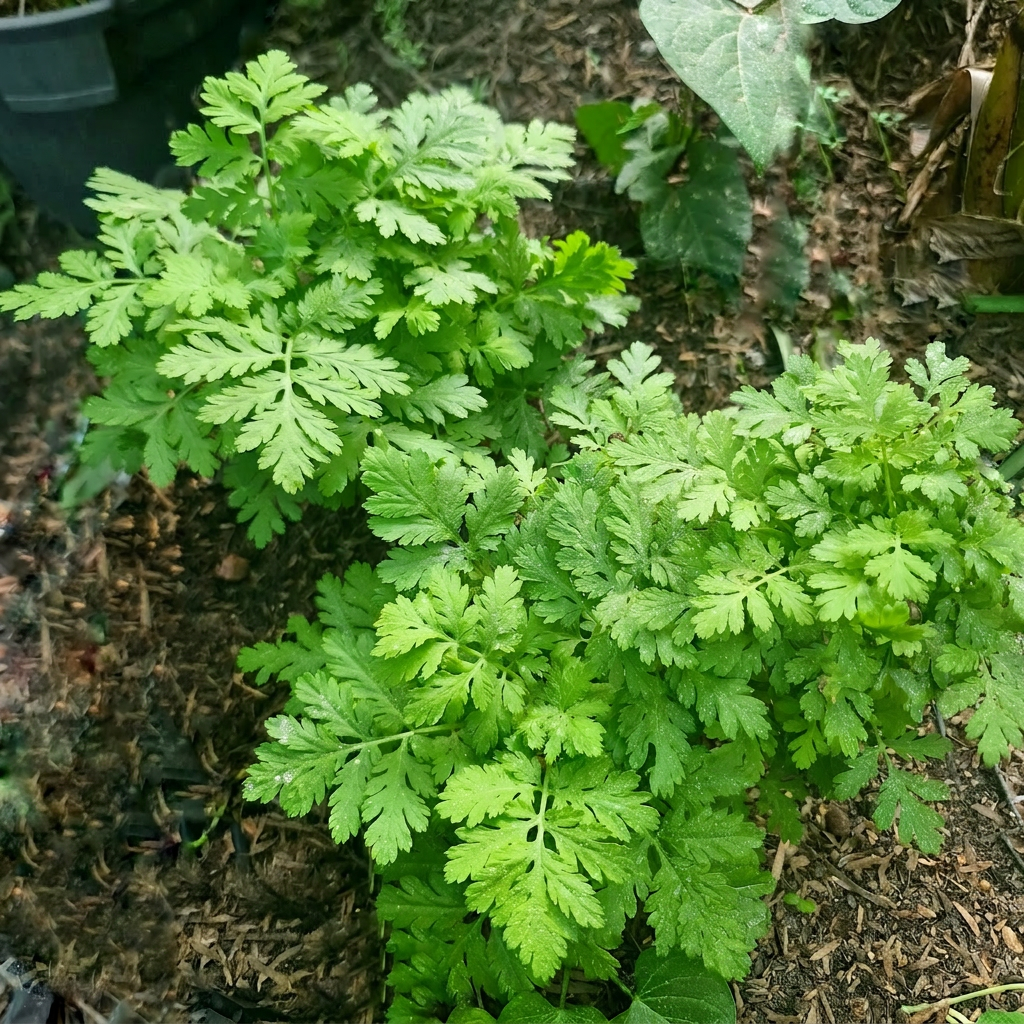
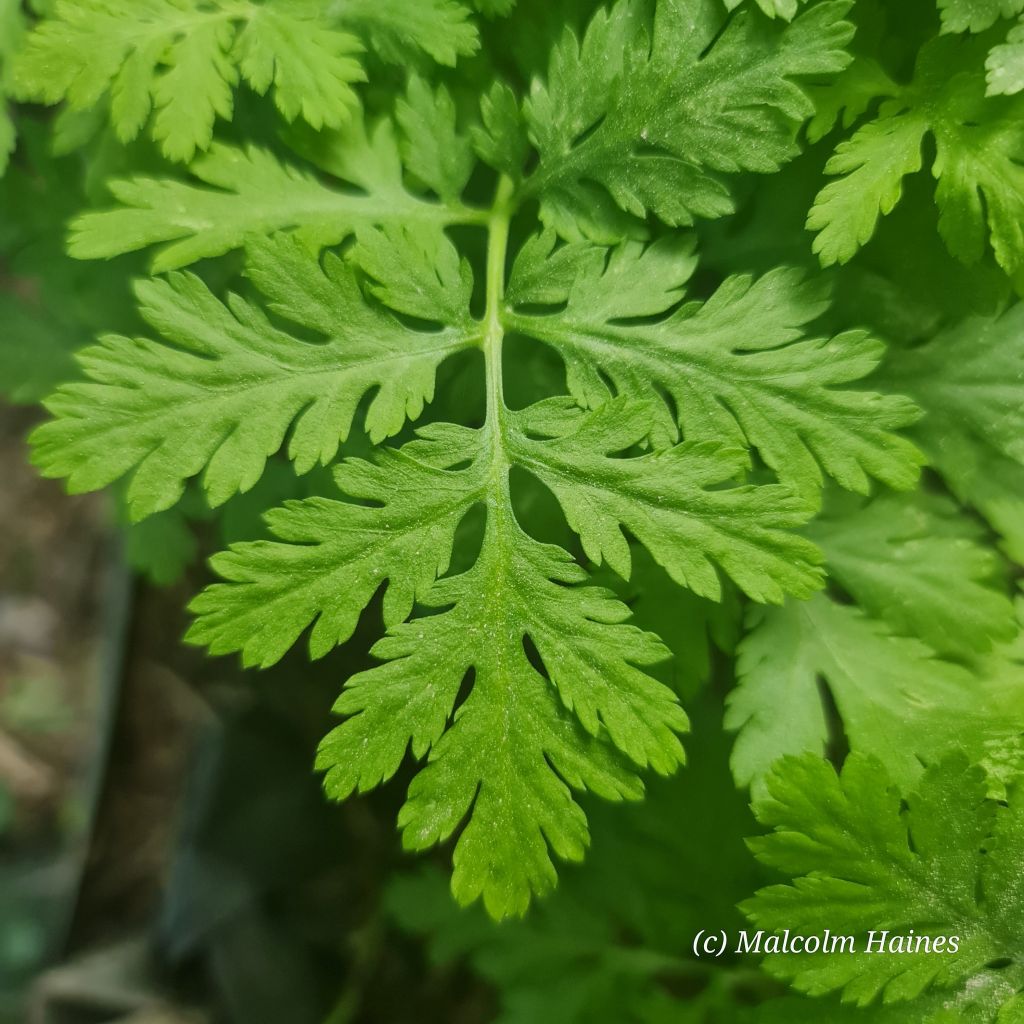
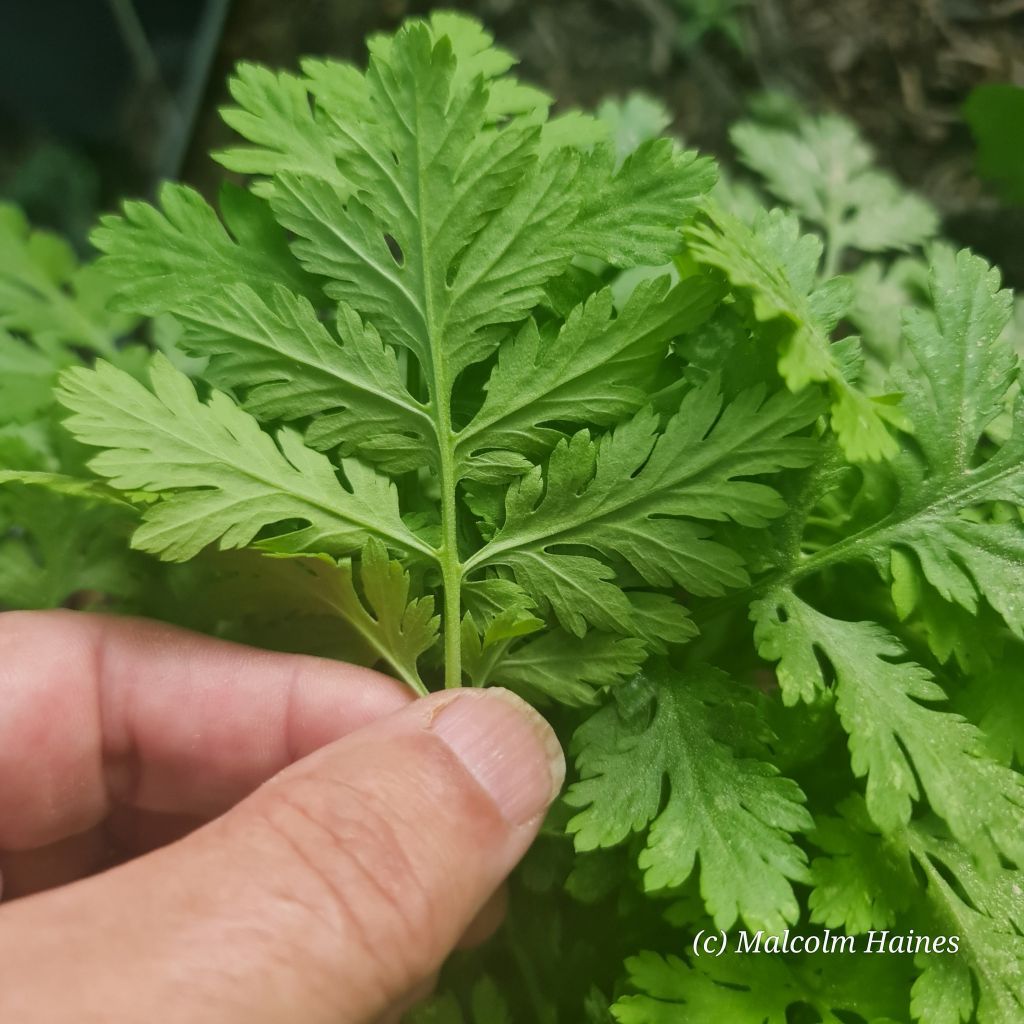
Daisy-like yellow flowers with a single layer of white outer-ray florets are arranged in a dense flat-topped cluster borne at the end of short stems. Flowers look similar to Chamomile flowers but have flat, if not convex centres as opposed to Chamomile’s dome shaped centres.
Feverfew self seeds prolifically, so you’ll always be guaranteed of a plant or two popping up anywhere they find appropriate.
Leaves can become quite unhealthy looking because the plant seems to attract every Whitefly that’s not living on our Kale.


Medicinal use
Regular use can reduce the frequency and severity of migraines and severe recurring headaches. its vasodilating action seems to have an affinity for the head and back of the neck, shifting the blood supply in a positive manner.
Anti-inflammatory for internal and external conditions including arthritis and muscle pain. It also works as a relaxant for smooth muscle tissue and help relieve tension throughout the body (I’m thinking its because of feedback through the Vagus nerve but must explore that further).
Feverfew can help women because it is an emmenagogue, especially for sluggish flow with dark clotted blood. It helps with hormonal swings during menstruation, menstrual cramps and regulates the cycle. By inhibiting production of prostaglandin – one of the key biochemical drivers of menstrual pain, uterine contractions, and the shedding of the endometrium, it can ease many of the symptoms found throughout the menstrual cycle.
Its bitterness makes it an excellent bitter tonic for digestive, liver and gallbladder issues. and it has been used to increase appetite, especially after surgery. as a mild bitter aromatic, it can support digestion by stimulating saliva and stomach acid production.
This versatile herb that lives to its name – Fever Few, is a pretty potent herb that can be used in colds and flu cases where fever is a dominant symptom especially when associated with feelings of head pressure, throbbing, irritability and the feeling of heat rising to the head. It isn’t a diaphoretic, in that it doesn’t open the pores or ‘release the exterior’ in the way that something like Elderflower does. Rather it works in a way similar to NSAIDs (non-steroidal anti-inflammatory drugs) do and reduces heat and pain caused by the production of the substance called prostaglandin that I mentioned above when yarning about menstrual issues.
Feverfew has been used for inflammatory and chronic skin conditions such as psoriasis and dermatitis (liver tonic, anti-inflammatory and diaphoretic propertied help here). It works because its constituent, parthenolide blocks blocks something called NF‑κB Here’s something to impress your friends with at parties – NF-kB stands for “Nuclear Factor kappa‑light‑chain‑enhancer of activated B cells. Try saying that three times fast after a couple of beers!). Basically, it is a protein that binds to DNA, turning on or off genes that switch on all kinds of inflammatory signalling compounds.
Toothache can be relieved by chewing fresh leaves and holding them against the affected area. The anti-inflammatory and analgesic properties of Feverfew reduce the pain. Personally, I’d go for chewing Yarrow roots, that taste isn’t as bad!
In the lab, Feverfew has been found to supports DNA repair and it has also been found, in laboratory studies, to have an apoptosis (cell death) inducing effects in some cancers such as Leukaemia, Breast cancer and Cervical cancer. A year or so ago, I met someone from Roseworthy Agricultural College who mentioned that they had a large scale plot of Feverfew growing that was destined for laboratories for anti-caapoptosis‑inducing effects in:
Preparing and using

Synergises with –
- Ginko biloba, Yarrow, Shepherd’s Purse for their blood stimulating properties, esp. peripheral dilation of blood vessels (also synergises with any of them for their ant inflammatory properties via altered blood flow to local areas.
- Peppermint -for its capacity to reduce nausea and also its pain killing and blood moving properties. Combine with Peppermint and Yarrow Elderflower or Limeflower for diaphoresis.
- White Willow Bark for pain relieving properties
Fresh leaves chewed leaves or extract taken daily for several weeks as a preventative for migraines, vertigo, dizziness and recurring headaches. Take it easy though ,and try a little at a time, Feverfew has been linked to mouth ulcers when used in quantity.
For toothache – fresh leaves chewed and held in place until the pain receded – Yuck! Yarrow roots are better)
As a tea, infusion or tincture can be used for any of the issues covered above. Some folks prefer the tincture in a little water sothat they can avoid the bitter taste of the infusion. You will know when you’ve had too much Feverfew because you’ll get diarrhoea as it’s digestion and liver stimulating effects take hold.
A warm tea seems the best compromise between effectiveness and taste. I’m usually against using sweeteners, preferring to recommend getting the full taste of the herb to maximise your body’s metabolism of it but this is one that a little honey will go a long way with. If you know me, you’ll also know that I nearly always recommend infusions over teas but once again, with Feverfew, going a little lighter may induce you to drink it again.
A wash is used for inflammatory skin conditions such as psoriasis and eczema. Make an infusion and either bathe the area with it or soak some of the warm infusion into a face towel for a handy fomentation.
Other herb pages on Ligaya Garden
We cover a lot of ground on many herb related topics here on our website. There are whole pages devoted to different topics as well as frequent posts. Some of the links are –

Feverfew (Tanacetum parthenium) is a close relative of the garden Chrysanthemum, in some books, you’ll even see it listed as Chrysanthemum parthenium.
It’s a very hardy plant. Ours lasts most of the year and grows every spring from seeds of the previous year’s crop. It’s so hardy that it prefers to grow in the gravel path rather than in the nice tasty garden beds.
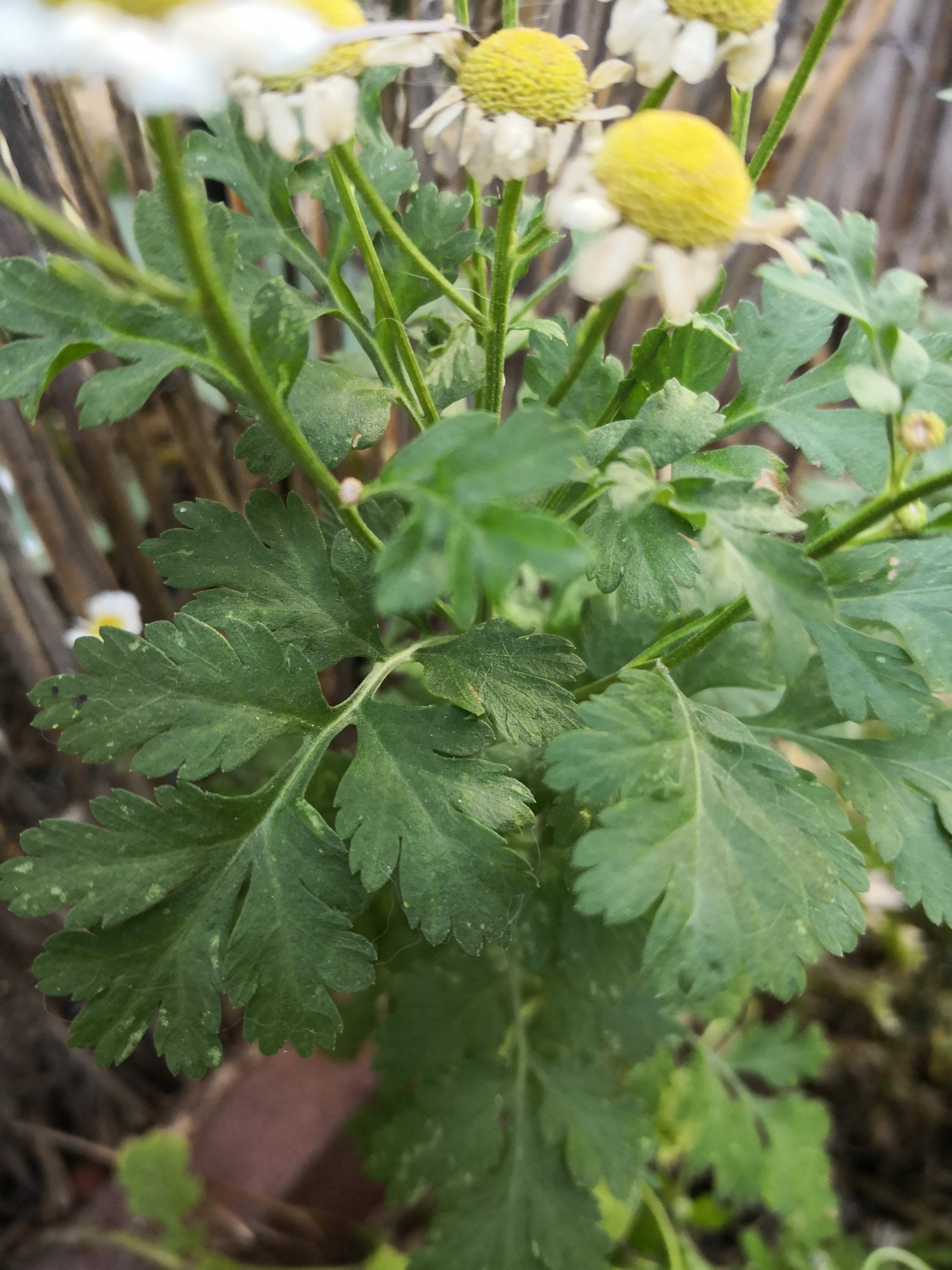
The name ‘Feverfew’ comes from the Latin for ‘to drive away fevers’. Not surprisingly, one of its main uses is for just that – the driving out of fevers. Taken as a hot tea, Feverfew can reduce a fever through producing a sweat.
Feverfew is bitter and as you’ll know if you’ve explored this blog a little, bitters are so very, very good for us. They help move congestion and have a myriad of other positive effects on our body that begin but by no means end there. They’ll kick the gallbladder into producing bile and thus help the liver process fats and thus give us energy as they are digested better.
We don’t use Feverfew much for ourselves but keep it because of what is probably its best know modern application – migraines.
Feverfew is a preventative for migraines. Taken as a fresh leaf or two every day, Feverfew has been proven to reduce the frequency and severity of migraines. As so many folk suffer from these terrible things, we think its a great plant to have in our garden both as an example and ‘just in case’.
Taken the same way, it is good for vertigo – ‘very good for them that are giddie in the head‘ as it says in one old book.
In herbal terms, one can see Feverfew’s actions from the ailments that it helps with. Helping the digestion helps to relieve bloatedness and biliousness. The migraines that it helps with are those that are best described as congestion of the blood. Symptoms include a feeling of fullness in the forehead, pounding and throbbing (mainly in the left temple area) and a feeling of hotness in that temple.
Along the same line as congestion of blood in the head, Feverfew also acts in a similar way on the women’s reproductive system. Symptoms include congestion and fullness before the period, headache (of the type above), heavy and clotted bleeding
So Feverfew helps move congestion, particularly of blood and particularly in our head and female reproductive organs. This suggests that taking Feverfew as a preventative helps prevent this congestion in the first place.
Maybe I should take it more often.
