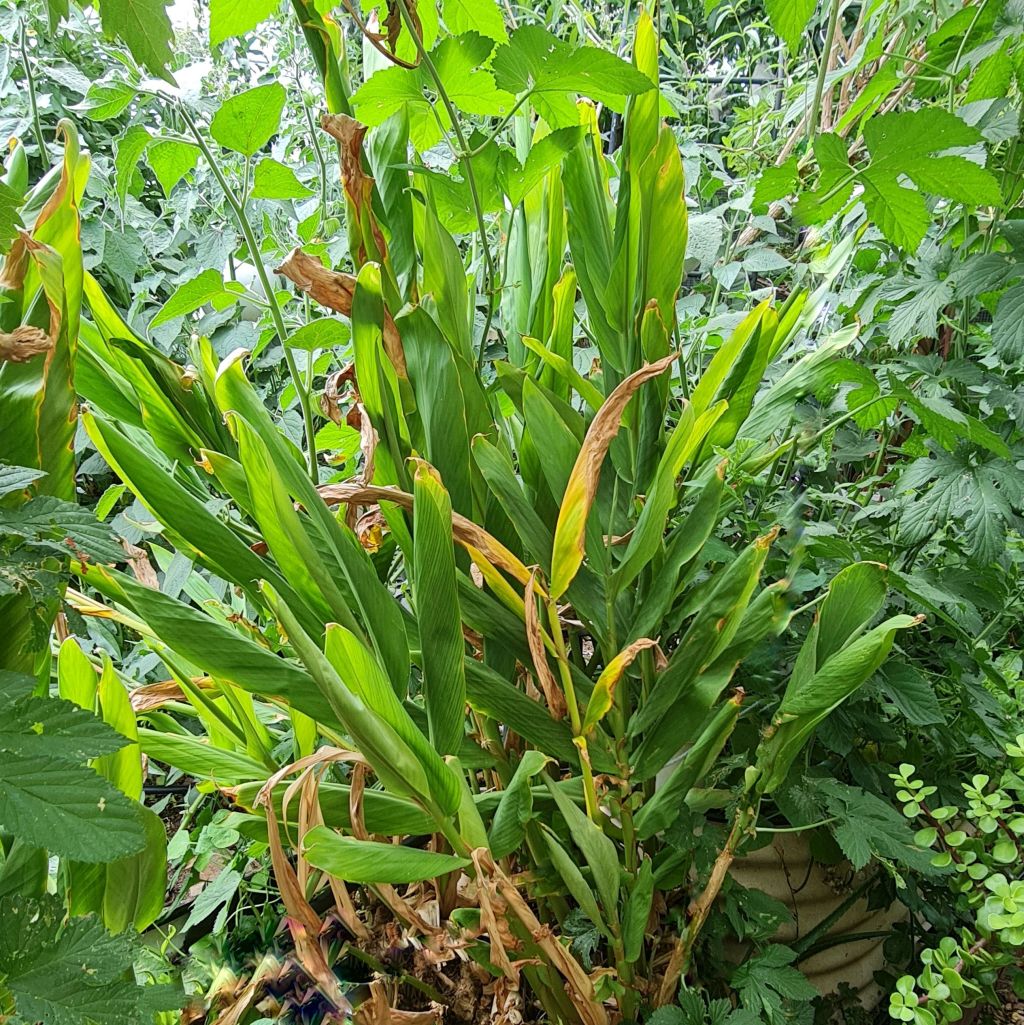
Common names: Ginger, Luya, Shen jiang Qiang jiang, Khing
Taxonomic name: Zingiber officinale
Family: Zingiberaceae
Related herbs: Turmeric, many species and cultivars of Ginger, Galangal, Cardamom, Ginger Lily
Area of origin: Southeast Asia
Parts used: Rhizome, flowers
Can be used medicinally for: nausea, vomiting and motion sickness, IBS, loss of appetite, stiff, cold cramped muscles, chronic inflammation, fevers, (esp. supressed fevers),
Organ/System affinities: Heart, lung, spleen, stomach, kidney
Healing Actions: Febrifuge, prokinetic, cholagogue, hepatoprotective, carminative, anti-emetic, stomachic, choleretic, cholagogue, hypolipidemic. Sialagogue, antispasmodic, anti-atherosclerotic, stimulating diaphoretic, antipyretic, antitussive, antimicrobial, cardiotonic, anti-inflammatory, antioxidant, kidney protective, diuretic, blood thinner, analgesic, anti-cancer, analgesic, aphrodisiac, decreases sperm mobility
Taste: pungent, sweet
Tissue states: Depression, congestion, cold, damp, constriction, atrophy
Energetics: Fresh: Warming, stimulating, diffusive, moistening. Dry :Heating, drying
Healing constituents: Volatile oils (zingerone) containing sesquiterpenes, zingiberene, beta-bisabolene, gingerdiols, gingerdiones, dihydrogingerdiones, sogals, lipids.. Phellandrene, borneol, citral, starch, mucilage. Oleoresins (shogal, gingerol)
Contraindications and warnings: Large doses in pregnancy, inflamed muscles. Anticoagulants Can irritate sensitive tissues.
Drug/herb interactions: Can interact with – Cyclosporine Coumadin Reduces damage to digestion from anti-inflammatories.
Description
Ginger is a perennial of wihch the rhizome is the best known part. Rhizome has a pungent taste.
The stems come annually and die down in the cold weather, though have persisted all Winter over recent years here in Gawler. They’re not really stems but are called ‘pseudostems’ and are composed of the rolled bases of leaves and can reach over to 1 metre tall. Narrow leaves alternately branch from the stem. The leaves similar to but narrower than Turmeric. Purple tinged white/yellow flowers grow in a gorgeous inflorescence that arises directly from the rhizome.
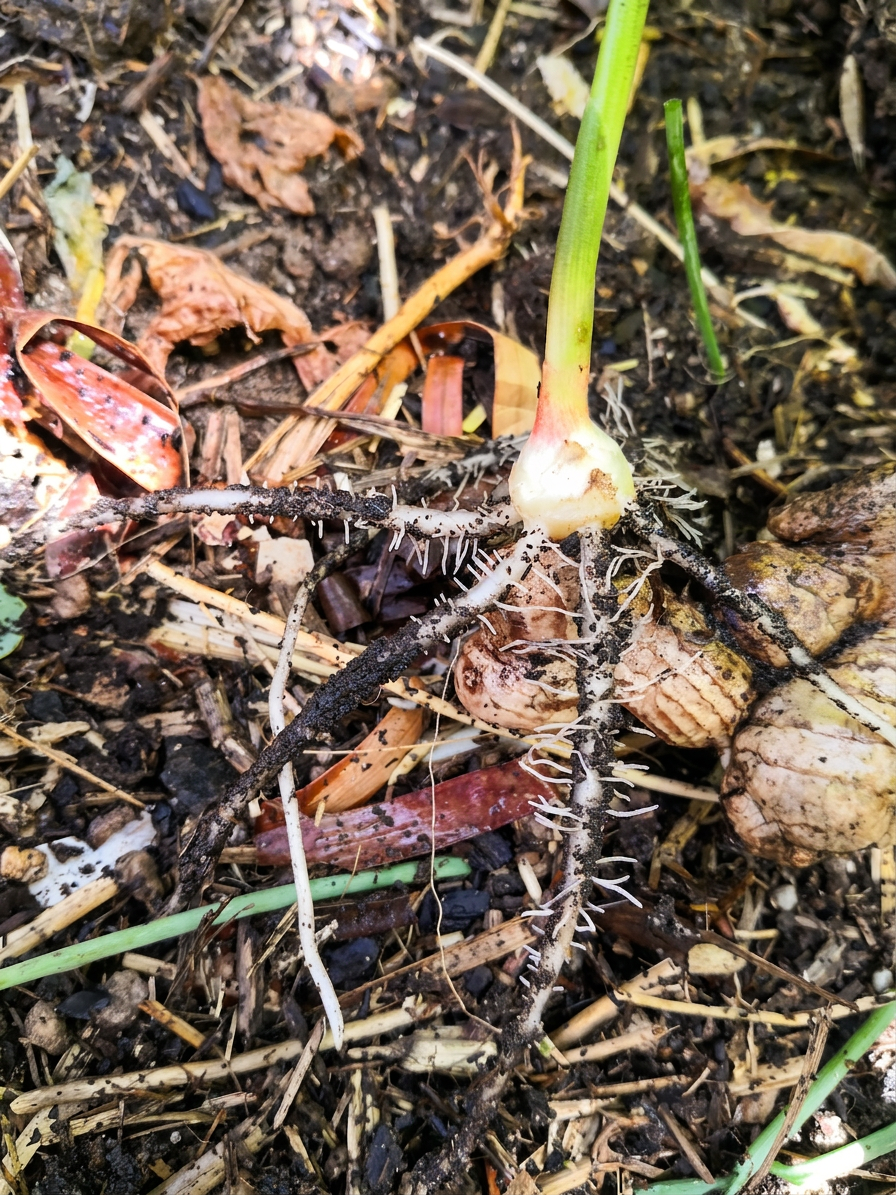
Zingiber officinale has spread through cultivation but doesn’t occur in the wild. Rhizome buds and shoots leaves at the beginning of the warmer weather. New roots come after budding (if you are propagating). In early Summer, leave spikes shoot up, dying down in mid-Winter (though, with the new climate, even in South Australia’s, they are remaining green all year). After the first year, and every year after the leaves shoot, flowers form on a spike, growing directly from the rhizome. In some species, the flowers are aromatic, especially at night.
Ginger likes very well drained soil and a lot of water but doesn’t like the water sitting around. No fertilizer is needed in the first month if propagating from cuttings. Loves sunlight but not the direct South Australian full Summer heat. Ginger likes 20-35 degrees C for optimal growth.
Using Ginger Medicinally
Keywords – warming, dispersing, moving, relaxing
Ginger is best known for its gentle warming property and has a special affinity for the stomach. It is a well-known carminative and has been used for millennia to calm upset stomach, relieving the alleviate nausea. It is particularly well known for preventing and otherwise relieving the nausea of motion sickness.
It has another wonderful property, and one that I often combine a little Ginger into other titnctures to utilise – it is what herbalists call a ‘prokinetic’ – it helps move other herbal constituents to where they are most needed so that the tissues and cells can better utilise them. It’s analgesic properties make it an extra useful additive to many remedies for aches and pains, cramps and soreness.
The warming character of Ginger also makes it an excellent diaphoretic. Using it internally, in almost any form, can help to induce a sweat. Just what’s needed in colds and flu. Because it is quite gentle, like to use it in cases of supressed fevers, where it can add just the little extra warmth that is needed to help the fever break out and thus help the body heal itself naturally. Ginger also has antimicrobial properties so can help in a cold type cold.
Ginger is also beneficial to our poor, often overworked livers. It can help increase the secretion of bile and otherwise protect liver cells.
Preparing and using Ginger at home
Fresh and dried Ginger rhizome have different properties in TCM. Fresh and dry vary in their heat levels, with fresh Ginger being warming while dried Ginger is heating and drying.
Ginger is a wonderful herb to bring medicinal properties to many foods, whether it is dried or fresh. Medicinally, the root is decocted (covered) but a quick, warming tea or infusion can be beneficial to warm a cold body.
Eating fresh Ginger can be a warming treat in the cold weather and candied Ginger is an even better way to take it. Dried Ginger is usually added to food in powdered form.
Externally, Ginger can be used in an oil, poultice or fomentation. The oil is particularly good when combined with Mugwort because both are prokinetics and help deliver the benefits of other herbs to where they are most needed. Adding a little Ginger to other herbal remedies can help their metabolism and effectiveness.
Ginger makes a potent tincture with a very strong taste. You only need a little, so I will often add a couple of drops to bottles of tinctures of other herbs to boost their effectiveness.
Many people dislike the strong taste of dried Ginger, so it is available in pill or capsule form.
If you’re finding this information useful, share it with your community
Other herb pages on Ligaya Garden
We cover a lot of ground on many herb related topics here on our website. There are whole pages devoted to different topics as well as frequent posts. Some of the links are –