Advice on herbalism and foraging in these pages and throughout our website is from a kitchen herbalist’s perspective and isn’t intended to replace medical diagnosis and recommendations. It is provided to enhance and encourage your own efforts to provide for your family and maybe add a little different perspective to your studies. Everything here is from my own personal study and experiences of using herbs and making remedies for my family and friends. This website is as much a diary of my own progress and learning as it is anything else, so, as I study to become qualified, I may change things a little here and there to reflect my growing knowledge and skills. There are reference pages on the website for all of the sources of information I have used in preparing this site in an organised manner.
If you are sick in any way for more than a couple of days, don’t hesitate to see a doctor.
Fungi are an incredibly important part of our ecosystems, possibly uniting them all. Fortunately for us, some of them are edible, if not delicious! The mushrooms that you pick are the fruiting bodies of complex underground organisms that contribute to most aspects of the health of the plants and animals around them. When I see a patch of your favourite mushrooms, I imagine that I’m standing in a thick mass of threads that connects them all and connects me and everything around us that I can see.
Many fungi are not edible, though and some are downright deadly. Nearly all mushrooms that you’ll find need cooking before consuming. The toxins in fungi can affect you in many ways and some are slower to work than others, so be very careful. I recommend making your first foray or two with an experienced mushroom hunter. The fungi that we list here are those that we’re 110% sure about identifying. There’s a couple more to add but I’m waiting on some better pics to help you identify them clearly.
Please note that I am a self taught herbalist and forager, I have no formal qualifications in this field beyond experience, observation and private research. These pages are more to inspire you to take up your own research and exploration and not are not intended to be prescriptive.
Fungal resources
Fungal ID books –
The books that have guided me well so far are these. There are plenty of others out there but make sure that you get an Australian one!
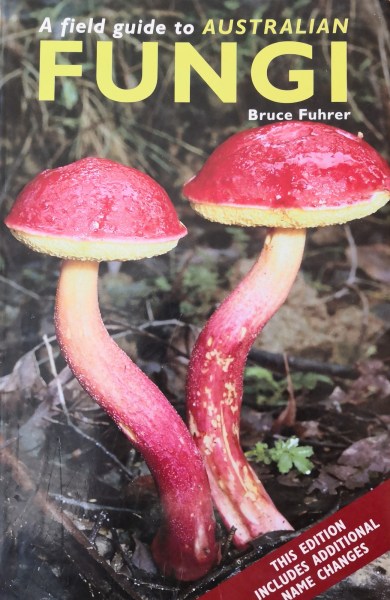
‘A field guide to Australian Fungi’ by Bruce Fuhrer.
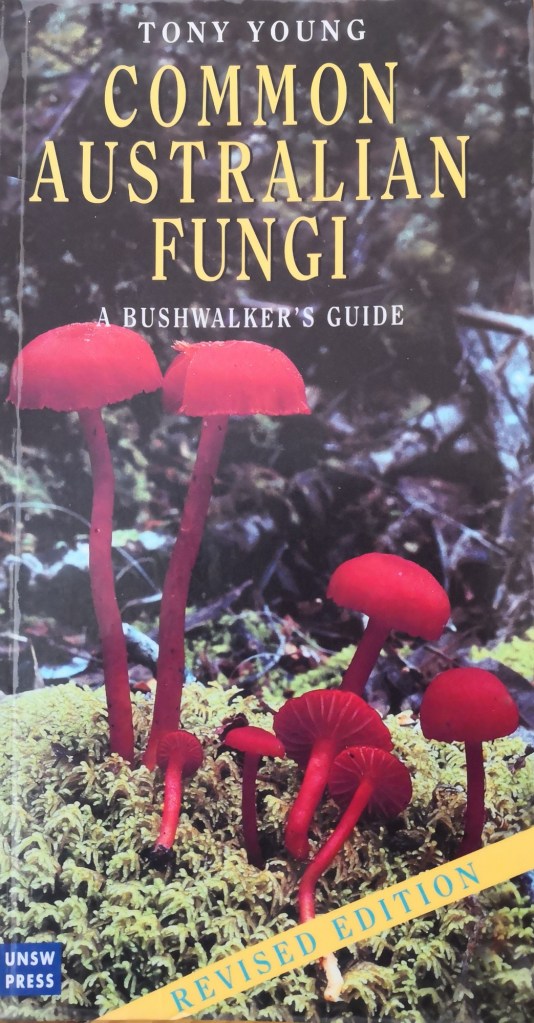
‘Common Australian Fungi. A bushwalker’s guide’ by Tony Young.
‘Wild Mushrooming. A Guide for Foragers’ by Alison Pouliot & Tom May.

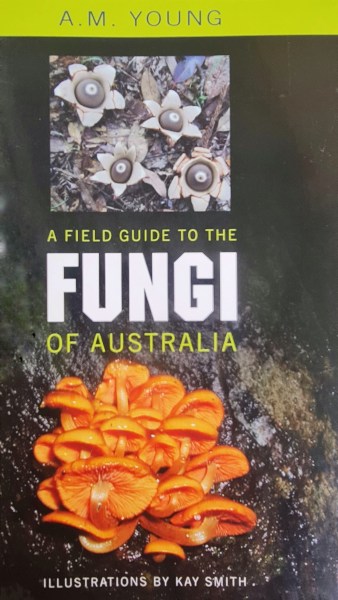
‘A field guide to the Fungi of Australia’ by A.M. Young
Fungi foraging interest groups and websites
It’s a good idea to find as many local sources of information before foraging for fungi. There’s a lot online and I’m happy to be a member of these two, very active groups on Facebook –
- Mushroom Foragers of South Australia
- Mushroom Hunters and Foragers South Australia
- The Wild Food Huntress
My favourite Australian fungal websites.
Australasian Mycological Society
The Field Naturalists Club of Victoria
Australian National Botanic Gardens
Great places to download free guides and information. I’ll be frequently updating this section as I find more. All of our fungi pages will be available for separate pdf downloads soon too.
Fungi in Australia– multipart pdf from the Field Naturalists Club of Victoria. If you’re thinking of printing it out, the sections are large!
A little book of corals – Another gem from the Field Naturalists Club of Victoria
Fungi of Adelaide and the Hills – Department for Environment and Water
The fungus files – downloadable lessons and worksheets aimed at high school kids but full of great info
Collecting and preserving fungi specimens. A manual – a great little download from the Queensland Herbarium.
On this website…