Common names: Early Nancy, Bull’s Eye
Taxonomic name: Wurmbea dioica
Family: Colchicaceae
Habitat: Woodlands
Habit: Herb
Flowering Time: Winter to early Spring
Description
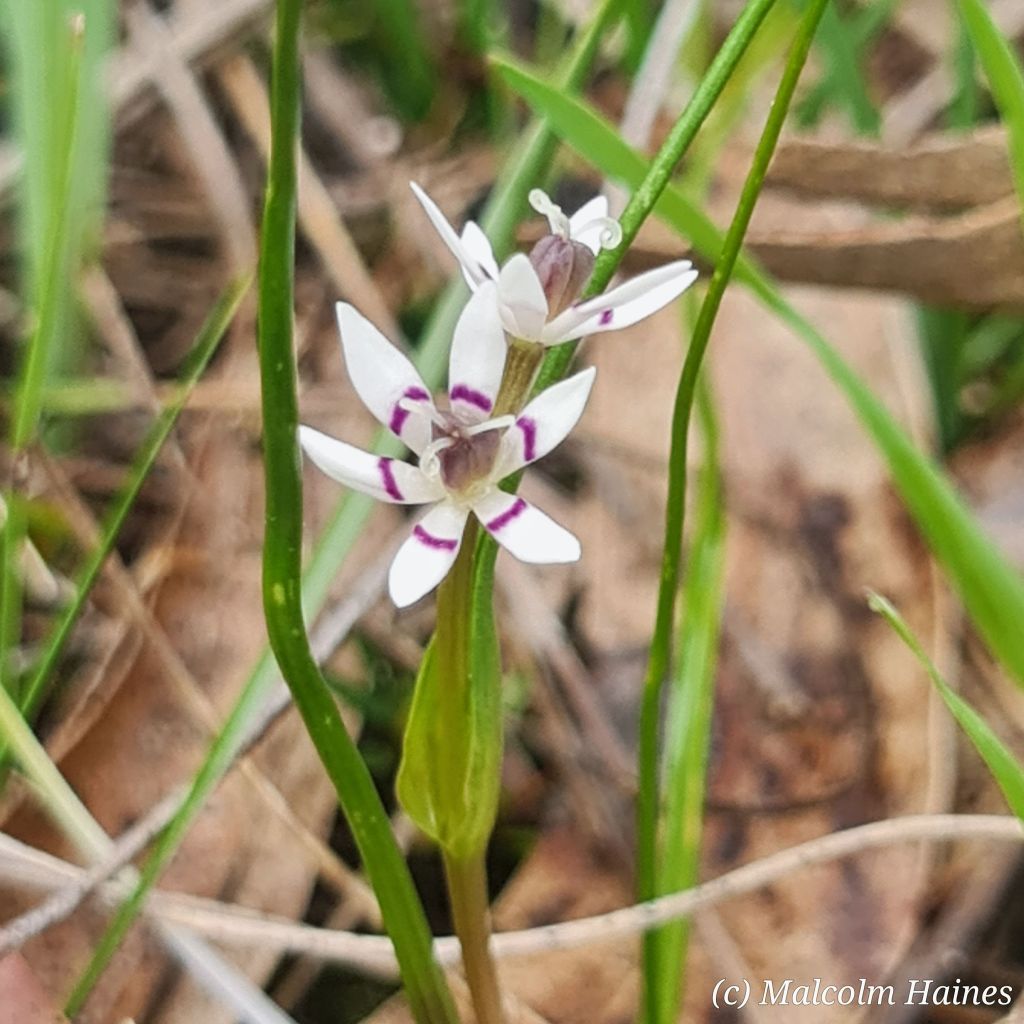
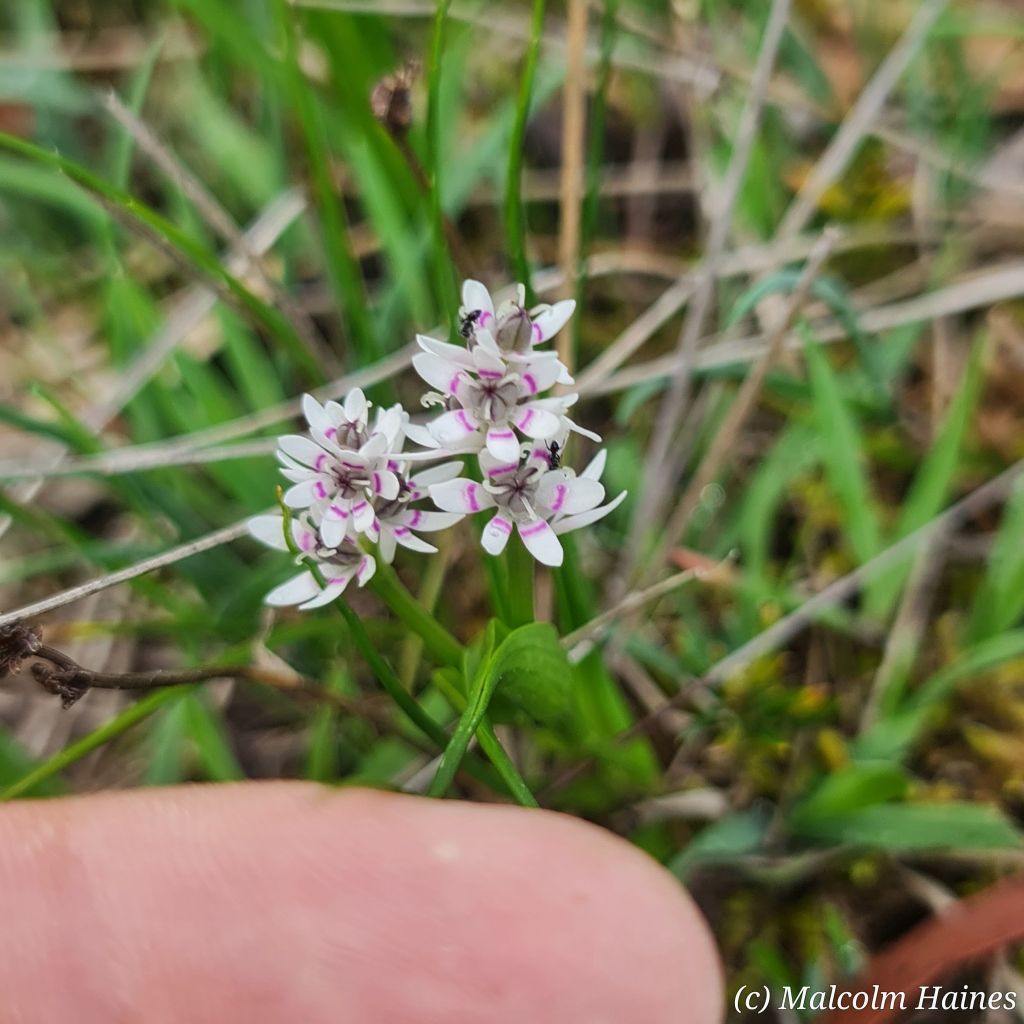
Look for a small white flower with six white petals to about 20 cm high. Each petal has a pink/purple arc (called a ‘nectary band’) on them that, when combined, make a circle on the complete flower. This gives the plant its second common name ‘Bull’s Eye’ . There can be from 1 – 8 flowers and the plant only has 1-3 leaves which clasp the stem. Very pretty! The male plants give produce greater floral displays than the female.
Early Nancy plants are sometimes mistaken for Milkmaids, which flower a little later around here.
Uses
Like quite a few of the pretty little herbaceous plants around in the South Australian bush in early Spring, Early Nancy (Wurmbea dioica) can be eaten.
Many of the plants around now have starchy bulbs and roots that have been fattening up over winter, getting ready for Spring’s reproductive frenzy and Early Nancy is no exception. The bulbs have a black covering that is best removed.
I’ve only ever eaten one because they’re so tiny and pretty, but I can say it was kind of like eating a raw, nutty potato. The flowers can be eaten too but are pretty nondescript taste wise. Roasted would definitely be the way to go but you’d need plenty to make a filling meal!
Please be careful this time of year, many orchids and other small plants are around and some are quite rare and endangered. Early Nancy isn’t endangered, it’s quite common.

If you’re finding this information useful, share it with your community
Other herb pages on Ligaya Garden
We cover a lot of ground on many herb related topics here on our website. There are whole pages devoted to different topics as well as frequent posts. Some of the links are –