I’ve been having a few down days of late, my cycle of depression has kicked in and has added weight to already grey days.

One of the best remedies for the blues is sunlight and as yesterday had some to spare, I soaked a little of it in beneath the grapevines at Cafe Nova.
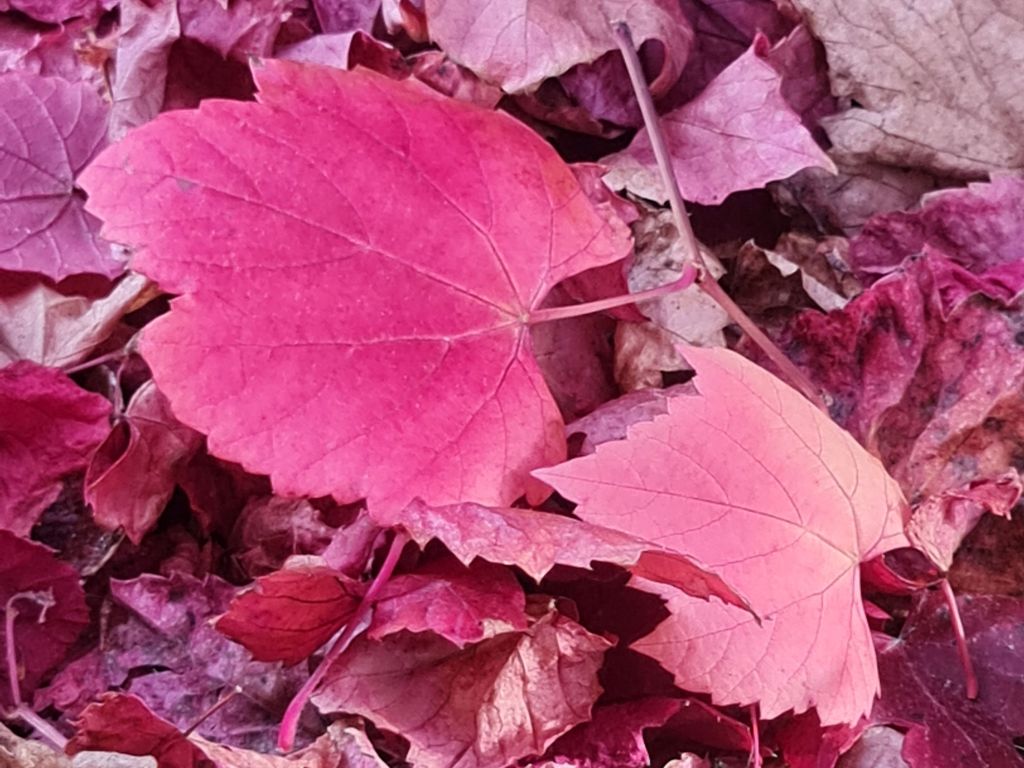
The vines haven’t been green for a while now and those that haven’t fallen are the most beautiful reds and pinks, especially when highlighted against the bright, cloud free blue patches of sky.
I got to chatting with one if the Sparrows that frequent the space and we got to wondering if those same colours that we see have the same medicinal properties for we humans as the compound that causes some of them has in other plants.
New customers came and sat nearby so the Sparrow lost interest in the conversation but I continued to ponder over my coffee.
So why do leaves turn red?
The green in leaves is the colour of that miraculous compound called chlorophyll wirhout which life asxwe know it wouldnt be possible. Plants who lose their leaves in the cold seasons are breaking down many difficult ti maje and energetically expensive compounds and storing them up for the return of the warmth. Chlorophyll is one if those. The withdrawal of chlorophyll from the leaves leaves (pun intended – isn’t English a weird language?) other compounds in them which were always there but to we humans, were masked by the green of the chlorophyll. As the green is withdrawn from the leaves, production of another compound is ramped up. That compound is called anthocyanins and is red. It is also a compound that is extensively used in nutrition and herbal cures.
Antho-what?
Anthocyanin is one of the flavonoid compounds that you mat be familiar from one of your herb books that lists the chemical constituents of the herbs contained within it.
Flavonoids have several key functions in our body’s activities. They’re antioxidants, meaning that they pick up free radicals before they can damage our cells. They’re also important in maintaining or restoring the health and proper functioning of our blood vessels and can affect a range if things from inflammation to blood pressure.
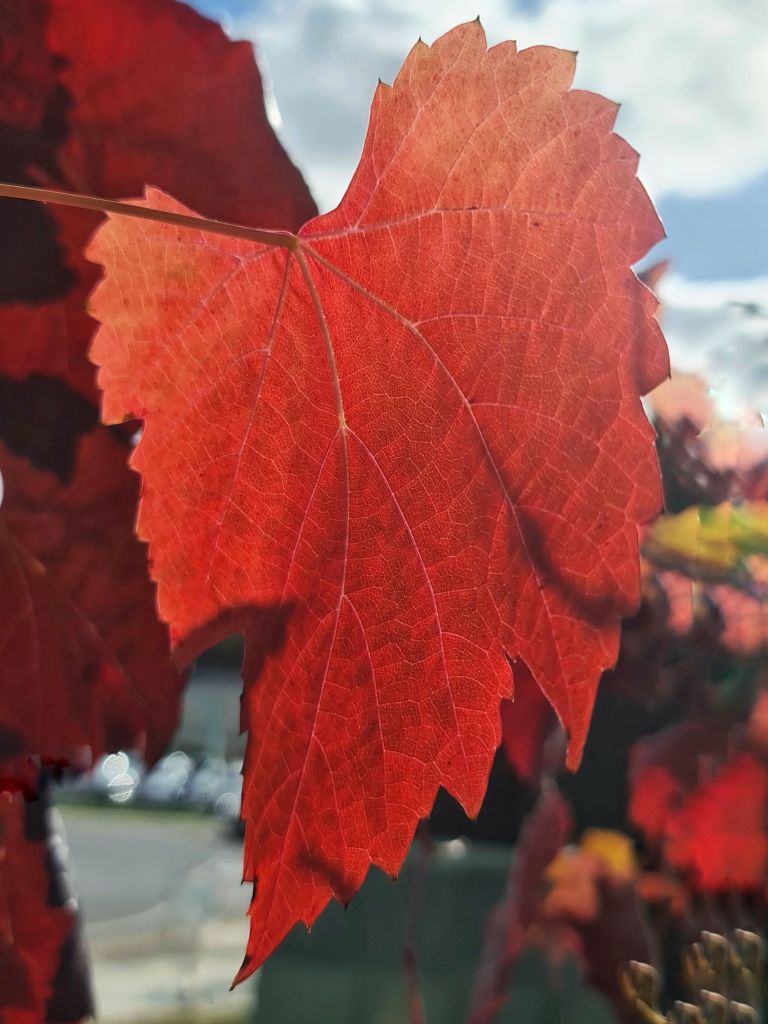

There are some differing theories about the role of anthocyanins in the leaves. The one that I like best is that they protect the plant from Sun damage. In the cold weather, when the rest of the plant is dormant, it doesn’t need a burst of energy from the Sunlight because most of its warm weather processes are toned down or switched off. That doesn’t mean that the plant is dead or even asleep but that its biochemistry changes to keep it alive in the cold. Remember that most of these plants come from the Northern hemisphere and that the Winter there brings heavy falls of snow and lots of ice. A big boost of energy in this state could throw things off and even wake the plant prematurely, so the anthocyanins block that.
I like that idea because it reflects the role of anthocyanins and flavonoids in general, in our body. They are key antiinflammatories and work by protecting the body from free radicals and damage to blood vessel walls.
Free radicals is a term often used in both medicine and marketing but what are they? Simply put, oxygen in our bloodstream exists in a state where the electrons in the molecule are balanced. Environmental stress, radiation, toxins and illnesses of some kinds break one electron from the outer shell of the oxygen molecule. It becomes a radical.
The upshoot of this is that the molecule tries it’s best to fill that gap with another electron. It takes it from any other molecule that has has a free electron handy and joins with that electron. The oxygen molecule can break that bond on the target molecule and steal that electron. This means that the molecule no longer functions in our bodyas it should. Free radicals can also atttach to molecules in blood vessel walls in the same way, causing damage and scarring. Too much of this and we end up with inflammation.
The body’s response to this damage to blood vessel walls is to produce the hormone cholesterol to patch up the damage. Cholesterol molecules are like tiny bandaids and olny cause problems if there are too many of them which usually occurs when there is a chronic state of inflammation in our system and cholesterol is constantlybeing pumped out, to the point that it accumulates and begins to block blood flow.
That’s where commercial medicine steps in with statin drugs which do pretty well nothiing but cause other problems. They reduce the level of cholesterol in our body and don’t address the underlying inflammation.
Antioxidants like anthocyanins stop all of this by scavenging free radicals in the blood stream before they can do any damage and some also bind with blood vessel walls, strengthenng them and keeping them flexible. This helps with all kinds of things from better blood pressure to better brain function.
To get more antioxidants, pay attention to your diet. ‘Eat the rainbow’ is a term I heard somewhere and it sums up what you need to do perfectly. Antioxidant rich fooda are often bright colours and dark hues. A rule that I often share at workshops is that the redder something is, the more antoioxidants it has in it. That red can move on to purples and blues too. Yellow as well, as it moves to orange, as in Calendula (Calendula officinalis) flowers is a good guide. So many herbs and remedies that help the blood vessels have yellow or orange flowers, berries or fruit.. All are rich in the good stuff. Oranges and Blueberries are classic sources of antioxidants, which leads us to another give away that a food is rich in antioxidants -its taste. Many berries and citrus fruits that are high in antioxidants are sour in taste.
Look for sour taste and bright colours and you’ll be well on the way to getting more antioxidants into your body. It beats eating old, red grape leaves!
Other herb pages on Ligaya Garden
We cover a lot of ground on many herb related topics here on our website. There are whole pages devoted to different topics as well as frequent posts. Some of the links are –