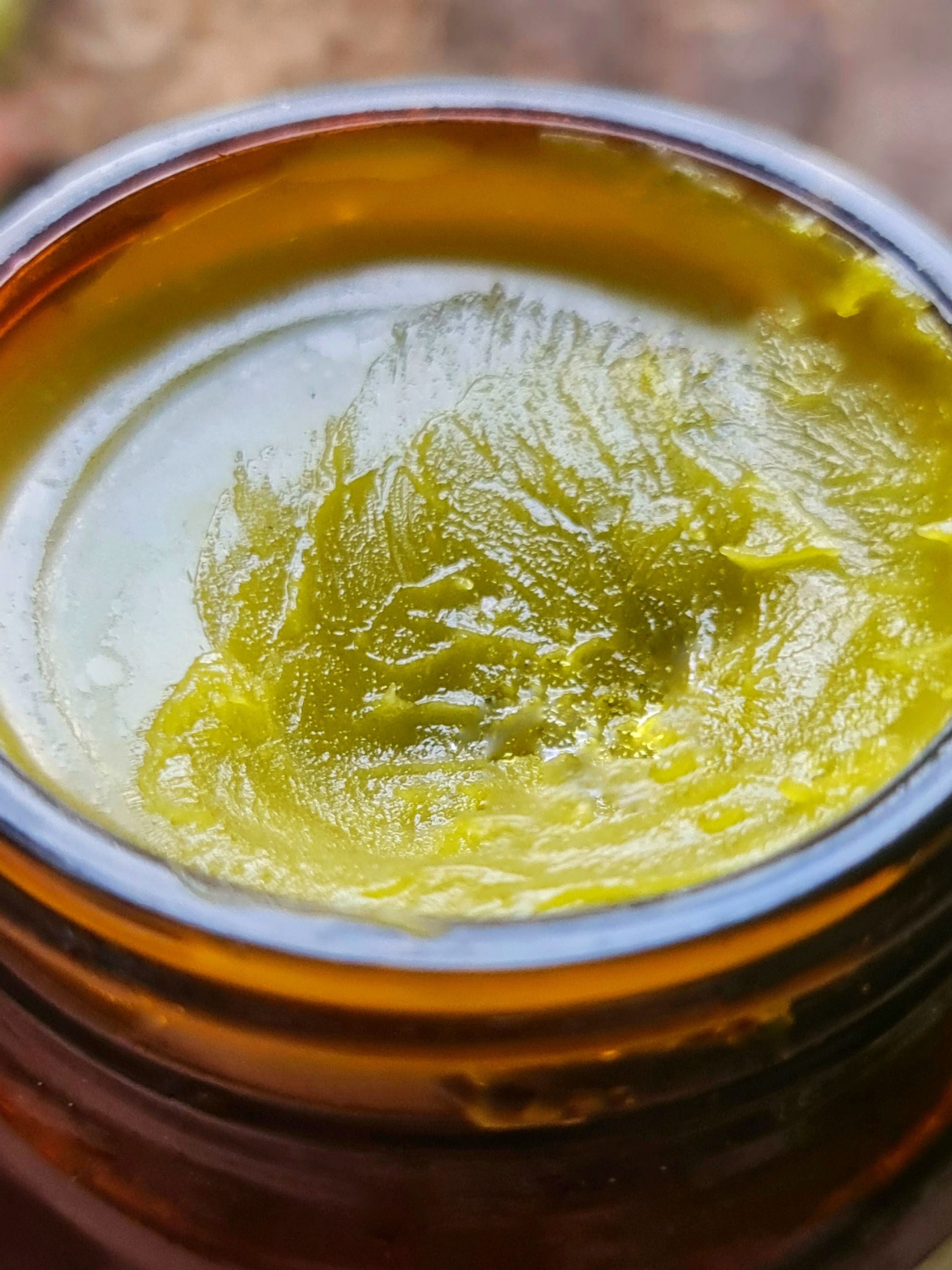
For a couple of years now, I’ve been making an effective healing salve from local plants, some from our garden, some gifted, some gleaned. The original post about it is here if you want to take a look.

The salve takes a shotgun approach; combining a range of vulnerary herbs that have a venerable tradition of wound healing. This year, I decided to split the recipe into three versions
Each has Calendula as their base. I make a lot of fresh Calendula oil throughout the year and use that as the oil hat extracts my other herbs. I like Calendula because of its wide range of healing properties, as you can find on our Calendula page. I also like it because flowers are out for most of the year; I believe that the name ‘Calendula’ stems from ‘calendar’ pointing to the fact that they are available throughout the year. In our garden, we have a brief spell at the end of Winter when they seem to take a rest, but luckily, I know a friendly garden nearby where I can pick some during this time. We mostly use dried herbs when making oils because the water content in the fresh plant transfers to the oil and reduces shelf life greatly. If you only have fresh herbs, let them wilt overnight to reduce their moisture content.
The other thing that goes into all both mixes is Yarrow, another wonderful herb with a wide diversity of healing gifts. Once again, Yarrow is available throughout the year, with any of the plant usable at any time, though I do prefer to use it when it is flowering.
Plantain too goes in, but only in the warmer weather – I find that Winter Plantain isn’t as potent as that which grows in the warm weather but as most herb infused oils are made with dried herbs, it doesn’t make a lot of difference.
The difference in the blends comes through season and need. English Daisy goes into one version. This herb is handy for all of the things that Arnica can be used for but has two advantages over that herb; first, it grows well locally and secondly, it can be used on broken skin or taken internally, both of which are to be avoided with Arnica. This blend has been created for all external wounds, skin conditions bumps and lumps.
The second is St. John’s Wort, a plant of the hot weather, which must be used relatively quickly because its key healing constituents degrade quite quickly. Because of St. John’s Wort’s affinity for our nerves, it works well when combined with the other to soothe rashes and skin conditions caused by nrevous conditions such as stress and anxiety and also those that live in our nerves such as herpes, shingles and thse that look the same such as psoriasis and even eczema. I thas potent antiviral properties when used externally and anxiety reducing powers when used internally.
A third blend contains Nettles, which I only started macerating into oil this year. This addition is amazing for inflammations that look like Nettle rash, that are quick to erupt and quick to vanish. Inflammations that sting rather than itch. I’m currently writing two oil making posts – Nettles and Olive leaf because, in both cases, their oil extracted super powers are worth examining in detail.


The formulations –
Well, there really is only one formulation, with the herbs substituted in as needed. The ratios of combined herbs : oil and oil : beeswax are easy to remember, both being 1:4 or close enough.
Base recipe:
- 60g Calendula flower heads and petals – this is the key healer, having anti-inflammatory, antimicrobial, lymphatic effects, builds new capillary beds and promotes graulation.
- 30g Plantain leaves – astringent, contains allantoin which stimulates cell growth. Contains mucilage to soothe and draw the sides of wounds together.
- 30g Yarrow – helps when the blood is red, fresh and moving, moves old blood away from the injury to allow better healing
- 600 ml Olive Oil – soothing and full of amazing saturated and unsaturated fats the help skin heal
- 150g Beeswax -adds solidity to the mix while bringing its own amazing healing properties.
Options:
- 30g English Daisy, Nettles or St. John’s Wort, as needed for the purpose of the salve.
- 15 ml Jojoba oil – has a chemistry close to our skin, so promotes rapid healing.
This mix is pretty flexible and you can include all of the herbs if you feel the need. I use the 1 Beeswax : 4 oil ratio, which is my favourite amount, giving a slightly more solid consistency than many recipes but only takes a little extra rubbing between one’s fingers to soften it up. I do this because a goodly amount of my salves go to folks who are unhomed and find it difficult to carry or keep more fluid remedies safely – safety is also why I use plastic containers for them. You can go up to 1:5 or down to 1:3 to get the stiffness in the salve that you prefer. I wouldn’t go much beyond this range though.
Rubbing it on –
Little could be simpler than using any version of this salve- just get a little on your finger and rub it around on your fingertips a little to soften it up and apply the salve directly to wounds and rashes several times a day (up to 4) This is safer than Arnica cream too because it can be applied to open/bleeding wounds.
Other versions –
You can substitute in any vulnerary herb that can be extracted in oil but these are the core herbs that I like to use because of their wide ranges of healing capabilities and ease of access. I would suggest always using Calendula as the core herb and build everything around that.

Other herb pages on Ligaya Garden
We cover a lot of ground on many herb related topics here on our website. There are whole pages devoted to different topics as well as frequent posts. Some of the links are –