
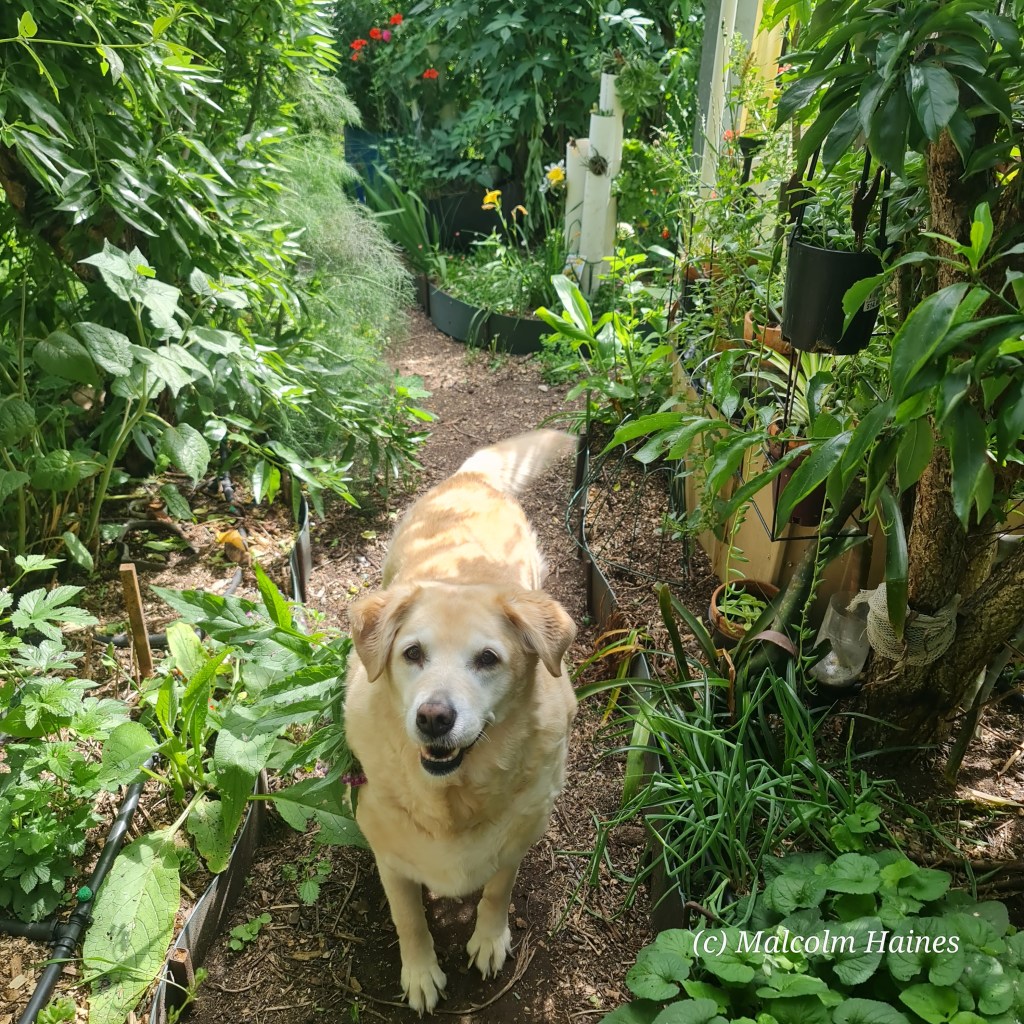
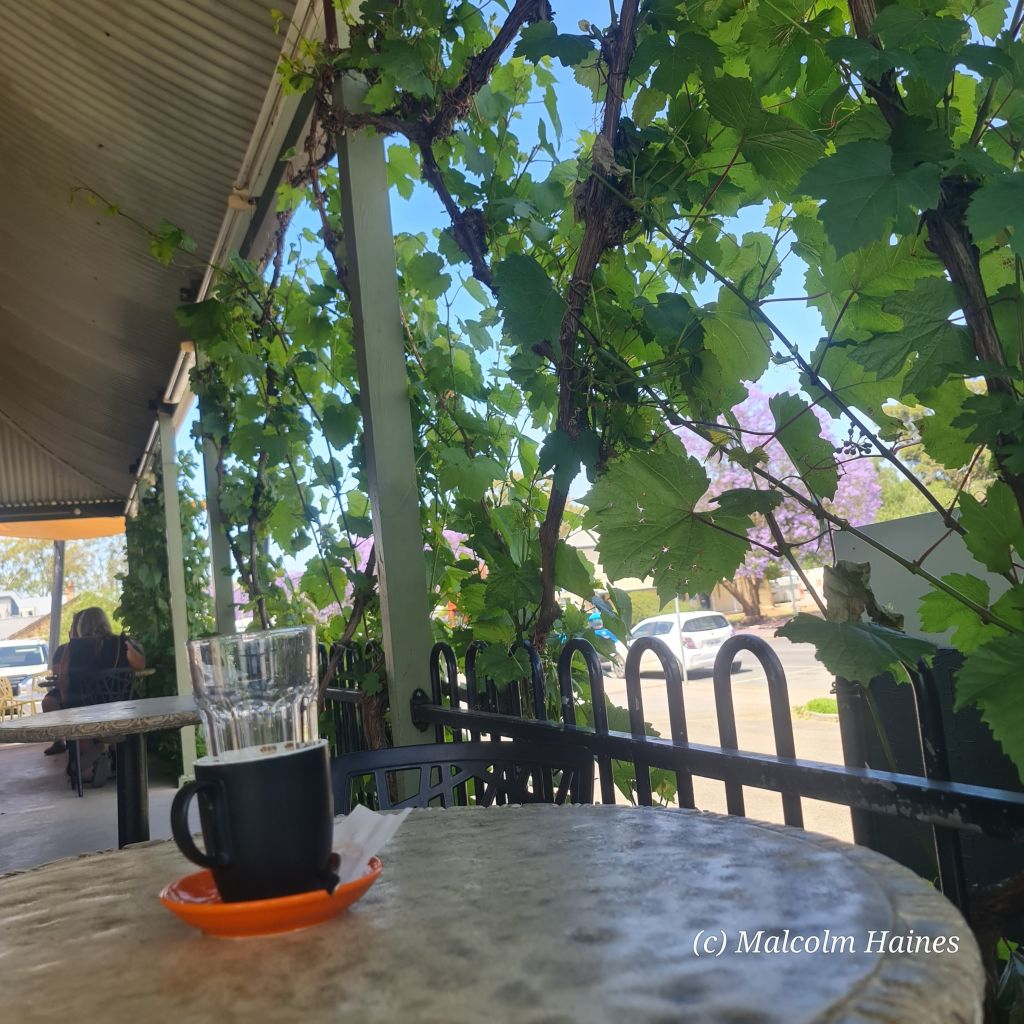
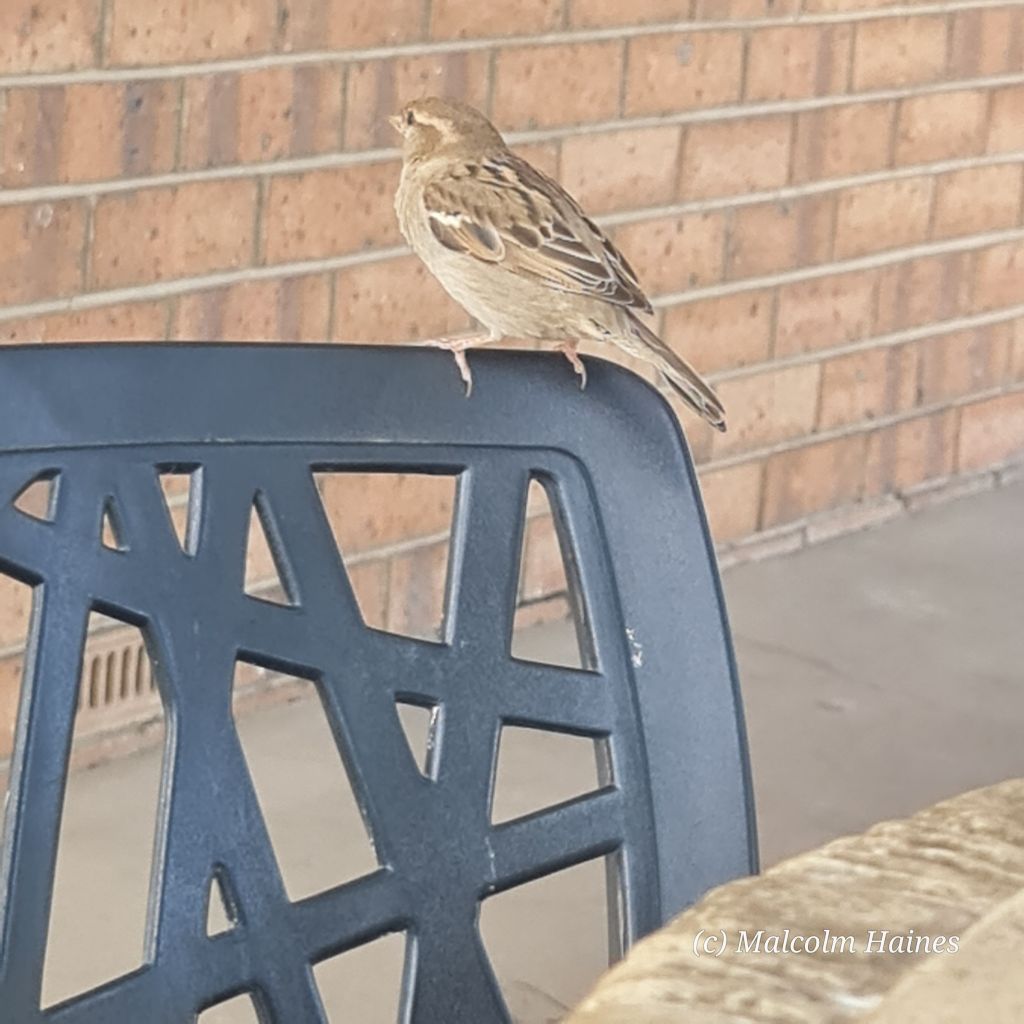
I’m sitting with a Sparrow, here in one of my favourite spots, shaded from late morning Sun by some lovely old vines. This year’s been a bumper one for growth – the periods of rain and warmth have kicked many a plant into a frenzy of expansion. Every week, I’m hacking a trail along our path in the garden, and it feels just like I’m back in the jungle in Sumatera.
But rapid expansion has its costs. If we don’t water the rapidly spreading vines in the tubs out in the back at least twice a day, they wilt. Last year, we lost many a grape to a sudden hot northerly that lasted two days. The apples and pears, too, suffered; most of the leaves falling with the same northerly, exposing unripe fruit to the full Sun and the birds. Our beautiful Packham’s Triumph really copped it in 2024. The biggest infestation of Pear Slugs destroyed the foliage, then the wind, then the Sun.
I’ve been trying to deal with Pear Slugs for a few years now. They’re the larvae of a species of Sawflies that live in the soil until late Spring when they emerge and bake a bee line (or is that a slug line) for our leaves. I’ve tried digging over the soil at the base of the tree and letting the chooks loose on the area. Sticky collars around the trunk are useless in our garden – everything’s so intergrown that the slugs just use another route.
Some years, I’ve sprinkled wood ash or diatomeceous earth over the leaves, but these bring their own problems of shifting the pH in the area and harmony other insects, respectively.
This year, though, there’s been a respite, maybe to do with the sudden growth that is the topic of this post. Jelina planted Warrigal greens, and, true to form, they smothered the area below the plum (sorry Hyssop) amd along with the Nasturtiums seem to have provided a barrier to the slugs. Maybe it’s the rough texture of the Tetrahgonia, maybe the biting mustard oils of tje Nasturtiums? Maybe the convoluted route makes the journey too long for the slugs? I’m not sure, but it’s all worth watching and learning from. I was thinking that maybe it’s too early for the slugs, but we’ve seen a few (easily squishable) individuals, and many insects came early because of the shifting seasons. It’s worth meditating on. It’s a positive for me but a negative from the slug’s perspective.
I left those last couple of paragraphs in the post to show how hopeful I am of achieving natural balance in the garden. The Pear Slugs didn’t listen, and two days after writing those paragraphs, they made an appearance and started their annual onslaught. Dessicated leaves everywhere!
Rapid growth can have unexpected benefits, too. If we get too much rain, a lot of plants throw up lots of soft young growth that then withers with the first heat. But maybe with older, larger plants, that’s a protective mechanism? They are all wiser than we, and maybe they can tell when extreme heat is coming. Maybe they throw up this soft growth, knowing it will wither and in witheringly, protect new growth beneath it from the Sun. They may use water when it’s freely available to build a protective layer that save’s water when its not.
If you’re finding this information useful, share it with your community
Vines take things over, interestingly, Vine is the Bach Flower Remedy for times and folks who dominate others, who smother and control, maybe its useful when growth is top quick? There’s lots to learn from Flower Essences.
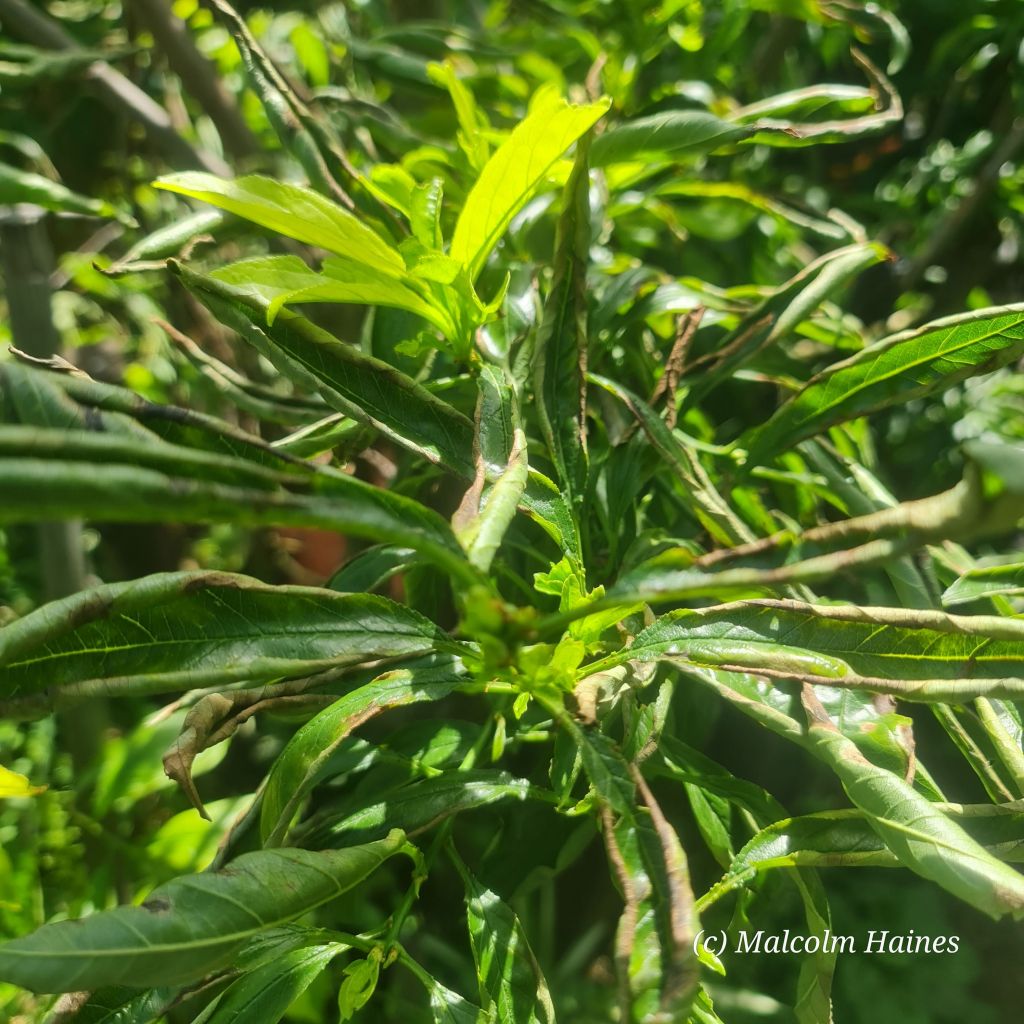
Our Satsuma Plum tree is dying. I think it is from our short-sighted greed but something we have to see as part of the cycle of things. We have become well known for the dense planting in our garden, something we got carried away with. The Plum was one of the first guests in our space and grew to a good size. It provided shade for house and garden, food and habitat for many, not to mention the sheer joy we got from it welcoming us every time we left the front door. Last year, i saw traces of a mosaic virus on some leaves, this year, it looked like leaf curl, but I could see no signs of the Aphids Now the leaves have all shrivelled and fallen.
Maybe it’s a disease, but I can’t get it identified. My thoughts ate that it’s just been outcompeted by the other more rapidly growing trees that surround it. The Mulberry and Nectarine, which are it’s neighbours have put on an unprecidebted boost in their growth, and I think it’s taken all of the resources from the Plum. We’ve been giving it extra water and fertiliser and lots of gentle talking too, but I think that even the extras are being consumed by its neighbours. Tje ums roots spread widely through the garden, so it’s hard to feed it directly without boosting companions, too. I’ll cut it back a lot, take off all of the fruit and give it a few sorays with Oak, Crab Apple and Star of Bethlehem Bach Flowers to help it in its struggle but eventually, Walnut may be needed to help with its transition.
If it passes, it will leave a patch of sunlight where there hasn’t been one before, maybe its just the natural development of the family that we’ve built in that small space. Even Blackbird babies (of which there have been many this year) push each other out of the nest as they grow. Maybe the same pattern is happening with the trees?
Have a great holiday season, folks! If you’re Christian, have a Merry Christmas, and we’ll all catch up in the New calendar year!
