Just had a thought while answering comments on the Gawler Kitchen Herbalists’ facebook group. You often hear about using the ‘whole plant’ or ‘whole plant remedies’ but we sometimes get the wrong idea about these terms.
Despite what the words imply, these phrases don’t mean using the whole thing from fruit to root. What ‘whole plant’ means is that we herbal folks don’t extract a single constituent and use that, we use as many of the compounds in the plant that we can extract.
The reason for this is that in the whole plant, there are constituents that synergise with others, some that buffer the strength and action of others and some that give a wider general effect, helping the herb work on more tissues organs and systems to support the primary compounds.
A couple of examples to think of are – whole Turmeric allows the Curcumin (which is actually hard for our body to assimilate) to be assimilated hundreds of times better than just taking curcumin alone.
Another is Meadowsweet, which, even though it contains compounds similar to aspirin, does not cause the gastric problems that the latter causes. In fact, it can be used to treat those problems because of the range of compounds in the whole plant.
A third, example is the herb, Hawthorn (of which you definitely wouldn’t use the ‘whole plant’ if you were still thinking of it in that way). I take (but am reducing my dependency) on a drug called Verapamil. This relaxes the heart muscles, allowing blood pressure to drop. It also allows more nutrients and oxygen to reach the heart muscles. It also reduces the electrical activity in the heart.
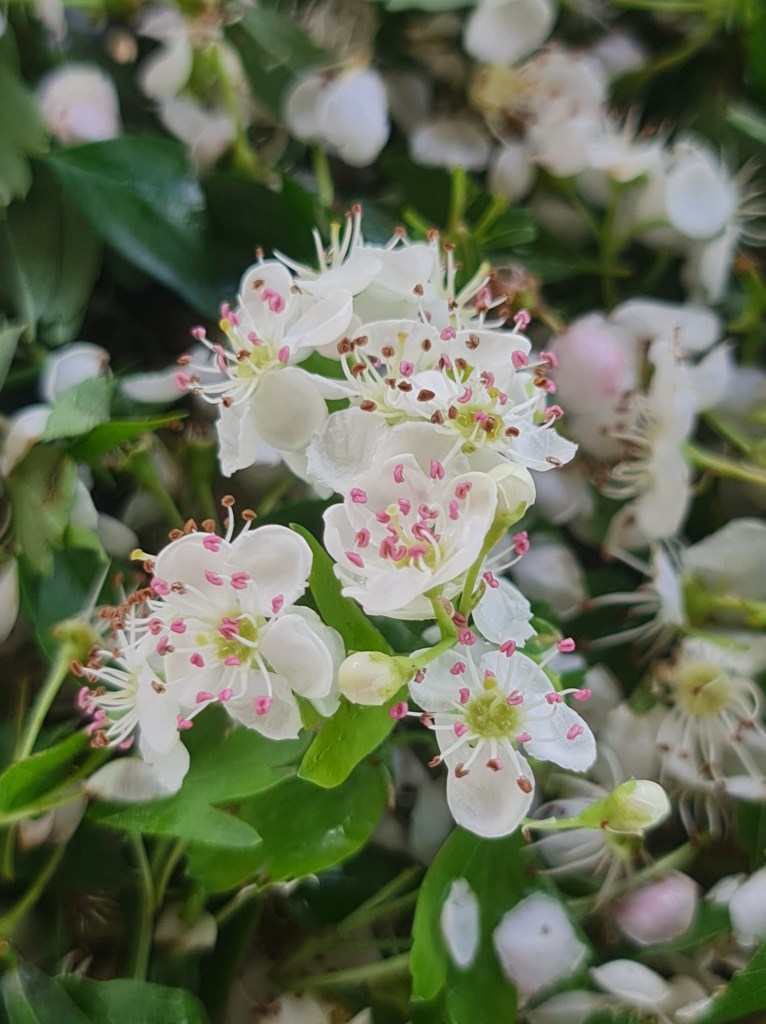
Hawthorn does all of this (though I’m not 1000% sure about the electrical activity aspect), plus it supports the whole circulatory system, helps reduce hardening of arteries and valves and also helps lower serum cholesterol levels. I won’t list all of the side effects of Verapamil, but Hawthorn’s wide range of constituents that are beneficial to our circulation address many of them. Imagine if we just selected a single constituent of Hawthorn to use in our healing? I started on the Verapamil as an emergency treatment – Hawthorn takes a couple of months to really start to do its work. It’s a very gentle healer, one of the few herbs that can be used every day but it needs time to really get into your system. It is a healer in the deepest level.
There’s nothing wrong with using pharmaceuticals. We’re ‘holistic,’ aren’t we? But it is better to use them temporarily while we get to understand the herbs that can replace them in our personal health situation. Ideally, we can then wean ourselves off of the pharmaceuticals and take the more natural approach of herbs and diet.
Contrast whole plant remedies to the industrial medical approach that identifies one constituent, extracts and concentrates that to level magnitudes higher than you would find in Nature and then expects to get results – I would say ‘results without side effects’ but they don’t seem to care about those, as long as the chemical does it’s job. The onus is then in the user to read the tiny print on the paper inside the box, translate the terminology into something meaningful to them and decide whether to go against their doctor’s advice. As so many people are subject to the (very human) ‘authority bias’ and defer to their doctor as the expert in all situations, this isn’t a very common occurrence. You can, of course, sue at a later date…
Thinking of single magic bullets is common in herbalism, especially in a person’s initial learning. It’s a method of thought reinforced by media attention grabbers, too. That’s the pharmaceutical mindset, and many people are stuck in it,even though they are starting to use herbs as an alternative to Big Pharma. They are just looking for a herb that is an alternative to a drug. Sadly,they often don’t get the effects that they want.
I’ve written in the past about the ‘more is better’ school of thought and how wrong that is in herbalism and is often just a waste if money and material when a smaller dose woukd have been just as effective, if not more so. Thinking of a single part of the range of the healing elements of a herb leads to the ‘more is better’ idea. Thinking of whole plant remedies helps us think the opposite and reduce the amount of herb we need to use.
So think about your herbs as complex mixtures as opposed to looking at just one aspect of them and you will soon learn, as I did that whole really is more than the sum of the parts.
Other herb pages on Ligaya Garden
We cover a lot of ground on many herb related topics here on our website. There are whole pages devoted to different topics as well as frequent posts. Some of the links are –