
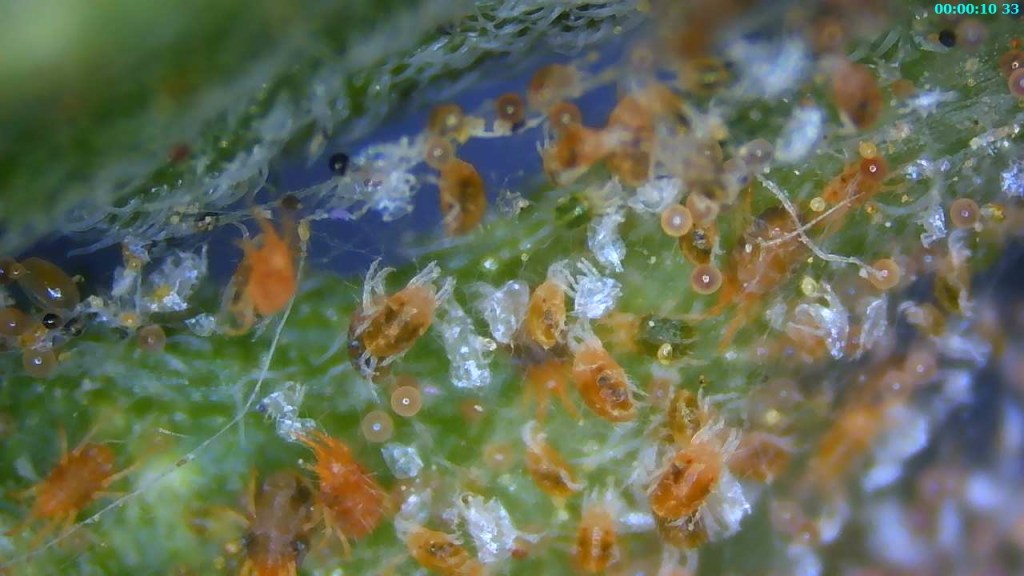


Every Summer, we see leaves on some of our Solanums turning brown and withering and fine webs forming, at first, where the leaves meet the stems. It’s our yearly plague of Red Spider Mites!
We used to see it start to see leaves on some Solanum plants like Tomatoes and Pepinos but fortunately, they go for the Blackberry Nightshades first and that gives me time to get them under control.

Because the Blackberry Nightshades plants are seasonal weeds in our area, we don’t need to grow them for food. We did for a couple of years, though and that’s when I noticed the mites on them and that they attacked these plants first. I spent time observing the insects on the plants, and learned to look for the arrival of tiny, moving black full stops on the leaves. These are a species of Ladybird called Stethorus who enjoy nothing better than a meal of Red Spider Mites for breakfast, lunch and tea.


Over the last few years, with the weather changing, we’ve seen an increase in mites and a decrease in Stethorus (or is that ‘Stethori’) numbers.
We had to work out a way to get a balance. We didn’t want to eliminate the mites completely, for then we’d have no Stethorus around when we needed them and we don’t know what else they may be keeping the numbers of under control. We also didn’t know what else feasts in the mites – we could be knocking a link out of the existing ecosystem and who knows what knock-on effects that would have?

I used to wait until the Stethorus came along to eat the mites but over the last few years, they’ve made so little difference. I still leave a couple of plants and Mites for them to breed on.
So the trick I came up with is to pull out the plants when they’re looking pretty sick, inspect them closely and put any Stethorus or other predatory looking insect on related plants, especially those showing signs of a mites infestation. Then, I put the plants in a bucket of water with some detergent in it. The detergent helps the water get into the mite’s spiracles (they don’t have lungs like we do and get their air through little tubes in their exoskeleton called-you got it! – spiracles) and drown them.
This keeps me a step ahead of the mites and has lead to a deeper understanding of our garden ecology. It helps us stay pesticide free and gives us some pretty good Tommies too!


2 responses to “This mite do the job!”
This is great info, thank you. I don’t have any problems with spider mites although I do think I see individual ones on occasion. Maybe they don’t like it here or maybe we have more fullstops! I’ll have to take note.Regards,FionaSent from my Galaxy
LikeLike
Thanks. They’re not a plague in every area but down here in Summer…ouch!
LikeLike