
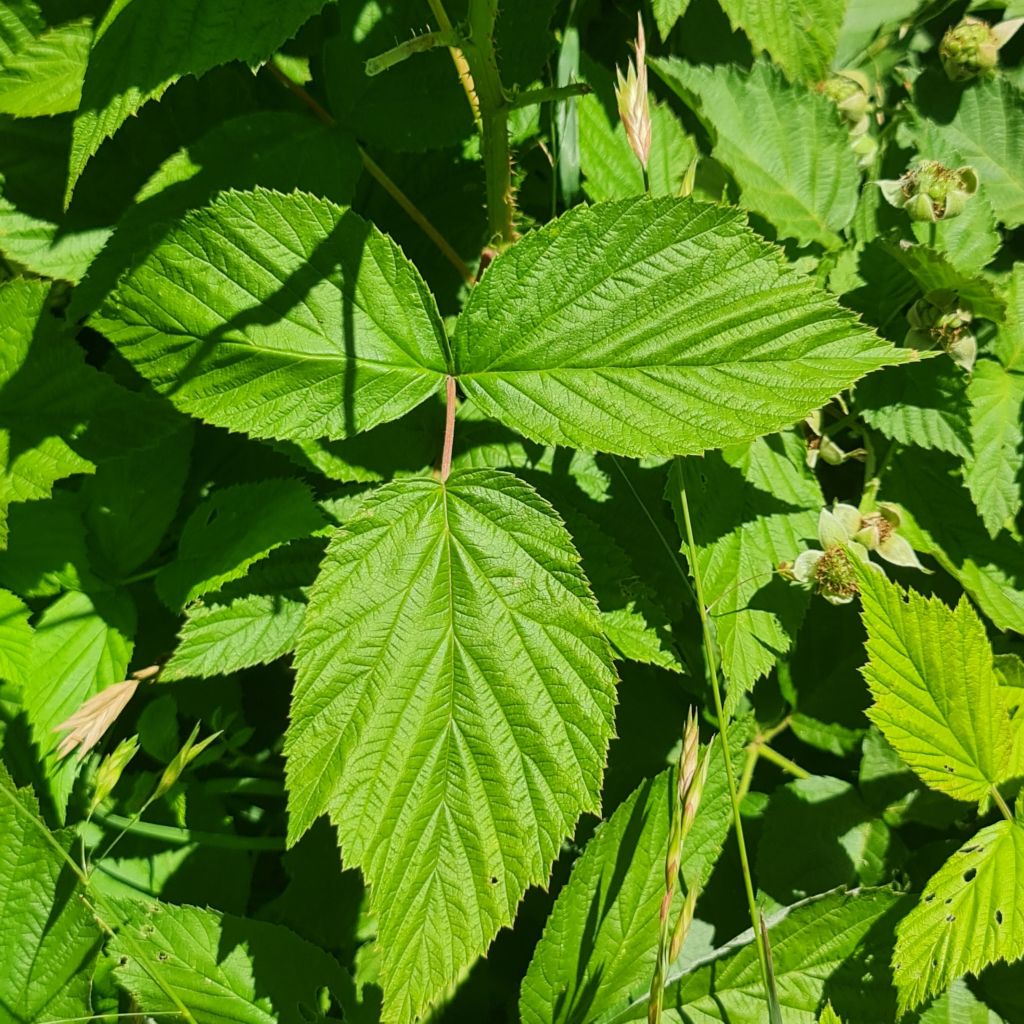
I’m drying Raspberry leaf and Mugwort from the Kapunda Community Garden and the irrepressible David. Their Mugwort patch is the most beautiful I’ve seen.
Even though they’re in the same family and even look pretty similar, Raspberry and Blackberry leaves are herbally used for seemingly opposite things You would make a strong Blackberry infusion if you have diarrhoea but if you are constipated, Raspberry leaf is the go! But don’t use Raspberry leaf if you’re pregnant, it has a potent effect on your uterus, the fragarine in it has been used to tone and strengthen uterine muscles in preparation for labour. Raspberry leaves are traditionally used as a tonic during pregnancy – they’re full of minerals and other constituents that are great for the health of mother and baby during pregnancyand after the little one comes into the world. As with all things though, take caution using anything during the sacred time of pregnancy.
While writing this post, I realised that I don’t have a page for Raspberries on this site. 🤔. I’ll fix that over the Summer. The really hot weather and the really cold are when I do a lot of updates to the information on here.

I love Mugwort. It has some amazing properties but I use it herbally because it helps to carry the benefits of other herbs deeper into the body I always add a little Mugwort oil to any of my other oils for just tthat purpose. Mugwort is such a useful ally that we let it go wild in our garden.
Our local Mugworts are interesting. The Kapunda plants are deep green and mild, mine are a lighter green, much shorter and have a distinct bite. Our neighbour, Lucy’s are, so far the most potent medicinally – so I always take a pinch whenever I walk past and nibble on it on the way to town. They’re all the same species but gown in different conditions. Just like people, each plant is an individual.
Some herbs are like Mugwort in that they enhance and magnify the effects of other herbs, usually for the better, sometimes for the worst. It’s called ‘synergy’ and goes beyond simple combinations of herbs that support the effect that another herb has on the mix.
Ginger is a great one. It’s warming, dispersing nature helps carry the effects of many herbs further throughout the body than they’d normally reach, especially to the peripheral parts of the body. Ginger is also known for its beneficial synergy with Turmeric. It helps the compounds in Turmeric be assimilated better and in return, the curcumin in the Turmeric helps the inflammation reducing compounds in the Ginger enter the body more easy.

Black Pepper is used in a similar way to Ginger and the combination of Black Pepper, Ginger and Turmeric is famous for its potency.
Licorice root too is a synergist. In TCM, it is said to ‘ease the flow of Chi throughout the body’. Western herbalism uses its adrenal supporting properties to reduce inflammation (the bodys natural cortisone cones from the adrenals). Because all of the endocrine glands work together, supporting the adrenals supports all of the rest – pituitary, thymus, all of them – meaning a better functioning body and an easier flow of energy…just like the ancient Chinese said!


6 responses to “Raspberry, Mugwort and synergy”
Please unsubscribe me from your mailing list.
Thank you
Mary
LikeLike
No problems, Mary. May I ask why?
LikeLike
I’d love to plant raspberries amd harvest the fruit! I might just do that when we have more space!
LikeLike
They do take up a lot of real estate!
LikeLiked by 1 person
Haha I won’t do it on a large scale. I only currently plant in pots due to lack of space. My apple trees are still in pots! They’re about 2 years old 😆
LikeLike
That’s the only way!
LikeLiked by 1 person