Here’s an afternoon ramble… I thought it reflective enough to post here.
Nature and herbalism are so intimately intertwined that they can’t be separated. The second just can’t exist without the first.
The picture below is of an old Bee taking their final rest on one of our beautiful Bellis perennis, which are wonderful wound healers for we people and I wonder if it can heal Bees too?
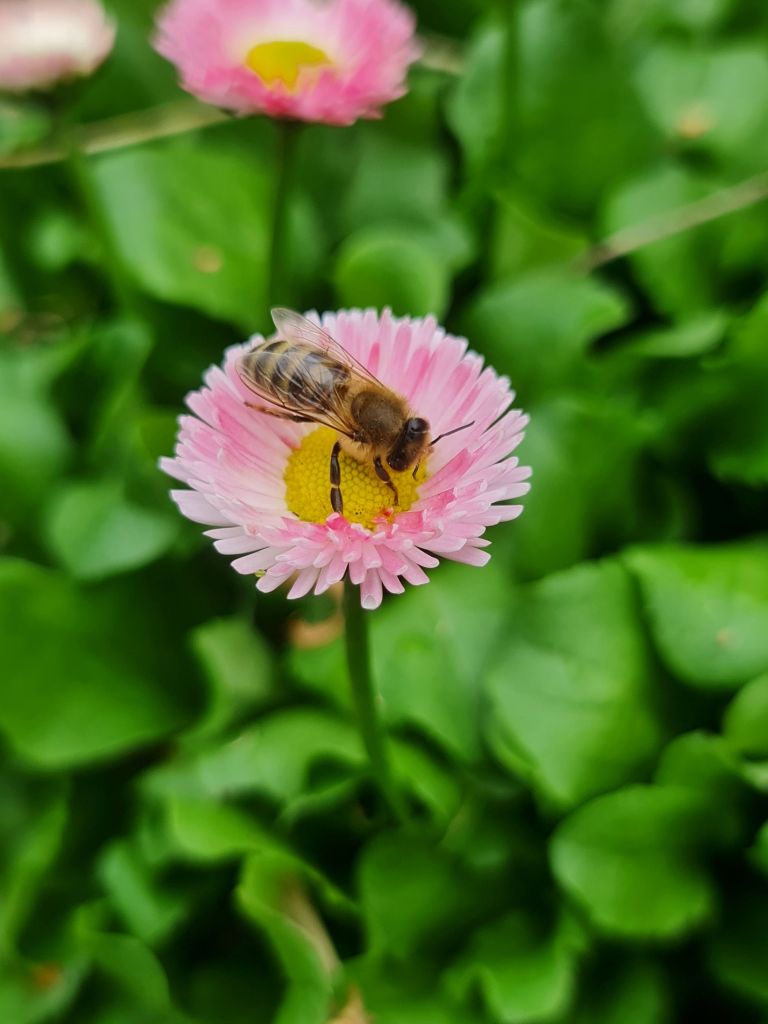
I’ve been told that old Bees don’t go back to the Hive in the evening, where they may die and cause strife in the colony. So they spend the night huddled in a flower where possible. If they wake in the morning, they go back to working for the colony.
Even if it’s not true, it’s a beautiful story of love and service to the community.
As herbalists, we are called upon to heal and to serve. Some herbalists forget that and make a good buck pushing supplements and products but that’s not really service, just business. Others try to use plants that we have harvested locally and prepared ourselves to help the healing of those around us.
Whatever school of herbalism we are a part of, we all rely on the natural world for our learning and remedies and at its root, herbalism is about love and respect for the natural world. Without the natural world, there wouldn’t be herbs to learn about and use or people to help to heal. But that world is burning, dying at a rapid rate yet relatively few people are standing up and fighting the Earth’s demise. That scares me. A lot.
So many have been sucked into the kind of ‘natural’ medicine herbalism that relies on the very forces killing us. They rely on dead plant material, industrially harvested, prepared, packaged and shipped across the world in plastic containers of the sort seen in most supermarkets or health food stores. These are prepared for profit, not healing and their use has driven many species of herb to near extinction. United Plant Savers has a list of at risk plants (mostly American) that contain many people’s favourites such as Black Cohosh and Slippery Elm, some of which has common herbs that can be used as substitutes. Mallow can substitute for Slippery Elm. Others endangered herbs have other plants that are not endangered that we can, with a little research, swap to. It just needs a little consideration.
As herbalists, we have a responsibility to nurture and protect the life around us, not just life in human form and that includes activism in other areas. Are you actively trying to heal the world with your herbalism?
If you want a detailed list of globally threatened species (not just herbs), check out the IUCN Red List of Threatened Species.

Other herb pages on Ligaya Garden
We cover a lot of ground on many herb related topics here on our website. There are whole pages devoted to different topics as well as frequent posts. Some of the links are –