Prickly Lettuce, also known as Wild Lettuce can be used to make potent pain killing remedy that works as well as ibuprofen and even as well as some stronger pain killers without the negative effects on gut bacteria oe possible addiction.
At this time of year (Summer in Oz as I write this), Prickly Lettuce (Lactuca serriola) takes over roadsides and some gardens. It loves the fullest of Sun but is OK with a little shade – but not too much though or it won’t grow tall and flower on time. This is the best time to harvest it for remedies as the flower buds are forming but most of the plants haven’t flowered yet. I’ve found that this is when the plants are bitterest and the pain relieving properties greatest.
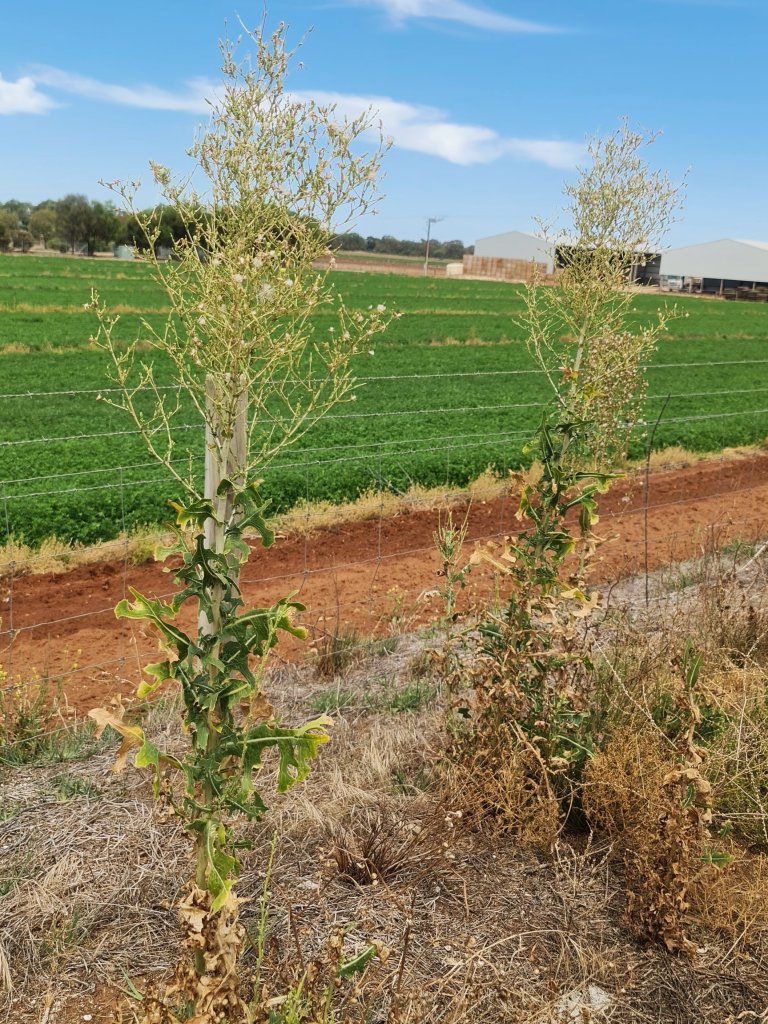

I usually dry a lot of the plant for use later in the year (it makes an excellent tincture using the percolation method – more about that later (I haven’t written the page yet). I tincture some of the fresh Prickly Lettuce in 40 – 50% alcohol as the compounds that we are after are water soluble but as I still have several bottles of tincture left from last year, I decided not to tincture any but to play around with the decoction and see how strong, black and icky I could get it. It gets like tar!
Here’s how to do it –
Harvest
The best time to harvest your Prickly Lettuce is when it starts to send up the flower spikes but before the flowers open. At this time the plant is at its bitterest and there is a lot of latex in these s
Harvest your Prickly Lettuce and cut from the top, working your way down so that the latex keeps pumping up. Cut the leaves and stem, as the latex that we are after is spread throughout the plant. Some herbals talk about just cutting into the stem, but that is for folks who have Lactuca virosa, which is the northern hemisphere species in which the sap is concentrated more in the stem. Ours will leak a little sap from a small cut but not the glorious amounts of you’ll get from L. virosa. In fact, one of the old ways of collecting the latex was to make a cut in the stem and get some of the milk on your fingers. Then that was rolled into a ball and the process repasted until the little ball that has formed reached a good pill size. Many pills were made this way and stored for later.
Some folks online recomend only using the leaves but the stems have plenty of the good stuff in them so as long as your plant isn’t too woody and you have a pair of secateurs, you’ll be right.
Prickly Lettuce tends to dry its leaves from the bottom up (i.e. oldest first) so when harvesting it, you won’t get much goodness below the level where the leaves turn brown and shrivel. If you’re cutting down from the top as I suggested, there will be little or no latex coming out of the stem by the time you get to this level, so stop there and start harvesting a new stem or plant.
Unless your hands are as tough as shoe leather, you’ll probably want to wear gloves or just stick to the softer parts of the plant.
Prepare
Give your material a quick wash
Chop your plant material as fine as you want, reduce the length of stem pieces to about ½-1 cm and the leaves into pieces about the size of a 10 cent coin to make sure of good extraction. As long as most pieces or leaves have a few cuts in them, the goodies will be easily extracted.

Decocting

Decoctions are a method of extracting herbal constituents from tougher, woodier materials. It works well for the tough leaves and stems of Prickly Lettuce. Put it all into a big pot, cover with twice the volume of water and bring all this to a boil. Let it boil for 5 minutes or so to really get the heat and water in there, then simmer until the water level is reduced to about 25%.

At this stage, let it cool until you can handle the plant material then strain out the water and press the marc. You can filter it all now.

Simmer the remainder down as much as you dare. It will turn blacker, get thicker and become more bitter as you go. You can reduce it to a thick, almost tar like consistency or stop earlier and keep it all fairly liquid – that makes it easier to combine with other remedies later. I prefer keeping it a little fluid because it is so much easier to use. About 1 kg of Prickly Lettuce and 2 litres of water will reduce to less than 10.


A couple of tips –
My biggest tip for making the goo is to, when your down to a goo that is still liquid and pourable, to pour it from your pot and into a saucepan. The benefits are twofold – you get a much larger surface area from the water to evaporate from and its much easier to get utensils into to scrape out the tar, so you get more out of it.
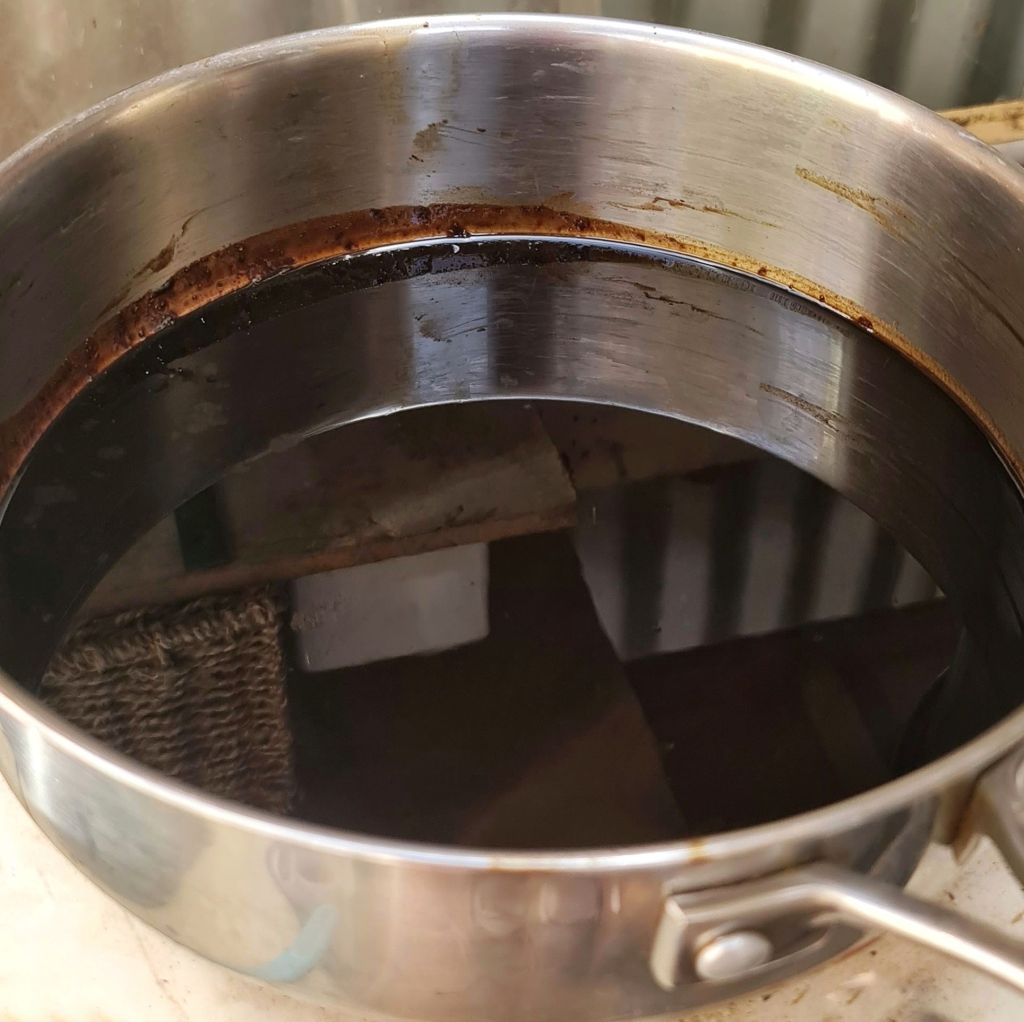
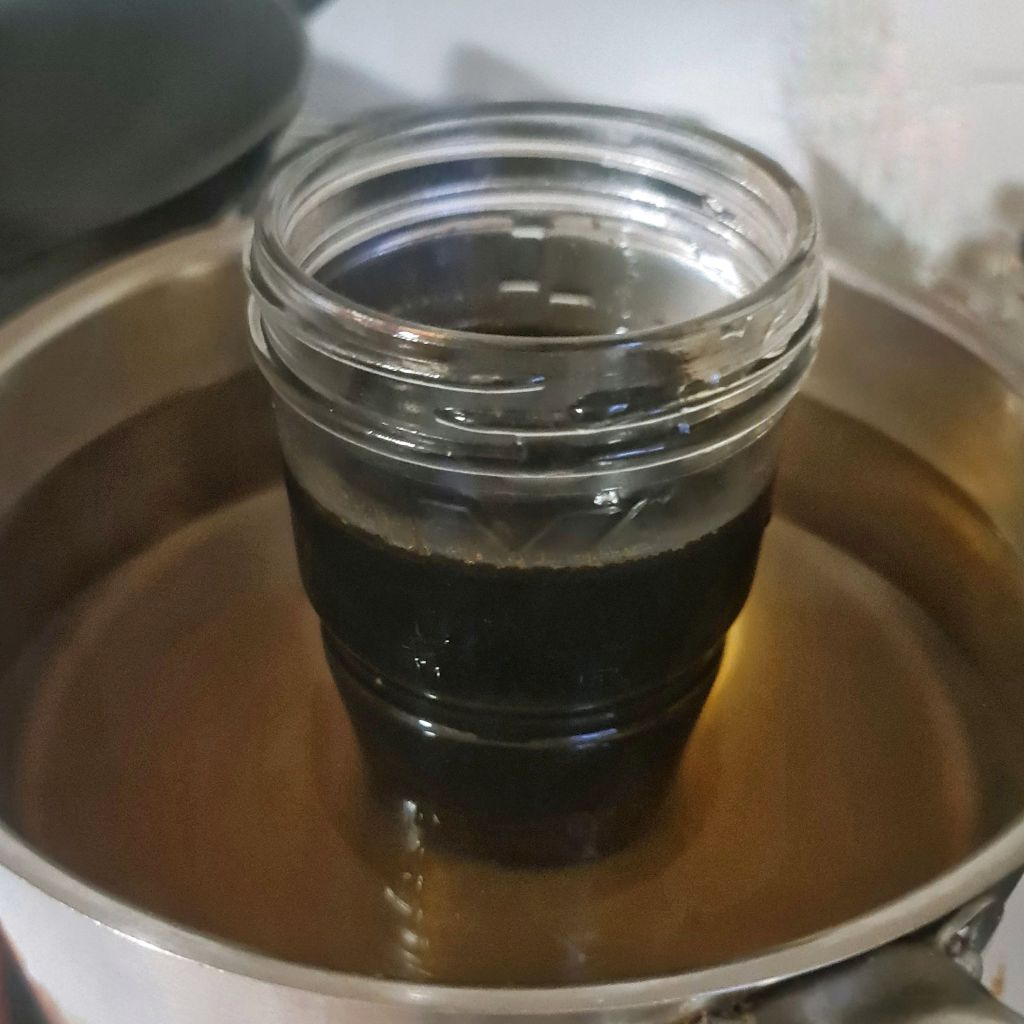
Transferring the goo to a jar is a messy job, usually with a some waste (after all the effort, any left behind is a waste). One solution is to do the final concentrating in a jar. Use a doubler boiler method to simmer the jar’s contents to your desired consistency. Keep an eye on it though, the water in the pan tends to evaporate much faster than the goo.
Another tip is – when you’ve finished but still have resin stuck to your pan and tools, add a cup or so of water and dissolve it. Then add that once your well into your next batch (not too early but after the first filtering). That’ll save wasting it and give your new batch a bit more kick.
Storing your decoction
There are several ways to store your decoction. Honestly, I just store it in a jar in the fridge. If you do that, make sure that you label the jar – don’t want someone thinking it is a sauce or marinade 🤑
You can add alcohol as a preservative, as explained below.
The other way to preserve your decoction is to simmer it down it to a gooo, dry it thoroughly in a dehydrator. Dry it until it isn’t sticky , cut it into smaller chunks and store it in the fridge.
Adding alcohol to preserve the decoction
You can store the decoction in the fridge or, if you don’t have a fridge, add alcohol to preserve the liquid. You need to make the total alcohol concentration in your liquid above 20% or above for effective storage. Use any of the calculations on our ‘A little about alcohol‘ page to work out how much you will need to add.
In the example in the pics, I have 100 ml of extract, which has 0% alcohol. To make the extract 20% alcohol, I add 27 ml of alcohol that is 95%. ABV That brings us a tad over 20% and is perfect for our requirements. If you’re not up for a little maths, you could just add 30% by volume to to preserve the decoction.

Adding that proportion of higher of alcohol will precipitate some ‘goo ‘that is the albuminous and resinous components of the extracts but that’s OK. You can filter this out, let it settle or just shake up your bottle before dispensing the extract or mixing it with other remedies. Check out this post – ‘What’s this goo in my tincture?‘ to get more details on the topic.

Using Prickly Lettuce decoction
Using your prepared Prickly Lettuce decoction is pretty easy but, as it depends on your final product, can it can be a little variable. It depends a little on the person too and how their personal biology works with the constituents. Start with a tiny amount and work your way up to a dose that works with you.
How much you rendered down the decoction will affect how well it mixes with other solvents. As long as it’s fairly liquid, a quick stir or shake will get it back into solution in either water or alcohol. If you have rendered it down to a gooey tar, it will take a little more time and effort. If you’ve dried it completely, it might take a while. Thats why I like to keep mine a bit more fluid and store it in the fridge. It’s just easier to use that way.
You can make an infusion by dissolving it into water at a rate of (roughly) 1/8 tsp into a cup of water and drink that up to 3 times a day. If its too bitter, a little honey can be added or reduce the size of the dose.
Tincture it by mixing it with 3-5 times the amount of 30-50% alcohol. It’s water soluble, so you don’t need a super high concentration of alcohol. Take 1 dropperful of that in a cup of water as required or up to 4 times a day.
This year is the first year I’m making a Prickly Lettuce glycerite and oil so I can’t recommend them yet until I’ve had a bit more experience with it.
All that being equal, some folks recommend dipping the end of a match or toothpick into the goo and putting it on your tongue as needed. It works.
Contraindications
Any pain reliever or any herb that works on the central nervous system should only be used for a short term. Prickly Lettuce is no exception.
As it can also have a sedative effect, take it in very small Doses if you are going to drive, fly fighter jets or are on any other sedating medicine. It could increase their effect.
Being a very bitter herb, don’t take too much at a time. It can stimulate bile production and as bile is our primary intestinal lubricant, give you diarrhoea.
Other herb pages on Ligaya Garden
We cover a lot of ground on many herb related topics here on our website. There are whole pages devoted to different topics as well as frequent posts. Some of the links are –