
Some compounds such as resins, triterpenes and volatile oils are alcohol but not water soluble and adding enough water to change the concentration of your tincture will cause them to precipitate out as either a sediment that makes the liquid cloudy or a real goo that floats around horribly.
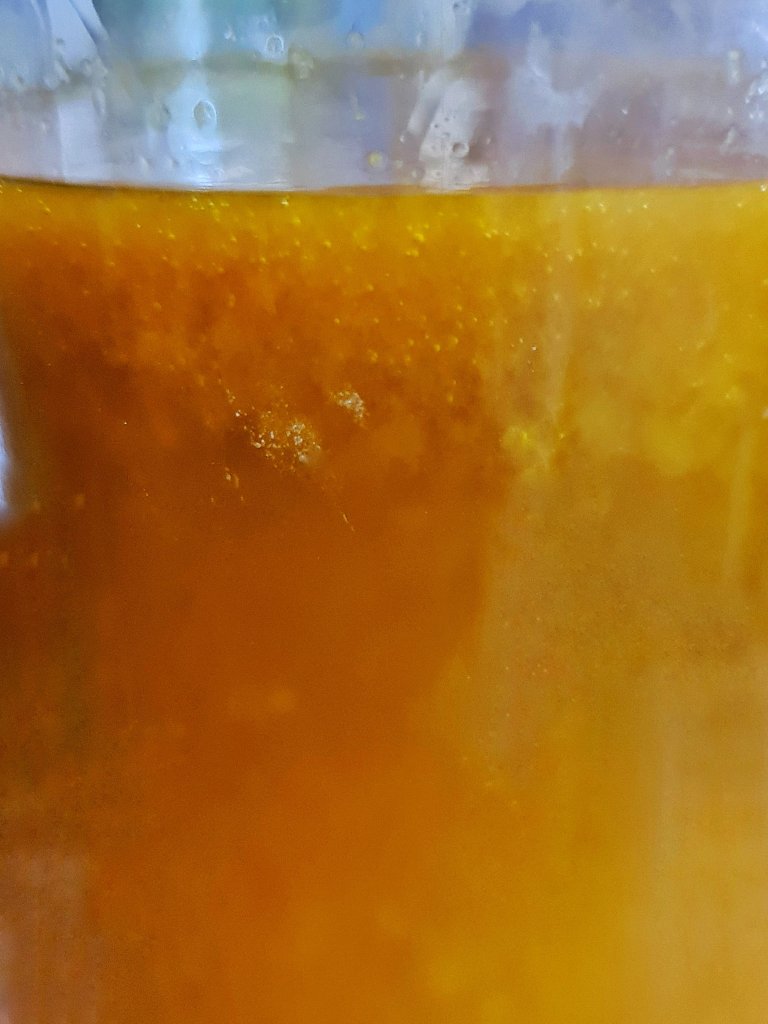
That’s what happened to this Calendula tincture.
I macerated dried flower heads for a month in 85% alcohol. After straining out the marc, I was left with a beautiful, golden coloured tincture. Liquid sunshine! Then I decocted the marc to make the whole process a double extraction. When I let it cool and strained out the depleted flower heads, I was left with a pretty, yellow liquid. Nice. Some folks like to use only the Calendula petals, but I like to include the whole head. The resins in the rest of the flower head contain additional medicinal components.
Then I added the liquid from the decoction (water based) to the tincture (alcohol based) and the whole container flocculated (isn’t that a cool word? I think its the right one and it’s too cool a word to miss the opportunity to use) into a golden goo! Yuck! The dissolved resinous, oily material in the flower heads had responded to the drop in alcohol concentration to settle out into a non-water soluble suspension.

So what to do?
‘Next time, don’t double decoct high concentrations Calendula extractions’, I told myself.
If you want to add water to an alcohol extract of an oily, resinous plant, James Green recommends adding cold (not warm) water slowly to the tuncture, stirring all the while. This still precipitates the insoluble material out of the tincture but it is in a very fine form that is easily diffused throughout the tincture by shaking.
Even if you try to add stronger alcohol to the tincture, only a tiny of the precipitated compounds will go back into solution. I had the same issue with a Rosemary tincture that I double extracted and added the water component in one big sloosh. At a guess, only about 5% of what settled out went back into the solution when I added stronger alcohol. The rest sits in a jar for demonstrations in advanced tincturing workshops.
Why didn’t it happen to the tincture I made from Vodka last time?
Simply put, the 37.5% Vodka didn’t pull all of these resinous constituents out of the herb. This is an example of how different alcohol concentrations can affect the substance of compounds. I’m sure the Vodka extraction will yield a pretty good remedy but a more effective one could have been crafted by choosing the higher concentration.
Options
If this happens to you, don’t throw out your tincture. You will have to shake it all quite vigorously for a while but it will work to a some degree. Otherwise, you can filter out the goo and still have a poor tincture to use. Easiest is to just bottle it and use it, remembering to shake the bottle well before using. Your patient’s body should be able to obtain some benefit from the precipitate.
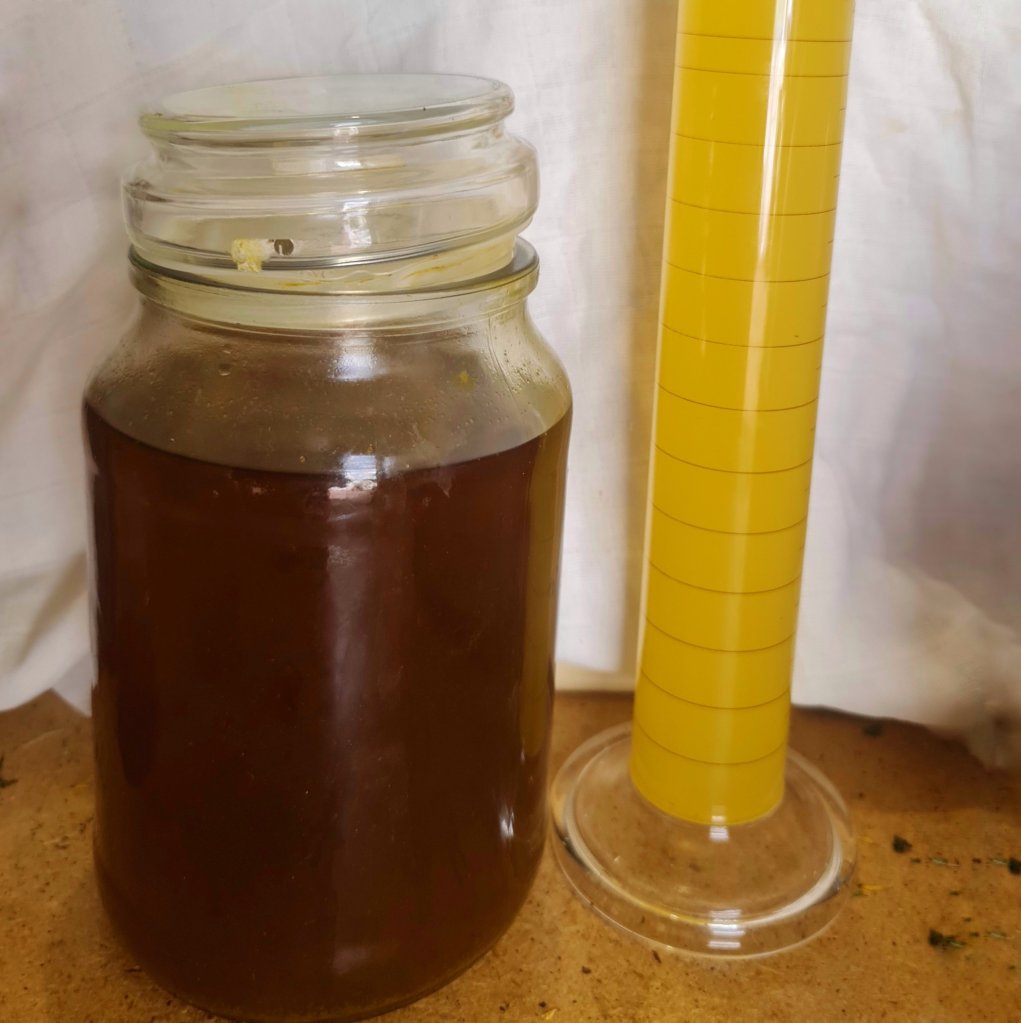


Other precipitates & sediments
Many herbs have constituents that are very soluble in hot water but not so in cold. They may settle out as a cloud and eventually find their way to the bottom. I had this happen a few times when experimenting with Mallow. There is a term in herbalism for all of this ‘stuff’ that settles to the bottom of the container it’s “apotheme” don’t mix it up with the term that is used in geometry though.
Some herbs will precipitate sediments after the addition of alcohol. This is in kind of the opposite to the reaction seen in the earlier parts of this post. In the case of herbs such as Dandelion, whose roots contain water soluble inulin (a soluble fibre), the addition of or to alcohol will precipitate them out of solution because they are not alcohol soluble. These compounds tend to go into suspension and eventually settle to the bottom of your container. The easiest way to deal with this is to leave the tincture as it is but remember to shake the bottle well before dispensing so that the sediment goes back into suspension. It will make the tincture cloudy but that’s OK. Things like Inulin or Beta-glucans that act in this way need to be used via the digestive tract so will be fine as solid particles Beta-glucans can be found in many mushroom extracts.
I’ve heard of the same kind of thing happening with some root herbs such as Comfrey where some of the albuminous or mucilaginous material will precipitate out with the addition of alcohol to the water component. Fortunately, this material can be easily taken back into solution by adding strong alcohol.
Some alkaloids are not very alcohol soluble so will fall out of solution easily. There isn’t much of a remedy to this problem once they have already precipitated but as mentioned on out tincturing page, the addition of a small amount (5% or so) of vinegar to the alcohol will help. If you’re working with tannin rich plants such as Blackberry leaves, some of the tannins may combine with other compounds and settle to the bottom. The addition of about 5-10% glycerine to the tincture should prevent that.
I’ll add more to this page as I get a better hang on the chemistry of tincturing. Never stop learning!

Other herb pages on Ligaya Garden
We cover a lot of ground on many herb related topics here on our website. There are whole pages devoted to different topics as well as frequent posts. Some of the links are –

One response to “What’s this goo in my tincture?”
[…] before dispensing the extract or mixing it with other remedies. Check out this post – ‘What’s this goo in my tincture?‘ to get more details on the […]
LikeLike