
Vinegar is an amazing thing to add to your herbal repertory of remedies. It has its own taste and if you are using Apple Cider Vinegar (ACV) (recommended), its own health benefits.
We add small amounts of vinegar to tinctures sometimes to better extract certain constituents (alkaloids) but vinegar is a great solvent in its own right.
Vinegar stands on its own for extracting minerals from herbs such as Oat Straw and Nettles. I used to take a little Apple Cider Vinegar in water every morning because of its health benefits. Now I do the same with a mineral rich version made through extracting minerals from the herbs I mentioned above. That gives me a powerful boost to my diet as well as the health properties of the ACV. You can make your own Apple Cider Vinegar easily , in your own kitchen using a ‘mother’ or creating your own from scratch with old apple cores.. Here’s the link to our Apple Cider Vinegar page.
A vinegar extract is called an ‘Aceta‘, the plural of which is ‘Acetae‘. An aceta is not the herbal vinegar that you see in the shops with a sprig or two of Rosemary floating in it. An aceta is a powerful remedy in its own right. Being alcohol free, acetae are also suitable for kids and elders and those who won’t imbibe alcohol for whatever reason.
But first, what is vinegar?
Vinegar is a solution that contains water and around 4% of Acetic Acid (that’s where the name ‘Aceta’ comes from). The double strength vinegars that you see are around 8% Acetic acid. It can be made industrially through chemical processes (Yuck!) or through much gentler fermentation. The ACV that I mention so often on this website is brewed through a process of fermentation.
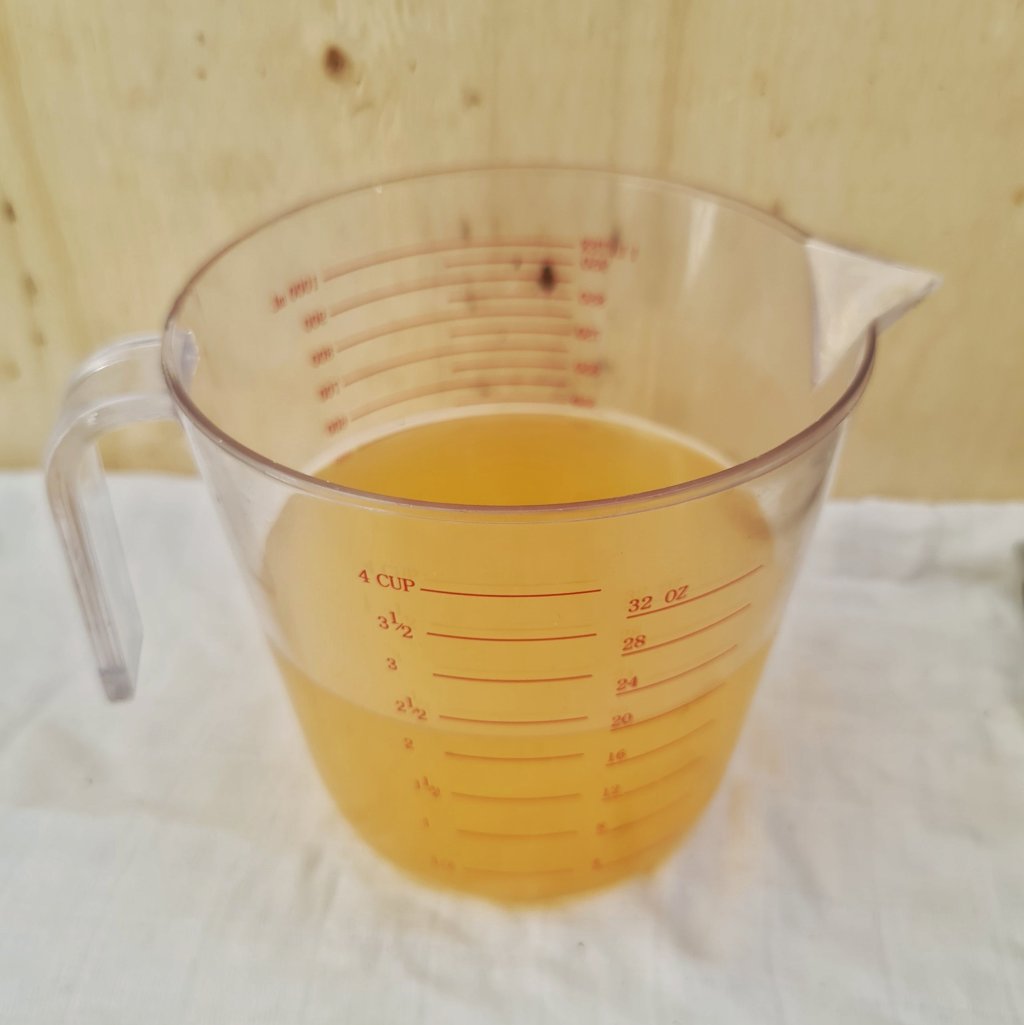
Making your Aceta
If you’re familiar with tincturing, making your own Acetae will be a walk in the park. It’s easy for folks who don’t tincture too. All you need to do is soak some herbs in vinegar for a week or two. It’s that simple but it’s still worth reading on for a few more details.
Fresh or dried herbs?
Dried herbs work best for acetae. Adding the water content and microbial population of a fresh plant can lead to a big reduction in the time the remedy can be stored for, especially if you’re using your own, home made ACV, which is a living organism in itself. For that reason, if you want to use fresh herbs, use commercially available vinegar instead of home brewed ACV. In fact, if you use your home made ACV, the brew may even start to go off during the maceration process. I’ve found that never to be the case with fresh plant material in commercial vinegars.
Proportions
Herbal vinegars are potent remedies and some folks like to make them at different strengths. As guideline, I like to make my ratio of herbs to vinegar 1:3 (some folks recommend 1:5). That is 1 part dried herb (weighed in grams) to 3 parts vinegar measured in millilitres). Because the solvent is vinegar, there is already plenty of water present (96% of it!), so there is no need to add any during the maceration (soaking) period.


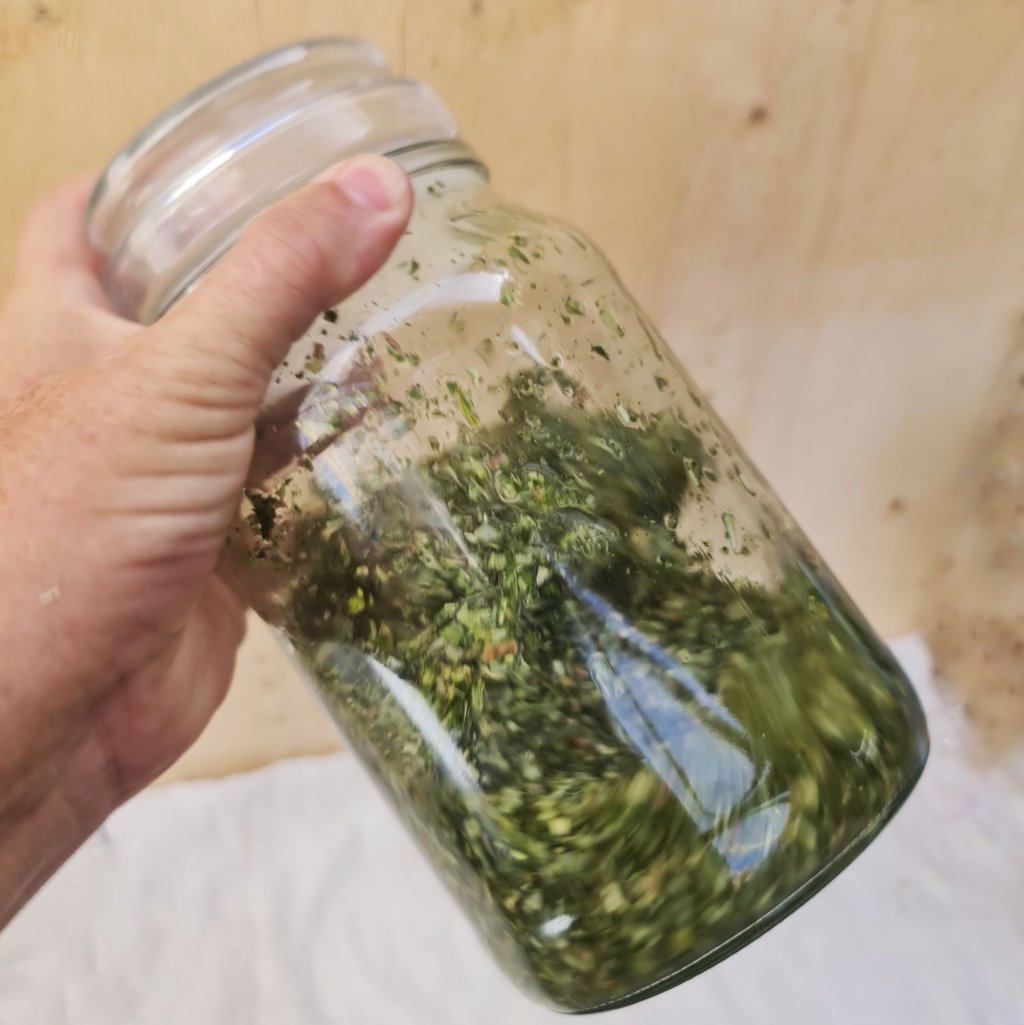
For instance, this morning I made a new batch of my mineral rich vinegar supplement. I used 20 grams of Oat straw, 10 grams of Nettles and 10 grams of Red Clover. The total weight of the herbs was 40 grams, so I needed 3X that in vinegar. In other words, I added 40 grams of dried herb to 120 ml of Apple Cider Vinegar.
Timeframe


Generally, let your herbs macerate in the vinegar for 2 weeks, and make sure that you shake your mix daily. Don’t be tempted to leave it for too long otherwise it may spoil before you can use it. Apple Cider Vinegar is a living brew of microbes and we are adding organic plant material to that, so the microbes will, eventually do what microbes do, that is eat and multiply. Because of that, it may be good practice to ‘burp’ the container once or twice during the maceration period.
Filtering and storing

Press and filter your aceta as you would any other remedy. Store your herbal vinegar extract in a sealed container, in a cool place, out of the light. The extract will store for a couple of months in the fridge.
You may get a thin, white crust form, on the top of your extract over time. This is Kahm yeast and is a harmless product of the ACV being alive. Just remove it before using the extract. It won’t do any harm but looks unsightly.
Using your vinegar extract.

My preferred method of using the aceta detailed above is is to have a tablespoon in a cup of water every morning for the mineral benefits. For acetae made for more remedial purposes, a teaspoonful 3x a day works nicely.
Vinegar has a drawing property, so a compress can be used in cases where a splinter is lodged beneath the skin.
Do you remember the old nursery rhyme ‘Jack and Jill’ (do kids still sing that or is it considered too gendered or even violent nowadays)? after ‘Jack fell down and broke his crown’ (referring to his head), the injury was fixed with ‘vinegar and brown paper’. It sound an odd remedy but, having researched it a little, the vinegar could have set something in the brown paper rock hard, forming a primitive cast. Who knows what went into products of old, I know that the paper making and printing industry have used some weird and wonderful (and sometimes quite horrid) chemicals in the past.
Vinegar is also used in advanced tincture making. Some herbs are rich in a class of compounds called ‘alkaloids’. These sometimes don’t get extracted very well but one method of improving their extractability is to add 5-10% vinegar to the solvent. Doing this causes the alkaloids to form water soluble alkaloidal salts which can be better extracted.
Combining with other styles of remedies
Aceta lead naturally into oxymels, those beautiful combinations of vinegar and honey. If you combine your herbal vinegar that has already extracted the beneficial constituents of you herbs with either straight honey or honey with other herbs, you will get a doubly powerful but still very gentle remedy. Guidelines for making Oxymels are right here.
One of the classic vinegar remedies that you can find on this website is Fire Cider.
Check out this post about making a Mugwort vinegar for strong bones.
Other herb pages on Ligaya Garden
We cover a lot of ground on many herb related topics here on our website. There are whole pages devoted to different topics as well as frequent posts. Some of the links are –


One response to “Herbal Vinegar extracts (Acetae)”
[…] vinegar seem to be the solvents that are in everyone’s reach. There’s a whole page on vinegar extracts (Acetae) on this website and one on teas and infusions […]
LikeLike